
The emerald ash borer threatens the survival of 7.5 billion ash trees across North America, a figure that dwarfs the 3.5 billion American chestnuts killed by blight and the 200 million elms lost to Dutch elm disease. This staggering scale of potential loss is one of the central narratives highlighted by the Milwaukee Public Museum, where immersive habitat dioramas serve as a living record of extinction, extirpation, and the fragile process of species recovery.
The museum’s collection doesn’t just archive the dead; it maps the interconnectedness of ecosystems. As the Milwaukee Public Museum reports, the disappearance of a single plant species, such as the American chestnut, creates a domino effect that can push animals like the passenger pigeon and Carolina parakeet toward extinction by stripping away vital food sources. For the visitor, these displays transform abstract biological data into a visible history of human impact and ecological collapse.
The Human Cost of Ecological Collapse
Extinction is rarely a clinical event; it is often a cultural one. The museum’s display of black ash baskets illustrates this point. Black ash trees are essential to the traditional artistry of the Haudenosaunee Nations, Ojibwe, and other Woodland groups because the wood lacks fibers connecting growth rings, making it uniquely flexible for weaving. Since the emerald ash borer was detected in North America in 2002, these trees—including black, blue, white, green, and pumpkin ash—have become critically endangered.
When these trees vanish, the loss extends beyond the environment to the erasure of ancestral knowledge and artistic practice. To counter this, Haudenosaunee basket weavers are now working to preserve seeds, attempting to ensure that a biological loss does not become a total cultural erasure.
From Near-Oblivion to Recovery
Not every story in the halls of the museum ends in silence. The “Beach Scene” diorama features the whooping crane, a bird that plummeted from a population of 10,000 to just 21 wild individuals by 1941 due to habitat loss and unregulated hunting. Today, through decades of conservation, that number has climbed to over 830, with breeding grounds established in central Wisconsin.
Similar trajectories are seen in the recovery of the American bison. Once numbering in the tens of millions, the bison was deliberately overhunted in the 1800s to undermine the food sources of Native Americans, leaving only about 500 individuals.
The museum’s records show a pattern of targeted intervention. Local efforts were spearheaded by Greg Septon, who established the Wisconsin Peregrine Falcon Recovery Program in 1987.
Great Plains Species Recover from Historical Lows
| Species | Status/Historical Low | Current Status/Recovery | Primary Cause of Decline |
|---|---|---|---|
| Whooping Crane | 21 individuals (1941) | 830+ individuals | Hunting & Habitat Loss |
| American Bison | ~500 individuals | 500,000+ (incl. commercial) | Deliberate Overhunting |
| Peregrine Falcon | 324 pairs (1975) | Recovered | DDT Pesticides |
| Passenger Pigeon | Billions (18th Century) | Extinct (1914) | Hunting & Habitat Loss |
Missing Displays Highlight Endangered and Extirpated Species
Some of the most profound stories at the museum are told by what is missing. In the Turkey diorama, the American chestnut tree is mentioned in the label but is absent from the physical display. This void represents a critically endangered species that once dominated the region. While billions were killed by fungal blight in the early 20th century, a few thousand survive today, with the largest remaining population located in Wisconsin.
The museum also tracks the “locally extinct,” or extirpated. Elk were wiped out in Wisconsin by the 1880s due to unregulated hunting, though they were successfully reintroduced in 1995 and 2015. These shifts illustrate a hard truth: extinction is not always a global event, but a series of local collapses that slowly erode the biological diversity of a region.
The history of the North American landscape is a ledger of losses and hard-won gains. From the last passenger pigeon, Martha, who died in 1914, to the formal 2023 declaration of the Eskimo curlew’s extinction, the record is clear. The survival of the remaining species now depends less on the absence of threats and more on the persistence of active, human-led intervention.
Keep reading

Christian Yelich Urges Brewers to Face Adversity After Game 4 Loss
The Milwaukee Brewers missed a golden opportunity to secure their first World Series title on Tuesday night, falling...

Obatala Sciences Expands to Charleston With 46 New Jobs
Obatala Sciences is bringing a $656,000 investment and 46 new jobs to Charleston County as it establishes its...

Diocese of Olympia Moves $100 million fund to Episcopal Church management
The Diocese of Olympia is moving a $100 million investment fund into the centralized management of The Episcopal...
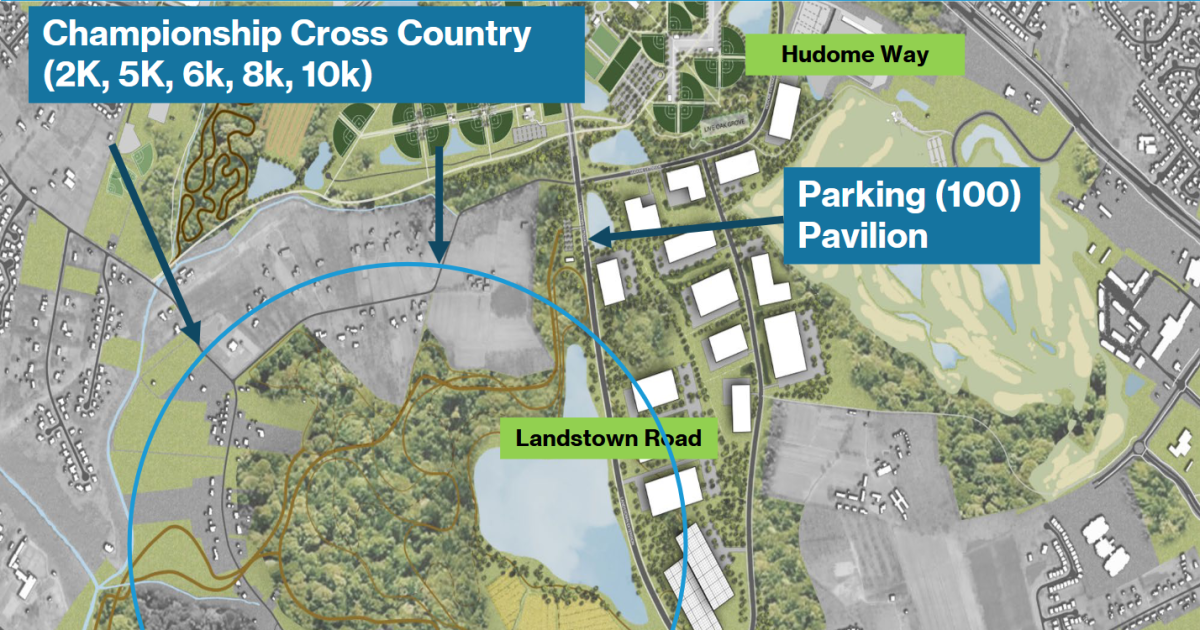
Virginia Beach School Board Debates Funding for New Cross Country Trail
The Virginia Beach School Board is currently weighing whether to spend $3 million in surplus funds to help...