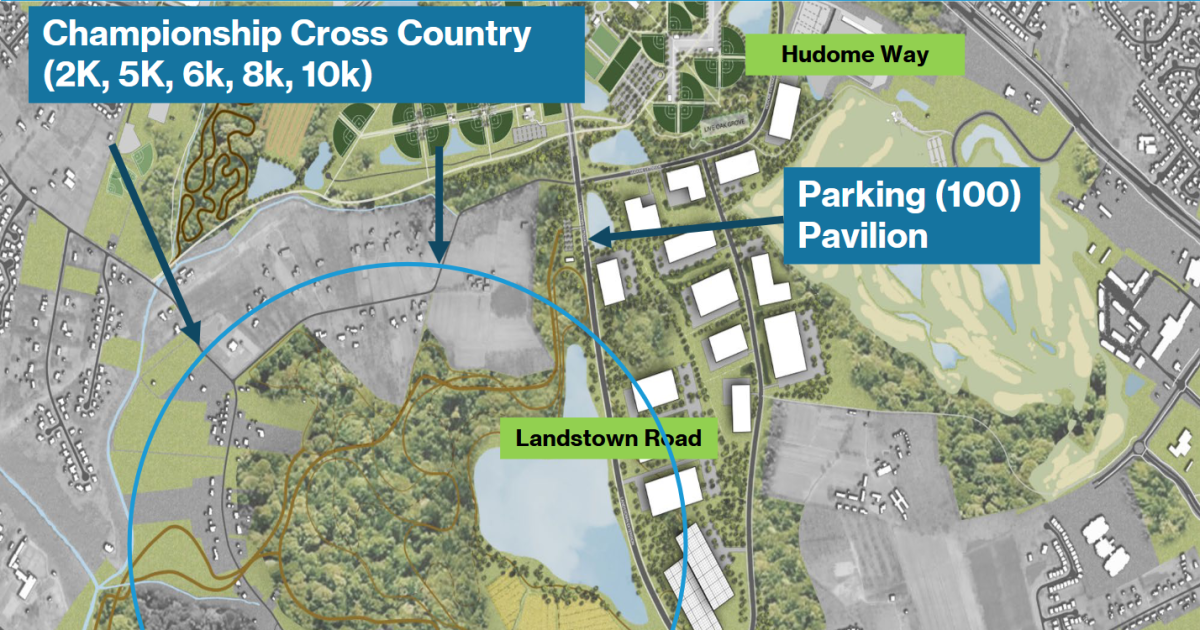
The Virginia Beach School Board is currently weighing whether to spend $3 million in surplus funds to help the city build a world-class cross-country trail, a decision that pits the desire for sports tourism and collegiate-level amenities against the immediate, gritty needs of classrooms and staff. While city officials argue the trail will draw thousands of visitors and benefit 300 high school runners, some educators and board members view the project as a “want” rather than a “need” in a system facing pressing capital demands, as reported by WHRO.
The conflict centers on $5.8 million in “reversion funds” from the 2024-2025 fiscal year—essentially money left over after the budget cycle closed. The Virginia Beach City Council, which holds the final say on these excess funds, has proposed a split: $2.8 million for a new human resources and payroll system and $3 million to match the city’s own contribution for a $6 million trail within the city’s Interfacility Traffic Area (ITA). If the school board agrees, the city will handle the ongoing maintenance and allow Virginia Beach City Public Schools (VBCPS) to use the facility for free.
Tourism gains versus classroom needs
The push for the trail isn’t just about the athletes; it’s about the economy. Assistant City Manager Jason Stroud told the board that the facility could bring thousands of annual visitors to the city once it integrates into the competition circuit. Because VBCPS receives a portion of tourism taxes, some board members see a clear return on investment.
Board member Rose Dwyer expressed skepticism, suggesting that the driving force behind the project is tourism and business growth rather than educational necessity. This sentiment was echoed by teachers during public comment. Lee Hicks, a teacher, argued that almost every school employee—from custodians to librarians—could name a more effective way to improve student outcomes than building a trail.
“A track is a want,” said board member Melinda Rogers. “It’s not a need. And we have lots of needs.”
The tension is heightened by the fact that the school board originally wanted to use this $5.8 million to bolster its health insurance fund. That request was denied by the city unless the insurance fund was completely depleted. According to Pilot Online, the fund balance sat at approximately $15 million as of June 30, which effectively blocked the board’s attempt to prioritize healthcare reserves over the city’s proposed projects.
The high cost of “goodwill”
There is a subtle but significant political lever at play here. While Superintendent Donald Robertson Jr. noted that the board doesn’t technically have to approve the money for the trail for the city to potentially move forward, he warned that the funds might simply sit unused for a long time if the board refuses. This leaves the board in a precarious position: they can either fund a project they are lukewarm about to build goodwill with the City Council, or risk the money remaining frozen while school facilities deteriorate.
The stakes extend beyond the $3 million trail. The board is also navigating a much larger sum—over $45 million in excess funding from the last fiscal year. The current proposal for those funds is far more focused on infrastructure:
- $27.2 million to $27.3 million for the replacement of Princess Anne High School.
- $16 million earmarked for next year’s capital improvement plan.
- $2 million for the new payroll system.
For the 300 students currently in VBCPS cross-country programs, the trail would be a massive upgrade. Currently, athletes rely on Mount Trashmore, the Virginia Beach Sportsplex, and Kellam High School, as there is no formal, collegiate-standard cross-country trail available in the city. For the city, the trail is a piece of a larger strategy to promote ecotourism and sports usage within Princess Anne Commons.
The timeline for a final decision
The board isn’t ready to sign the check just yet. Superintendent Robertson has committed to producing a memo outlining alternative priorities for the money, though he noted the list of needs could potentially be “100 pages long.” This memo will likely serve as the primary evidence for those arguing that the $3 million belongs in the classroom rather than on a trail.
The road to a final decision follows a strict calendar:
| Date | Action |
|---|---|
| Nov. 10 | School Board votes on the funding proposals. |
| Nov. 24 | Proposals are presented to the City Council. |
| Dec. 1 | Public hearing is held. |
| Dec. 8 | City Council holds the final vote. |
The core of the debate remains an unresolved question of identity: is the school board’s reserve fund a tool for educational excellence, or is it a civic piggy bank to be used for projects that benefit the city’s general economic profile?
Keep reading
Providence voters to decide on divestment initiative Tuesday
Providence voters will decide this Tuesday whether the city should pull its investments from companies and countries profiting...

Harrisburg Police Increase Patrols for Halloween Celebrations
Harrisburg Police are increasing patrols and encouraging residents to take precautions as Halloween falls on a Saturday this...
Salem Academy and College Hosts Panel on Women, Ethics, and Leadership
Dr. Jill Fleuriet, the 23rd president of Salem Academy and College, recently convened a panel of five women...

Jason Momoa’s Band ÖOF TATATÁ to Play OKC’s Fassler Hall on Halloween
Actor Jason Momoa is bringing his rock and blues band, ÖOF TATATÁ, to Fassler Hall in Oklahoma City...