
The Federal Aviation Administration lifted a nationwide ground stop late Friday after a massive communications failure paralyzed US air traffic, marking the most significant aviation shutdown since the September 11, 2001, terrorist attacks.
The disruption, which lasted more than four hours, left over 1.5 million passengers stranded and triggered a cascade of delays that industry analysts expect will disrupt travel schedules for days, according to RTÉ.
Passenger Update – Saturday 0400 Airspace in the United States has been reopened. The majority of first-wave inbound flights from the US to Dublin Airport are now either airborne or have an active flight plan. Some delays to flights between Dublin and the United States are… https://t.co/iBGzstGQ44
The stoppage began after a critical malfunction at air traffic control centers, where switches and routers became overloaded with data. While the specific cause of the equipment failure remains under investigation, Transportation Secretary Sean Duffy confirmed that the system—which relies on aging hardware—was unable to handle the traffic load.
“It’s going to be slow,” Duffy told reporters at a White House briefing, warning that returning to full operational capacity will require significant time.
Operations were halted for over four hours until the FAA restored connectivity at 8:15 p.m. ET, CBS News reported. While the Department of Homeland Security stated there is currently “zero evidence” of a cyberattack or rogue AI, investigators have not ruled out any possibilities. Homeland Security Secretary Markwayne Mullin emphasized that despite the scale of the outage, the priority remained ensuring the safety of aircraft already in the air.
Infrastructure Strains and Funding Disputes
The event has reignited a fierce debate in Washington over the state of the nation’s aviation infrastructure. Secretary Duffy, who previously urged Congress to approve $30.1 billion for airport and air traffic control modernization, has now boosted his request to $50 billion. “What we have is an incredibly old air traffic control system,” Duffy said. “Give us the money to fix it.”
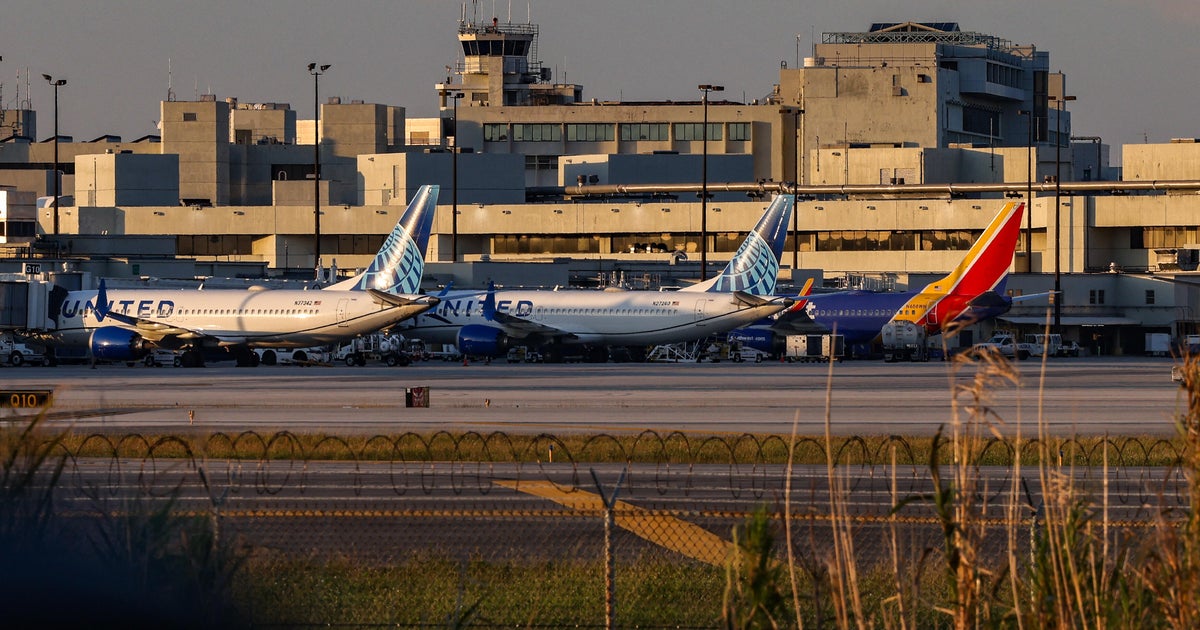
The system’s fragility is well-documented. In 2024, the Government Accountability Office reported that the FAA had classified 51 of its 138 air traffic control systems as unsustainable, with an additional 54 labeled potentially unsustainable.
Even with $12.5 billion in funding approved by Congress in July 2025 to replace legacy copper networks with fiber-optic cables, officials warned in September that hardware upgrades alone are insufficient without a fully modernized telecommunications network. The Government Accountability Office further noted in May that the FAA lacked a coordinated master schedule, managing nearly 11,400 separate project schedules that lacked integration.
Widespread Chaos for Travelers and Teams
The impact of the ground stop extended far beyond typical commercial passengers. According to ESPN, the sports world faced severe logistical hurdles as professional and collegiate teams scrambled to reach their weekend games.
Several major college football programs, including Utah, Texas, and Tennessee, were forced to delay travel or return to campus entirely. Some teams resorted to chartering buses to bypass the gridlock, while others were forced to reschedule kickoff times.
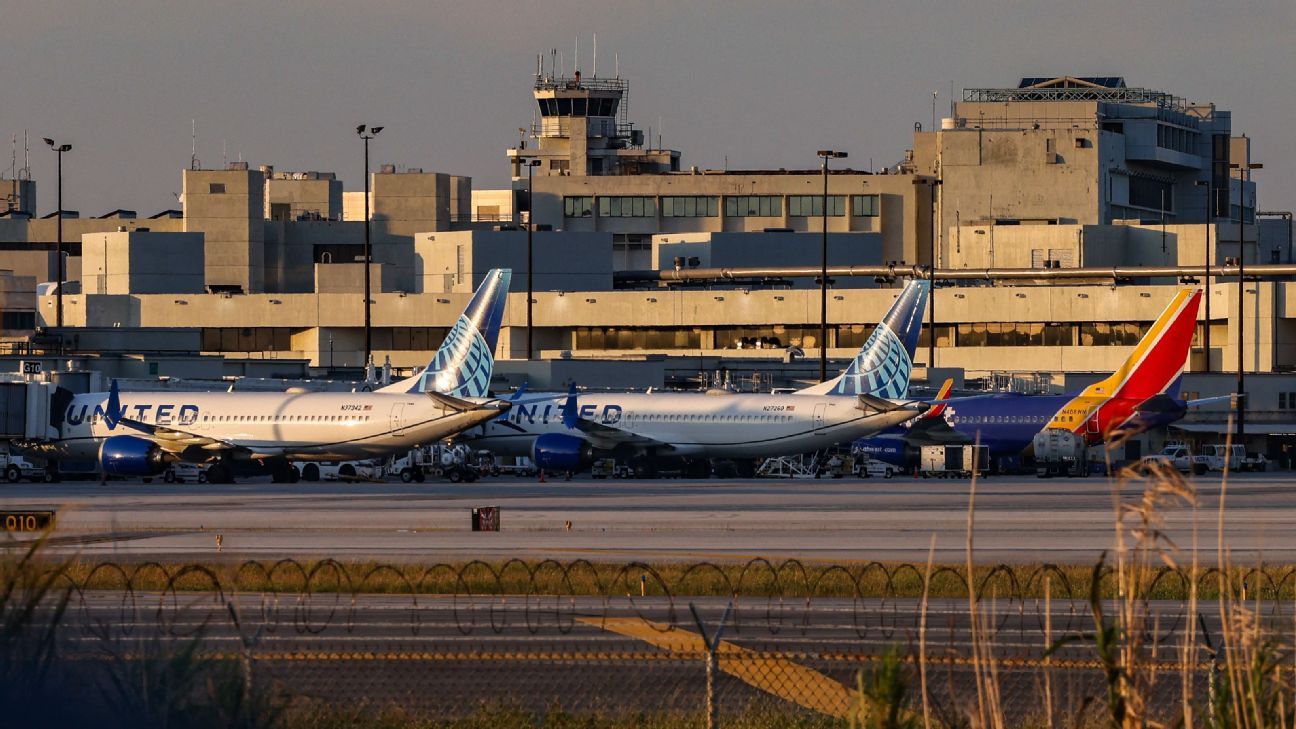
International travel also felt the shockwaves. Dublin Airport reported that while airspace reopened and most flights were clearing, delays and a small number of cancellations were likely for transatlantic routes. Aer Lingus issued a statement confirming they were monitoring the situation and clearing flights that had been held on the tarmac, advising passengers to check their specific flight status before heading to the airport.
As airlines work to reposition crews and aircraft, the industry faces a massive backlog. FlightRadar24 data indicated that over 6,600 flights were cancelled and 8,600 were delayed during the shutdown. With the Thanksgiving holiday approaching, officials are under mounting pressure to ensure the system can withstand the coming surge in volume.
“I don’t want to say that this is a crisis, but it is because we’re… we had to do a nationwide ground stoppage,” Secretary Mullin said, noting that while the immediate danger has passed, the investigation into the underlying mechanical failures is ongoing.
Keep reading

Sweden and Ivory Coast Sign Article 6 Bilateral Agreement at Cop 31
Sweden and Ivory Coast signed a bilateral agreement under Article 6.2 of the Paris climate agreement on Friday,...

FAA Imposes Nationwide Ground Stop Due to Air Traffic Control Communication Failure
Thousands of US flights remain grounded after a massive communications failure paralyzed air traffic control centers across the...

Zimbabwe Proposes US$50 Annual Levy on Underutilised Large-Scale Farms
“Exemptions should apply in cases of drought, genuine financial hardship, and other legitimate circumstances,” said Felix Maburutse, chairperson...

Nasser’s Long Road to Suez – Engelsberg Ideas
Suez erupted on July 26, 1956, when Egyptian President Gamal Abdel Nasser stepped to the podium in Alexandria’s...