The Abdullahs Move to Defuse Internal Dissent
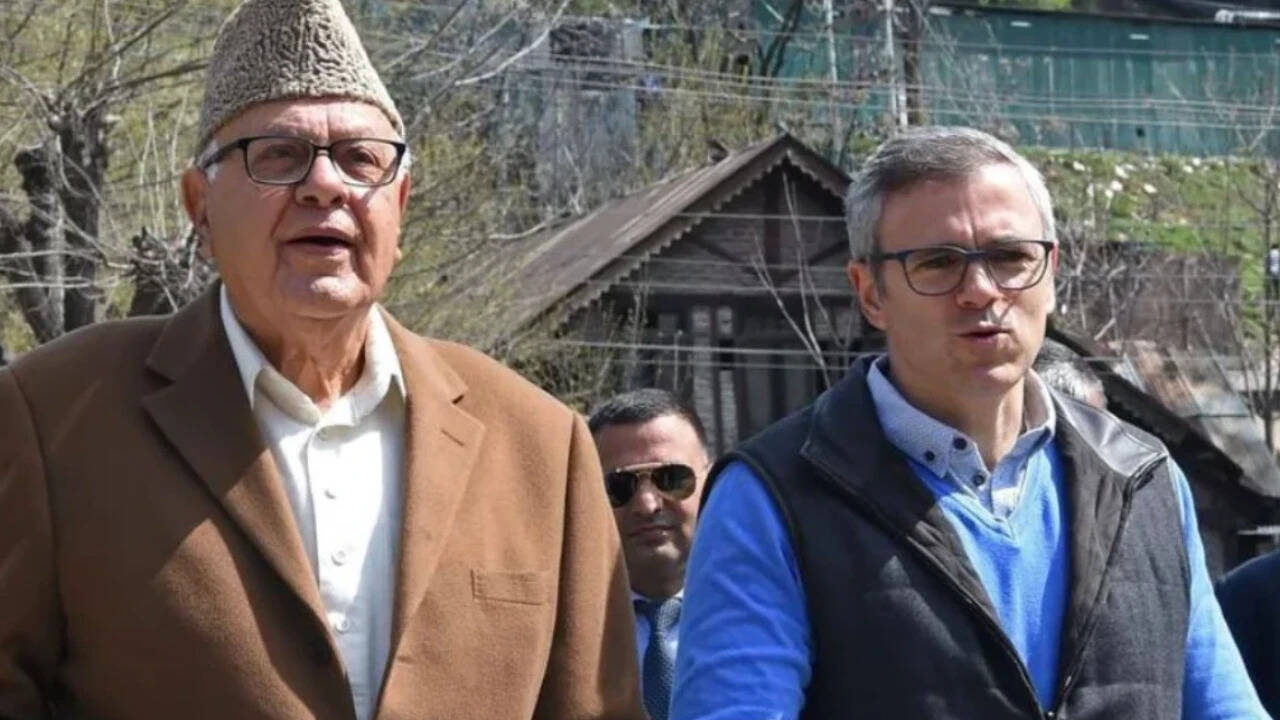
“The baseless news of the National Conference splitting into groups is totally wrong. The party stands together.” With those words, party president Farooq Abdullah addressed the media in Srinagar on November 6, 2026, attempting to stabilize a political foundation that has been visibly shaking for weeks. The meeting, which brought together Farooq, Chief Minister Omar Abdullah, and 15 of the 25 rebel MLAs at the former’s residence, marked a critical attempt to contain the most significant internal challenge the National Conference (NC) has faced in four decades, as reported by The Times of India.
Dr Farooq Abdullah, CM Omar Abdullah & NC Legislators Gather in Srinagar Ahead of J&K Assembly Session NC President Dr Farooq Abdullah, Chief Minister Omar Abdullah and other National Conference legislators arrive at the Banquet Hall in Srinagar for a meeting ahead of the J&K… pic.twitter.com/4WNcrwzgeu
The tension, which had been simmering since the cabinet expansion and reshuffle on October 27, reached a breaking point as legislators aired grievances regarding ministerial accountability and the concentration of power. According to The Hindu, the political unrest began shortly after the cabinet changes, with senior leaders like Mubarak Gul, Nazir Gurezi, and Abdul Majeed Bhat Larmi expressing public dissatisfaction over their exclusion from the cabinet. The dissenters, whose numbers grew to 17 by the time of the November 6 meeting, submitted a 10-point memorandum demanding structural reforms, including the removal of the Chief Minister’s adviser, Nasir Aslam Wani, and a reassignment of the Roads and Buildings (R&B) portfolio held by Deputy Chief Minister Surinder Choudhary.
Emotional Appeals and Consultative Committees
Inside the two-hour meeting, the atmosphere was reportedly fraught with emotional intensity. Omar Abdullah, facing direct criticism of his cabinet and his closest advisers, reportedly offered to resign several times, framing the pushback against his inner circle as a fundamental challenge to his leadership. Sources cited by The Times of India noted that the Chief Minister walked out of the room at least three times before being persuaded by the MLAs to return to the table.
To bridge the divide, the leadership agreed to a shift in how the government functions. The party will establish consultative committees for each cabinet minister, ensuring that legislators have a formal mechanism to influence policy. Additionally, a manifesto committee will be formed to monitor the implementation of election promises—a move intended to address the specific demand for a time-bound delivery on the party’s platform, including the restoration of statehood and the protection of Article 370 and 35A. While the demand for an immediate cabinet reshuffle remains an open point of contention, some legislators told The Times of India that they received assurances that this would be considered within a year.
The Stakes of the Rebellion
For the National Conference, the stakes extend far beyond internal personnel disputes. The party is operating under the heavy weight of its electoral commitment to reverse the changes to Jammu and Kashmir’s special status. The frustration among the MLAs is not merely about ministerial berths; it reflects a broader anxiety about the party’s ability to move the needle on its core political promises. As noted by The Telegraph India, the resignation of Srinagar MP Aga Ruhullah Mehdi earlier that week—citing a lack of aggression in pursuing the restoration of Articles 370 and 35A—added a layer of urgency to the leadership’s efforts to maintain unity.

Despite the public display of solidarity, the path forward remains complex. The rebels have pushed for a two-year cap on ministerial terms, aiming to rotate leadership and prevent power from consolidating in the hands of a few. Whether the promised “step-by-step” approach to addressing these grievances will be enough to satisfy the dissenters remains to be seen. As Bashir Ahmad Shah Veeri, an MLA from Bijbehara, stated, the party’s base is watching closely to see how aggressively the leadership pursues the restoration of statehood in the coming days.
While the leadership maintains that the party is “united and strong,” the events of the past week have exposed the challenges of balancing traditional party loyalty with the demands of a new generation of legislators seeking greater democratic accountability. The NC now faces the delicate task of integrating these demands into the machinery of government without further fracturing the coalition that brought them to power.
Keep reading

Demographic and Clinical Profile of Patients Undergoing Strabismus Surgery in Northeastern Brazil
A Profile of Strabismus Surgery in Northeastern Brazil When a patient is referred to a tertiary hospital for...

Shelly O’Donoghue’s family escapes vehicle fire near Little Island
A family narrowly escapes a vehicle fire near Little Island A Cork mother and her family experienced a...

Alberta Denies COVID-19 Vaccine Shortage Despite Pharmacist Concerns
Alberta Vaccine Supply Chain Faces Scrutiny Amid Pharmacist Concerns Alberta’s primary and preventative health services minister, Justin Wright,...

Indonesian Prosecutors Seize Rp11.8 Billion in Nickel Corruption Probe
The Cash in the Suitcases: Inside the AGO’s Latest Nickel Mining Crackdown Indonesian prosecutors have moved aggressively to...