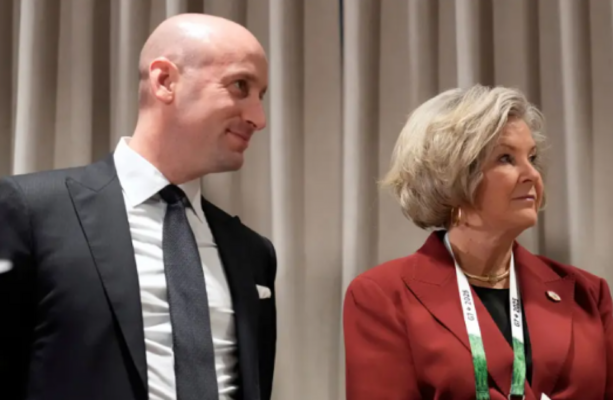
Trump Elevates Stephen Miller to White House Chief of Staff Following Midterm Losses
President Donald Trump has appointed Stephen Miller as his new White House chief of staff, a move that signals a pivot toward a more aggressive, confrontational approach to governance in the wake of the Republican party’s significant losses in this week’s midterm elections. The appointment, announced Friday, marks the departure of Susie Wiles, who served as the first woman in the chief of staff role and is credited with providing a measure of stability to the West Wing over the last two years, according to The Journal.
Stephen Miller to host a primetime show on trump TV called 'White Power Hour'.
The transition is set to take place Monday, with Wiles moving to the Trump political operation. While White House communications director Steven Cheung characterized Miller as a “Trump OG” who has been with the president since the beginning, the selection of the 41-year-old loyalist has drawn sharp condemnation from Democratic leadership. Minority Leader Chuck Schumer, writing on X, labeled Miller the “architect of the most barbaric, inhumane policies of this administration” and promised that Democratic majorities would fight the new chief of staff “every step of the way,” as reported by The Journal.
A Shift Toward Executive Action Without Congress
The appointment comes as the administration prepares to navigate a Washington landscape where Republicans have lost control of Congress. According to Fox News, the administration has been quietly developing a strategy to advance the president’s agenda without new legislation since April. This framework, developed by Miller in conjunction with Office of Management and Budget Director Russell Vought and White House lawyers, focuses on utilizing executive actions to implement policies on tariffs and immigration.
This governing strategy relies heavily on an expansive view of presidential authority. Fox News notes that the administration has looked toward the Supreme Court’s June ruling in Trump v. Slaughter—which upheld the president’s power to remove federal officials despite previous statutory restrictions—as a legal foundation for bypassing congressional hurdles. For the public, this suggests a move away from legislative negotiation and toward a period of high-stakes legal and administrative maneuvering.
The End of the Wiles Tenure
Susie Wiles, whom the president famously dubbed the “ice maiden” for her disciplined management style, leaves behind a legacy of reduced infighting that characterized the first term of the Trump presidency. Her departure follows a recent announcement regarding her recovery from breast cancer. Despite her role in leading the 2024 campaign to victory, the political climate following the midterm results rendered her position untenable in the eyes of the president, who stated, “Sometimes in life you have to make moves,” as noted by The Journal.

The Guardian reports that the reaction among former administration officials has been polarized. Anthony Scaramucci, a former White House communications director, suggested on X that the appointment indicated the president was “delusional” regarding the implications of the midterm results. Conversely, supporters within the MAGA movement have celebrated the shift, with right-wing journalist Jack Posobiec posting, “It’s Miller Time,” a nod to the aide’s long-standing influence on “America First” policies.
The Institutional Fight Ahead
The elevation of Miller, who previously served as deputy chief of staff for policy and homeland security adviser, ensures that immigration will remain the central pillar of the administration’s focus. His tenure as a policy architect was previously marred by the January shootings of two protesters by immigration agents in Minneapolis, an event that triggered widespread demonstrations and intensified Democratic opposition. The Guardian notes that over a hundred Democrats in Congress have previously signed a letter demanding his removal, citing his record on nationalist policies.
Political analysts view the appointment as a clear signal that the president has abandoned the brief conciliatory tone he adopted immediately following the midterm collapse. Chris Whipple, author of The Gatekeepers, described the move to CNN as an “almost a declaration of war,” suggesting that the administration is preparing for a full-throttle confrontation with congressional oversight and investigations. As the party grapples with the fallout of the midterms, Politico reports that many Republicans have grown resigned to the reality that the president will not pursue a party-wide reckoning, opting instead to double down on the combative approach represented by Miller’s return to the center of power.
The immediate question remaining for the American public is how this shift will impact the federal budget and the stability of government operations as the administration attempts to circumvent the legislative branch. With the transition finalized, the administration faces the dual challenge of managing a hostile Congress while attempting to execute a policy vision that remains deeply divisive.
Keep reading
- President Prabowo Welcomes 11 New Foreign Ambassadors to Strengthen Bilateral Ties
- Man Charged with Murder of Missing Limerick Mother Carrie Mullane
- Trump Predicts Massive Deal with Russia to Reshape European Security System (archyde.com)
- Stephen Miller Named Trump’s New Chief of Staff After Midterm Loss (newsarchyuk.com)

President Prabowo Welcomes 11 New Foreign Ambassadors to Strengthen Bilateral Ties
President Prabowo Subianto Formalizes Ties with 11 Nations at Merdeka Palace President Prabowo Subianto officially received the credentials...

Man Charged with Murder of Missing Limerick Mother Carrie Mullane
Man charged with murder following disappearance of Limerish mother A 35-year-old man has been charged with the murder...
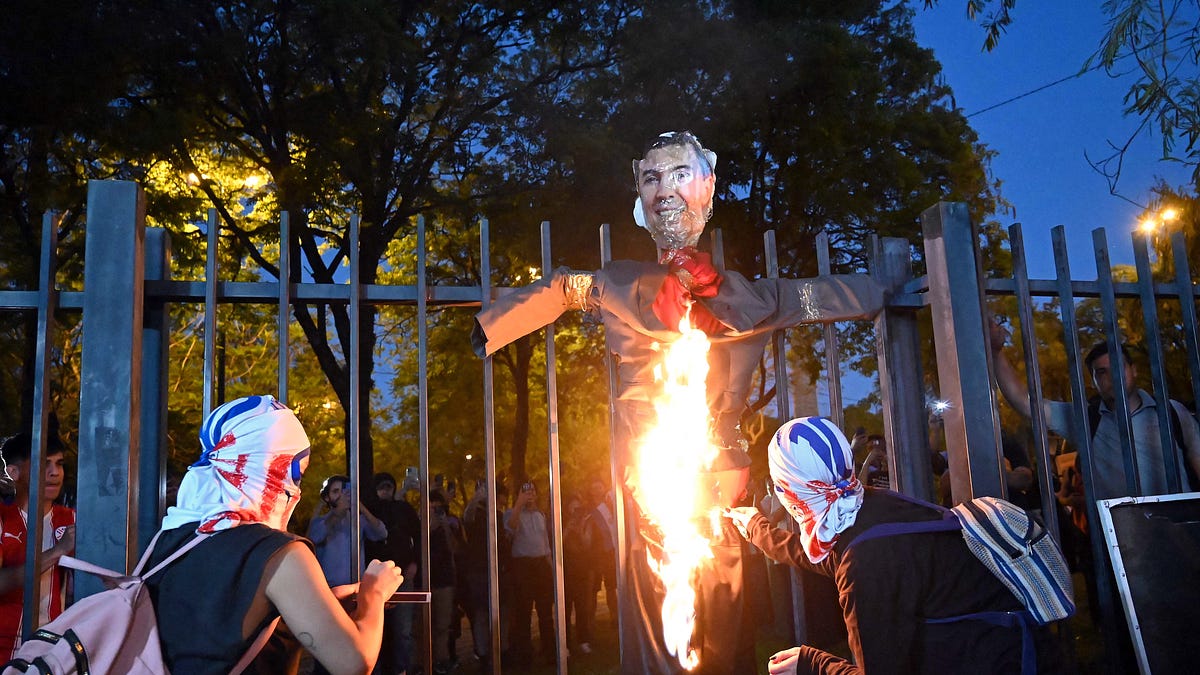
Trump threatens Iran as UNRWA says 94% of Gaza needs shelter assistance
Global Instability and Domestic Shifts Mark a Volatile November The geopolitical landscape fractured further this Friday as President...

Thomas Markle Sr. faces federal charge for child abuse material
Federal Agents Arrest Thomas Markle Sr. in Florida Thomas Markle Sr., the 82-year-old father of the Duchess of...