
Mohammad al-Saadi allegedly used coded phone calls to his family in Iraq to orchestrate a terrorist attack targeting U.S. bombers at a British military base, according to a federal indictment secured Tuesday.
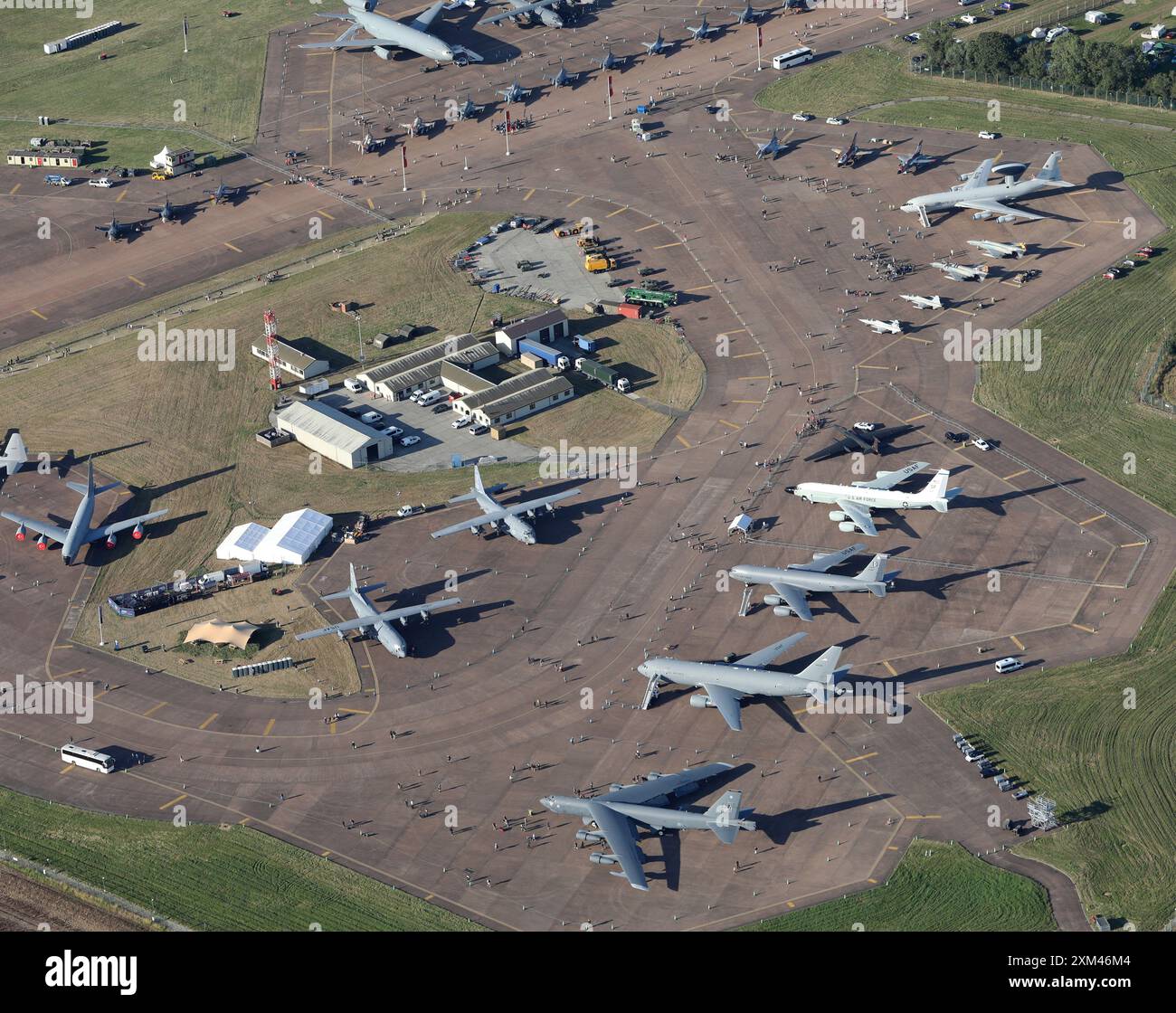
The superseding indictment from the Southern District of New York alleges that al-Saadi, a dual Iranian-Iraqi citizen, managed the logistics of the plot while held in solitary confinement at the Metropolitan Detention Center in Brooklyn. The target was Royal Air Force Base Fairford, a critical site for U.S. military operations. The details emerged following a security scare in late September that had previously remained largely unexplained.
“There were some threats and rather than tempting the enemy, we’ll capture the enemy and beat the enemy,” President Trump said at the time of the incident, according to the New York Post. The President said that the U.S. military moved a dozen B-1B Lancer bombers to other airports to mitigate the risk during the heightened period of tension.
The investigation into the plot at RAF Fairford has connected a series of violent incidents across Europe to a single network. Federal prosecutors allege the trio of plotters—which includes al-Saadi and two co-defendants, Mohsen Mohajeri and Mohammad al-Hassani—are linked to the Islamic Revolutionary Guard Corps (IRGC) and the Iraqi militia group Kata’ib Hizballah.
Coded messages and logistics in the UK
The indictment details how al-Saadi allegedly used his mother and sister as unwitting or complicit messengers to bypass prison restrictions. In recorded jailhouse calls throughout June and July, al-Saadi reportedly asked his sister for updates on “work.” When he inquired if certain tasks had been canceled, his sister allegedly responded that “it isn’t cancelled,” the New York Post reported.

The operational timeline escalated sharply in late September. Just three days before British police disrupted the plot on Sept. 27, al-Saadi allegedly asked his relatives about al-Hassani’s status. After being told his comrade had been moved to the “International Section,” al-Saadi allegedly told his family to “give him [al-Hassani] money so we can do it,” according to the court papers.
Organizers prepared extensively in the United Kingdom to execute the attempted strike. Prosecutors allege that al-Saadi directed associates to conduct video surveillance of the RAF Fairford base and to acquire specific materials for an explosive device. These supplies allegedly included:
- Vans decorated to resemble fuel or swimming pool business vehicles
- Barrels of fuel
- Chemical accelerants, specifically potassium chloride
- Metal intended for use as shrapnel
On Sept. 26, three vehicles were allegedly driven toward the base. While two were stopped at a roadblock, all three were eventually seized by British authorities the following day. Although British police arrested seven men following the security scare, they were later released on bail, a decision that drew public condemnation from President Trump.
A pattern of violence across Europe
This attempted attack on the UK base is part of a broader wave of instability. The indictment alleges that the Iran-backed group organized 18 terrorist attacks across Europe earlier this year, following U.S. and Israeli strikes on Iran in February.
These incidents included a stabbing attack in London against two Jewish men, one of whom is a U.S. citizen, and an attempt to burn down the Bank of New York Mellon in Amsterdam.
Al-Saadi has maintained his innocence, attempting to frame his actions through the lens of a political conflict. “I’m not a criminal. … Our children are being killed by your rockets,” al-Saadi said during a June hearing.
The legal battle over his communication methods is ongoing. While the Justice Department sought to limit his family calls to once per month due to the use of “coded language,” Judge Colleen McMahon expressed skepticism regarding the government’s specific claims in a November 4 ruling.
“The Government’s argument about defendant’s using coded language during his video calls with family members to communicate with his FTO confederates is vague and does not appear to be linked to discrete criminal planning or conduct,” McMahon wrote. “The Court needs to hear more.”
The conditions of al-Saadi’s confinement also remain a point of contention for his legal team. Andrew Dalack, al-Saadi’s federal defender, noted in a Tuesday court filing that his client was held in an “elaborate and highly restrictive shackling system” during a recent meeting.
The filing said that al-Saadi was restrained by leg irons and front handcuffs affixed to a chain wrapped around his stomach, which prevented him from moving his arms or hands.
It remains unclear whether the other two alleged conspirators, Mohsen Mohajeri and Mohammad al-Hassani, are currently in custody.

No. 9 Tennessee Faces Texas A&M in Crucial SEC Road Matchup
No. 9 Tennessee faces a critical road test against Texas A&M this Saturday at 3 p.m. Eastern Time....

Oregon Progressives Gain Power to Push Wealth Tax and Policy Shifts
Oregon progressives roughly doubled their presence in the House and Senate during last week's election as the Democratic...

Why Beating Michigan Is the Only Nonnegotiable Left for Ohio State
In a column for Land-Grant Holy Land, a contributor argues that while Ohio State has three games remaining...

Proposed SNAP Rule Changes Could Impact Nevada Families and Retailers
Federal regulators are moving to tighten how families qualify for food assistance, a decision that could strip nutrition...