Flexential Salt Lake City – Downtown: Mapping Utah’s Digital Infrastructure
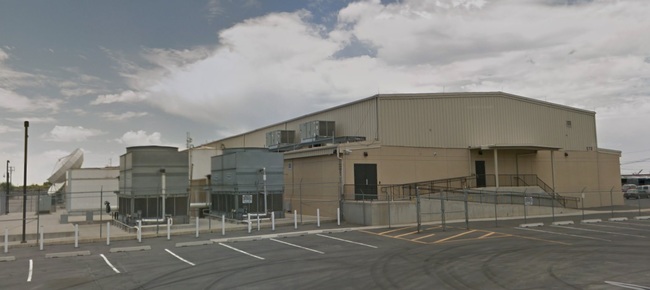
The rapid expansion of the digital economy in the American West has turned Salt Lake County into a focal point for high-density data infrastructure. Central to this growth is the Flexential Salt Lake City – Downtown data center, a campus that serves as a critical node in the region’s expanding IT capacity. According to data tracked by the Cleanview platform, which catalogs infrastructure through public records, utility filings, and satellite verification, the site represents a significant investment in the state’s technical backbone.
For businesses and stakeholders navigating the regional market, the facility’s status is currently listed as operating. Unlike speculative projects that often populate urban planning documents, the Downtown campus has moved past the permitting phase into full utility-backed service. Cleanview maintains granular records on the campus, including individual building specifications and capacity metrics, which are typically cross-referenced against county documents and verified via satellite imagery to ensure the accuracy of the site’s construction timeline.

The Mechanics of Data Center Transparency
Understanding the impact of a facility like the one in Salt Lake City requires looking past the physical structure to the regulatory framework that governs it. Data centers are not merely buildings; they are intensive consumers of power and connectivity. The Cleanview platform utilizes a methodology that synthesizes primary source material—permits, utility filings, and company disclosures—to provide a window into the otherwise opaque world of industrial IT hosting.
This approach addresses a common frustration for community planners and local businesses: the lack of clear data on which facilities are active versus those still in the developmental pipeline. By checking construction progress against consistent satellite monitoring, the platform provides a verified status for the Flexential campus that aligns with the reality on the ground in Salt Lake County.
Infrastructure and Economic Stakes
The presence of a major data center in a downtown core carries specific weight for the local economy. Beyond the immediate construction jobs associated with building out server capacity, these facilities dictate regional utility demand. As the state of Utah continues to evaluate its energy infrastructure, the power and IT capacity requirements of facilities like the Flexential Downtown campus become central to long-term planning.
The facility’s placement within Salt Lake County allows for lower latency connections for businesses operating within the Intermountain West, a key driver for companies choosing to house their data locally rather than relying on coastal hubs. While the facility provides this essential service, it also necessitates a constant dialogue with local energy providers to ensure that the power grid can sustain the high-density load required by modern server racks.
For those looking to monitor the broader landscape of Utah’s digital footprint, the data center is part of a larger network that includes facilities in Provo, St. George, Ogden, and Cedar City. Each site serves as a piece of a distributed architecture, designed to provide redundancy and reach for a client base that demands constant uptime. As the industry evolves, the reliance on transparent, verified reporting—such as the records maintained by Cleanview—becomes the primary tool for analysts and civic leaders to track how these massive infrastructure projects shape the future of the state’s urban and economic development.
AES Nashville 2026 Brings New Gear and Music Legends to Music City
Nashville hosts a successful AES North American convention The Audio Engineering Society successfully moved its annual North American...

MIAA High School Football Championships to Move From Gillette Stadium
Gillette Stadium will not host the 2026 MIAA football championships The tradition of high school football state championship...

Providence College Leadership Celebrates CCNE Nursing Accreditation
“Accreditation affirms the excellence of the nursing education offered at PC and marks a significant achievement for one...

Portland City Council Approves Opioid Settlement Funds for Riverside Winter Warming Shelter
Portland City Council approves industrial park warming shelter as winter approaches The Portland City Council has voted to...