
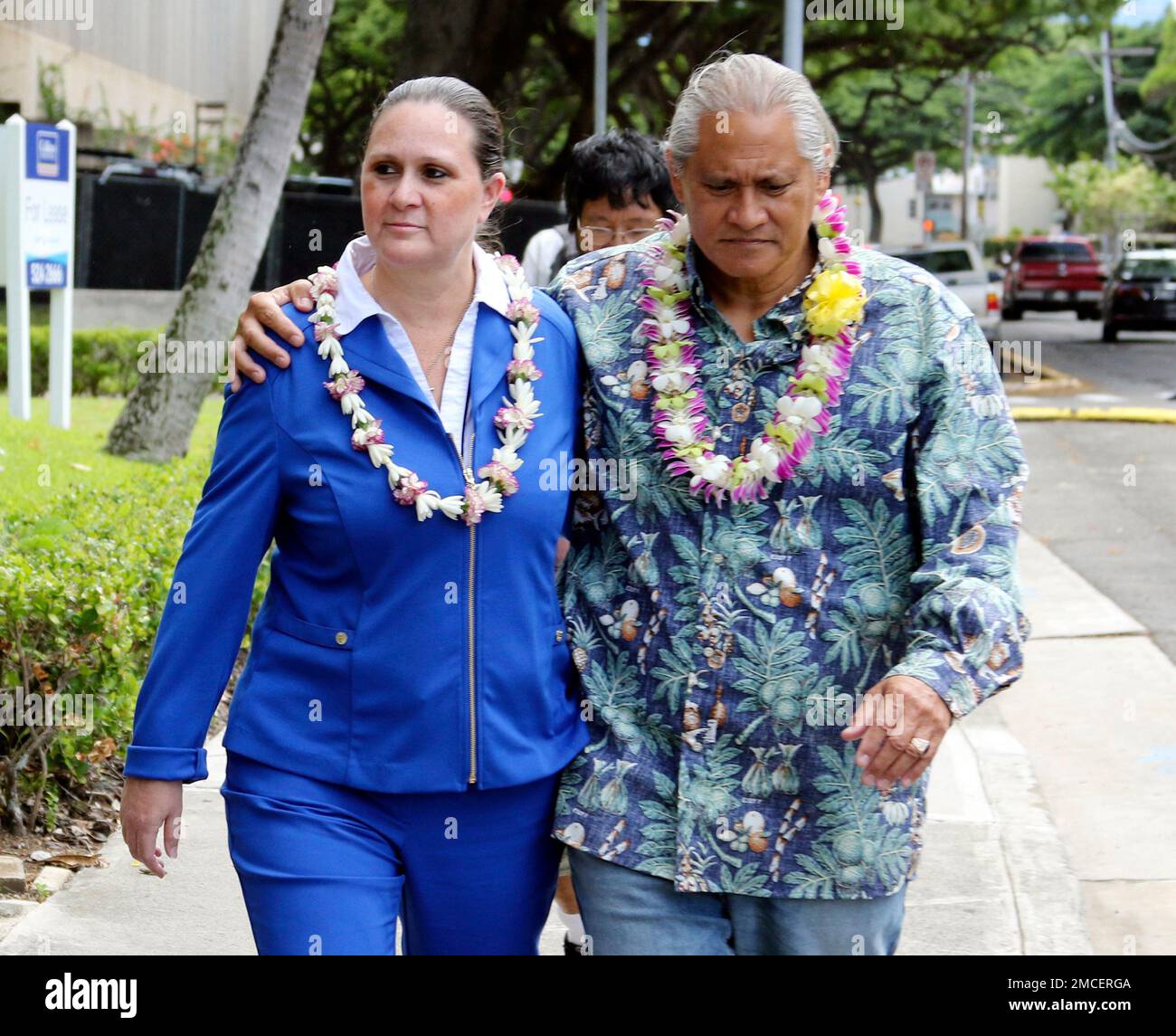
Katherine Kealoha, the former deputy city prosecutor whose conviction once shook the foundations of Honolulu’s legal and law enforcement community, is set to leave federal prison this month.
According to reporting by Hawaii News Now, Kealoha will transition from the medium-security federal prison in Victorville, California, to a halfway house in the Bay Area next week.
This move comes years ahead of the original 13-year sentence handed down for her roles in a sprawling conspiracy involving fraud, obstruction of justice, and the abuse of her position of authority. While the shift marks a change in her custody status, it is a standard procedural step for federal inmates rather than a judicial reduction of her original term.
The Mechanics of a Shortened Term
The path to this early transition involves a combination of time-served credits and policy incentives that are baked into the federal prison system. Since the federal government abolished parole years ago, inmates rely on specific administrative benchmarks to reduce their time behind bars.
Katherine Kealoha, the former high-ranking deputy city prosecutor convicted of fraud, conspiracy and obstruction, will be moved this month from a federal prison to a halfway house years before her 13-year sentence is up. ⬇️ pic.twitter.com/X0NHLFDipq
Kealoha’s case highlights how these factors accumulate. Having been detained immediately following her conviction in July 2019, she accrued 17 months of credit before her formal sentencing in November 2020. The federal system grants two months of credit for every year served for good behavior, shaving another 26 months off her sentence. Additional time was earned through the First Step Act, which rewards inmates for completing educational programs and assisting others.
Victor Bakke, a defense attorney and former deputy city prosecutor, explained that these mechanisms are designed to facilitate re-entry. “In the federal system, they do not have parole anymore,” Bakke told Hawaii News Now. “So all of these credits that she’s getting are standard credits that are issued by the prison.”
A Legacy of Public Corruption
The gravity of Kealoha’s crimes remains a defining chapter in local judicial history. In June 2019, she was convicted alongside her husband, former Honolulu police chief Louis Kealoha, and two other police officers.
The trial revealed a scheme in which the deputy prosecutor stole large sums of money from her grandmother, Florence Puana, and two children under her guardianship. The police officers involved were found guilty of participating in a cover-up to protect the Kealohas.
Alexander Silvert, the retired federal public defender who was instrumental in bringing the scandal to light, views the transition to a halfway house as a necessary, if difficult, reality of the penal process. “The purpose of a halfway house is to provide that transitional period so when you are released back in the community, you’re not just left on the street,” Silvert said.
Silvert also pointed out a logistical hurdle for those returning to the islands: Hawaii no longer maintains a halfway house for federal prisoners. This reality means Kealoha’s transition, at least initially, must occur on the mainland.
The Road to Full Release
Following her year-long stay at the halfway house, Kealoha will transition to home confinement. This period of restricted liberty will continue until July 24, 2029, which serves as her official release date. Even after that date, she will remain under supervised release for three years.

The transition is not an immediate return to normalcy. As Silvert explained, the oversight remains stringent. “As you demonstrate and prove yourself to the probation officer, those restrictions get lighter and lighter as you transition into your full freedom of supervised release, where you just simply have to follow general rules and guidelines,” he said.
As Bakke observed, “When you take somebody out of the community for six, seven, 10 years, you can’t just throw them out on the streets. So all of these things serve purposes for the system and for the defendant as well to be successful.”
Keep reading
Inspired by Networks Found in Nature, Engineers Design Stronger, More Resilient “Metamaterials
The procedure can be used to build impact-absorbing materials like helmets and armor, alongside acoustic lenses that efficiently...

Wilde-Stein Club and the 25-Year History of the Maine Symposium
Wilde-Stein club founders at the University of Maine in Orono expected resistance when they organized in October 1973,...

Jesse Minter Discusses Ryan Neuzil’s Role and Chargers Matchup
Facing the Los Angeles Chargers on Monday night brings complex emotions for Baltimore Ravens defensive coordinator Jesse Minter...

The Parole Project Has Supported 738 Formerly Incarcerated People
“Over 730 men and women who’ve come home now through our program, the vast majority of them have...