
Sixty-six years ago this month, four federal marshals walked a six-year-old girl named Ruby Bridges into William Frantz Elementary in New Orleans while a white mob screamed outside.
The image feels like settled history. It is not.
Roughly half of the 750 displaced Black students found no schooling at all. No private alternatives were built for them.
That segregation‑academy model became a template that spread across the South. Some of those academies are still operating today.
The 2026 playbook looks familiar
The civil‑rights enforcement offices that monitored anti‑discrimination compliance in schools have been dismantled.
Eleven states passed legislation in 2026 alone increasing funding or expanding eligibility for school vouchers. Ohio spent over $1.17 billion on private school vouchers this fiscal year. Texas is pushing to double its voucher program to $2 billion. Florida’s education commissioner wants to remove the cap on its $4.5 billion voucher system entirely.
You do not need the National Guard when you can defund the public schools instead. You do not need a mob when you can just pass a budget.
The counter‑archive hip‑hop built
You can make it harder to access. You can starve the institutions that deliver it. But you cannot stop a culture from teaching itself.
The Pulitzer Prize committee understood that by 2018.
Quieter ones. Ones that did not require a single photograph.
What we owe the six‑year‑old and the nine
He went on to serve as Assistant Secretary of Labor under President Carter. Ruby Bridges went back to William Frantz Elementary for second grade and kept going.
These were children. Ruby was six. The Little Rock Nine were teenagers. They walked into buildings surrounded by hostile crowds and armed soldiers, and they went to class. Then they went home, and they came back, and they went to class again.

The culture has never stopped building the counter‑archive. “You Must Learn” in 1989. “They Schools” in 2000. Kendrick’s entire To Pimp a Butterfly as a Compton civics course in 2015.
William Frantz Elementary opened in 1937 as an all‑white school in the Deep South, designed in understated Art Deco by architect E.A. Christy.
After Ruby Bridges integrated it in 1960, the building survived Hurricane Katrina’s five feet of floodwater and a $23.5 million rehabilitation that restored her first‑grade classroom to its 1960 appearance. It was listed on the National Register of Historic Places in 2005, and a statue of Bridges was unveiled in the courtyard in 2014.
And whether they are right.
Related reading

Oberlin Play Uses Disney’s Lincoln Animatronic to Interrogate Price of Creative Ambition
An Oberlin College student production staged this past week used the creation of Disney's Abraham Lincoln animatronic to...

University of Alaska Fairbanks Athletics: No. 6 Alaska Nanooks Rifle Team Hosts No. 9 Air Force, No. 8 Kentucky This Weekend
The No. 6 Alaska Nanooks rifle team hosts No. 9 Air Force and No. 8 Kentucky this weekend...
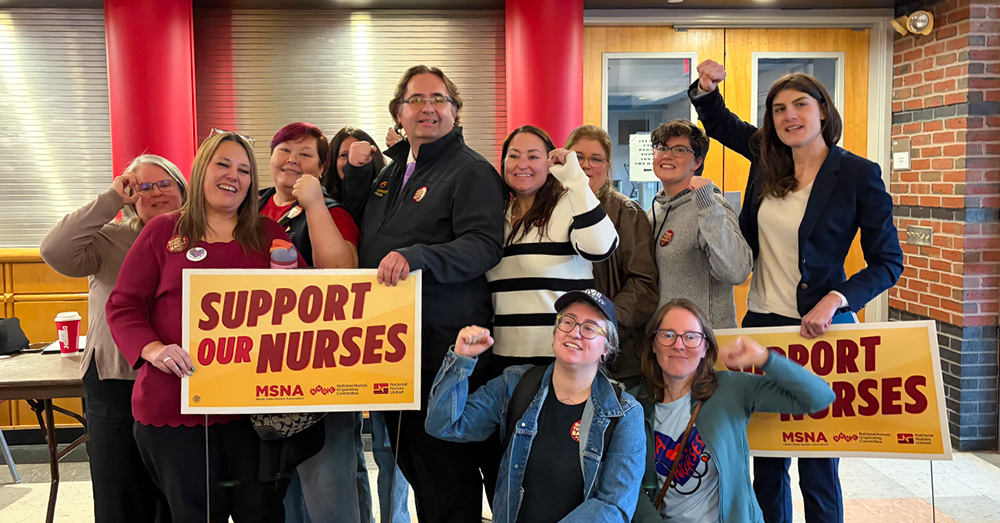
Six Nurses Tell Maine Regulators Firings Degraded Care, Violate Certificate of Need
Six nurses told Maine health regulators Thursday that Prime Healthcare’s firing and suspension of experienced staff has degraded...

Hernshaw Farms Seeks Community Help for Underground Mushroom Operation
"If you or someone you know has access to large subterranean spaces, let them know about Hernshaw Farms!"...