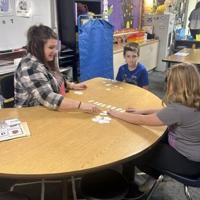
A New Classroom for Iowa Students with Autism
The George-Little Rock School District in Iowa has launched a new Level 3 special education program for elementary students with autism and other special needs, as reported by nwestiowa.com.
This is not just another classroom. It is a targeted response to a persistent challenge in education: providing intensive, individualized support for students who learn differently. The program represents a deliberate effort to balance specialized instruction with the vital goal of social inclusion.
A Dual-Track Approach to Learning
The program’s core philosophy is a dual-track approach. Elementary teacher Kim Dykstra, who works within the program, explains that students receive their foundational instruction in math, reading, and writing within the specialized classroom. This is where they get the focused, personalized attention they require.
But the design intentionally pushes them back into the general education fold for non-academic classes and, when possible, academic ones.
“They get a lot of that instruction in math, reading, writing, any kind of academics,” Dykstra said. “We hit a lot of social skills too, adaptive behavior, being able to interact with peers. They just need to be pulled out and work on that more than the other students so that’s kind of what we do here.”
This model ensures crucial social experiences like PE, music, lunch, and recess are integrated with their general education peers. For subjects like science and social studies, where the curriculum can be more accessible, the program also strives for inclusion.
“We like to get them in the classrooms for science and social studies when we can,” Dykstra said. “Reading and math they’re in because those skills there’s too big of a gap in between there, but anytime we can get them in for any activities then we push them into gen-ed with somebody to help them.”
“Their instruction is designed especially for them so we’re meeting them where they’re at right now. That helps their skills grow I think quicker than it would if they were in a gen-ed classroom.”
Individualized Plans for Every Student
The program is built on a foundation of individualization. Every student in the Level 3 program has a tailored Individualized Education Program (IEP), a legally mandated plan that outlines specific learning goals, services, and accommodations.
“All of them have an IEP, so it depends on the minutes that are listed in there what we spend on,” Dykstra said. “They all have math and reading. They all have an adaptive goal social skills so we just go based on that.” This ensures instruction is not a one-size-fits-all model but a responsive framework designed to meet each child where they are.
Currently serving seven students in grades one through five, the program is set to expand to include kindergarten students in the future, indicating a forward-looking commitment to supporting young learners with special needs as soon as they enter the school system.
Specialized Training and Resources Power the Program
A key element of the program’s success is its reliance on specialized training and external resources. The school district has partnered with the Northwest Area Education Agency (AEA), a regional support agency that provides critical expertise and materials.
This partnership is a lifeline for teachers and students. The AEA provides access to specific, evidence-based curricula and professional development. Dykstra highlighted two key training components: TEACCH for classroom structure, and CPI training for helping students regulate their emotions and behavior.
“Along with the TEACCH training we use for classroom structure, the Northwest AEA is a huge asset in finding us additional resources, curriculum, and trainings that we use,” she said. “CPI training is something we use to help regulate students, and that is offered through the AEA. They also provide support with our academic curriculum and adaptive goals and activities.” This structured support system is essential for creating a stable, predictable, and effective learning environment.
For Dykstra, the work is deeply rewarding. It’s a profession measured not by standardized test scores but by incremental, monumental victories.
“People should know how great it is and how much the kids learn,” she said. “They kind of see that anything small that they can do, it’s a huge victory in our room and that makes the job worth it.”
Community Tackles a National Challenge
The introduction of the Level 3 program in George-Little Rock reflects a broader, nationwide conversation about the best ways to educate students with disabilities. This conversation has evolved significantly since the passage of the Individuals with Disabilities Education Act (IDEA) in 1975, which mandated a free and appropriate public education for all children. While the debate continues over funding, mainstreaming, and the level of support required, this program offers a concrete example of one community’s attempt to find a balance.
Worth a look

Catastrophic Flash Floods Trigger Water Rescues and Evacuations in Georgia and Tennessee
Life in McCaysville, Georgia, and Copperhill, Tennessee, changed dramatically overnight. CNN reported that the two towns on the...

BBC Two to Air Rockstar Chefs Documentary Tonight
Rise of the Rockstar Chef: How Three Brits Changed What's for Dinner Turn your television to BBC Two...

South Carolina’s 2nd District Race Close Enough for Recount
Republican incumbent Joe Wilson maintains a lead of approximately 3,000 votes over Democratic nominee Zyon Khalifa in the...

RI Working Families Party sees major election growth in power
Working-Class Champions Win Across Rhode Island “Rhode Island is at an inflection point, and tonight voters chose leaders...