Ghana has officially transitioned from advocacy to enforcement regarding gender equity and disability inclusion, anchoring social protection as a legal right through new legislation, fully operational implementation frameworks, and compliance reporting across 47 key public and private institutions.
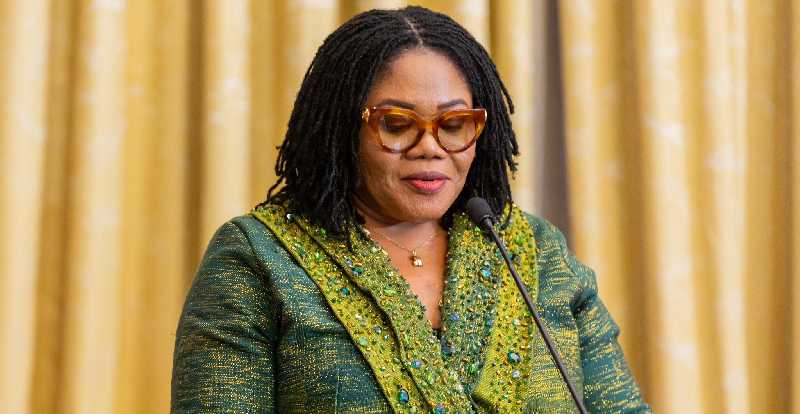
The shift represents a departure from traditional reliance on charity and voluntary goodwill toward structured legal entitlements. According to the Government Accountability Series presentation in Accra, the implementation of these measures is supported by newly enacted laws, specific institutional mechanisms, and mandatory reporting protocols designed to hold organizations accountable. Dr Agnes Naa Momo Lartey, Minister of Gender, Children and Social Protection, made the statement at the Government Accountability Series in Accra on Wednesday. The series, organised by the Presidency Communications Bureau, is aimed at deepening transparency and accountability in governance.
Legislative Frameworks and Enforcement Mechanisms Under Act 1148
The legal foundation of this enforcement shift rests on the passage of the Social Protection Act, 2025 (Act 1148), and its accompanying Regulations, L.I. 2521, in 2026. These legal tools establish the Ghana National Household Registry as the sole targeting mechanism for welfare distribution while creating a dedicated Social Protection Fund. Dr Lartey said the shift had resulted in significant gains for women, Persons with Disability (PWDs) and older persons, supported by new legislation, regulations and institutional mechanisms.
On the gender equity front, the implementation framework for the Gender Equity Act, 2024 (Act 1121) is fully operational. The Minister for Gender, Children and Social Protection announced that the Gender Equity Committee and Secretariat had also been established and were fully operational. Speaking at the Government Accountability Series at the Presidency in Accra yesterday, Dr Lartey said the accompanying regulations, Legislative Instrument (L.I.) 2522, had also matured in June 2026. According to her, 47 institutions, including ministries, municipal and district assemblies and private-sector organisations, had submitted compliance reports.
“The Ministry has sensitised 2,321 stakeholders on their obligations under the Act, and 47 institutions, including ministries, metropolitan, municipal and district assemblies, and private sector organisations, have already submitted compliance reports,”
Dr Agnes Naa Momo Lartey, Minister of Gender, Children and Social Protection
These institutions are now legally obligated to take action on gender equity, with monitoring tools in place to ensure compliance and accountability. The Minister said 37 sensitisation programmes had also reached almost 11,000 people on sexual and gender-based violence, child marriage and harmful cultural practices.
Disability Inclusion Reforms and Technological Upgrades in Special Schools
Disability inclusion has advanced alongside gender initiatives. On disability inclusion, Dr Lartey said Cabinet had approved amendments to the Persons with Disability Act, 2006, to align it with the United Nations Convention on the Rights of Persons with Disability, describing the reform as one that the disability community had awaited for years. Financial support has reached 19,760 PWDs who have benefited directly from the Disability Common Fund across 208 metropolitan, municipal and district assemblies. She added that sensitisation programmes on disability-inclusive disaster risk management had been conducted in 11 regions.
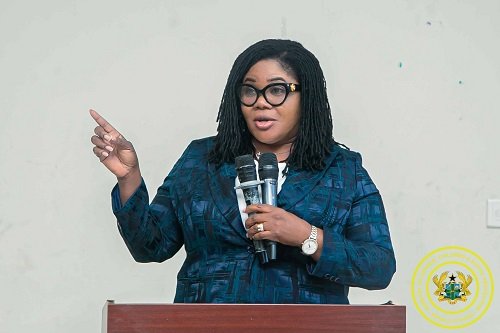
Employment integration is also moving forward. The Ministry, in collaboration with the Ghana Education Service (GES), was formalising the employment of 272 PWD graduates into the GES.
In education technology, the Ministry, working with the Ministry of Communication, Digital Technology and Innovation, through the Ghana Digital Acceleration Project, has also procured ICT equipment for seven special schools. The equipment included desktop computers, laptops, accessible software, Braille displays and embossers, and graphic tablets.
“Installation is complete in three of those schools, with work underway in the remaining four. For students who have never had hands-on access to this kind of technology, this is the first,”
Dr Agnes Naa Momo Lartey, Minister of Gender, Children and Social Protection
Securing Rights for Older Persons and Vulnerable Communities
For older citizens, the Social Protection Act affirmed what previously depended on charity as a legal right to free healthcare and social assistance. The Minister said the Ministry continued to provide welfare services to 50 elderly residents at the Central Destitute Infirmary in Bekwai, which had been fully renovated.
Core safety nets, including the Livelihood Empowerment Against Poverty (LEAP) programme and the National Health Insurance Scheme, remained critical mechanisms for delivering social protection services to vulnerable older persons. As institutional enforcement takes hold across government and private sectors, these regulatory structures aim to ensure that national social policies translate into measurable, legally mandated protections on the ground.
Ethiopia to Double Electricity Exports to Kenya to 400 MW by December
Kenya Power renewed its supply agreement with Ethiopian Electric Power in July 2026 to double electricity imports from...

Man in 60s Dies After Car and Bus Collision on N25 in County Waterford
A man in his 60s died late Sunday when his car collided with a bus on the N25...
Delhi Court Quashes Order Refusing FIR Against Sonia Gandhi Over Voter List
A Delhi court on Monday set aside a magisterial ruling that had refused to order a police investigation...

Remco Evenepoel Wins Fourth World Time-Trial Title to Tie All-Time Record
The 26-year-old reigning Olympic champion delivered a masterclass on the Canadian circuit, asserting his dominance from the opening...