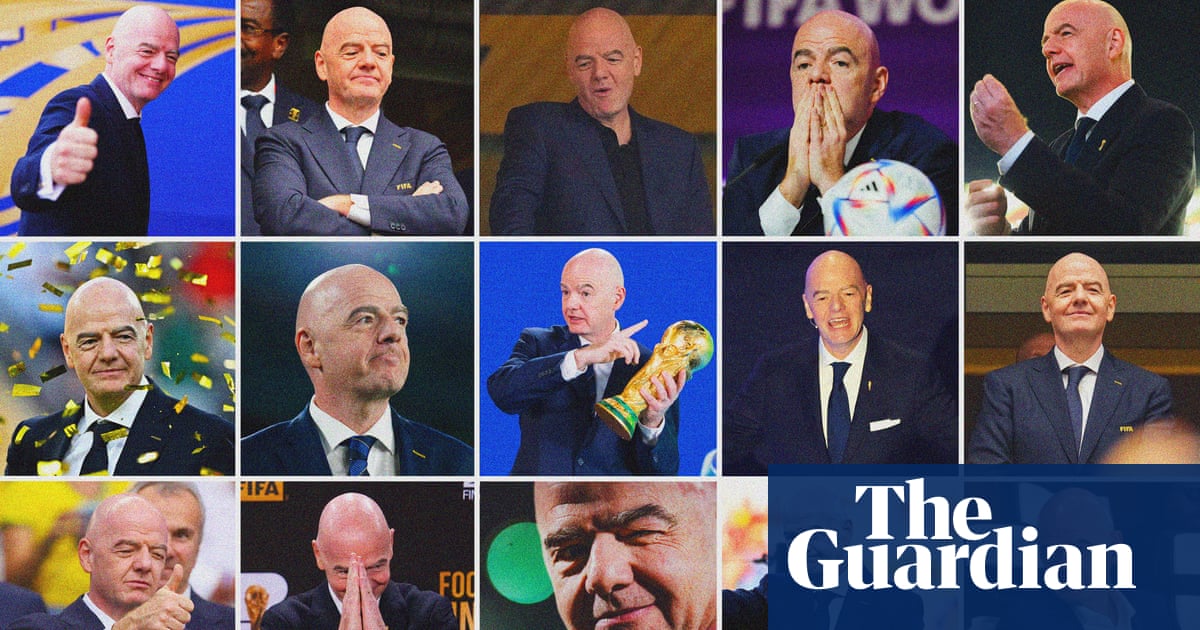
FIFA President Gianni Infantino faces fierce re-election resistance from global confederations following a scrapped World Cup private sell-off plan. Despite opposition from UEFA, AFC, and New Zealand Football, Infantino has secured backing from Donald Trump, African and South American bodies, and Andrew Giuliani ahead of the March 2027 vote in Rabat.
Continental Divide: How the World Football Map Split Over Infantino
What began as a contentious commercial proposal has hardened into a full-scale political stalemate across international football.
The controversy centers on Infantino’s previous push to sell approximately 20 percent of a proposed new entity called the FIFA Forward Enterprise (FFE). That structural vehicle was designed to oversee the commercial and operational facets of the World Cup and other tournament fixtures. Among the prospective investors lined up for the project was Joshua Kushner, brother of Jared Kushner and a member of the group that recently agreed to purchase the Los Angeles Lakers. Public outrage over monetizing the tournament forced Infantino to scrap the sell-off idea in late July.
Yet the political damage was already done. UEFA, the Asian Football Confederation (AFC), and CONCACAF have voiced sharp displeasure with the leadership. UEFA has emerged as the most vociferous opponent, with its 55 member associations united behind potential tournament boycotts if Infantino refuses to step back from running.
Allies and Defectors Across the Global Electorate
While European leadership pushes for a change, Infantino retains powerful backing in other corners of the globe. The Confederation of African Football (CAF) and South America’s CONMEBOL have boldly declared their desire for him to stay on for a third full term.
Individual member associations have also broken ranks with their regional blocs. Mexico, Qatar, the United Arab Emirates, and Grenada have publicly endorsed Infantino. Notably, the Grenada Football Association split from CONCACAF consensus by throwing its support behind the incumbent president.
Conversely, historical alliances are fracturing closer to home for FIFA. New Zealand Football (NZF), the largest federation within the Oceania Football Confederation (OFC), broke away from the regional body’s conciliatory statement by formally withdrawing its support.
New Zealand Football (NZF) withdrew its support for Infantino and called for an independent review of the sell-off plan.
Washington Backing and the Road to Rabat
External political figures have also waded into the fray. Andrew Giuliani, executive director of the White House Task Force for the recently completed World Cup and son of former New York Mayor Rudy Giuliani, dismissed the backlash against Infantino as petty political posturing.

“It’s politics.”
Andrew Giuliani, White House Task Force, via The Athletic
Giuliani added that critics are motivated by jealousy over what Infantino has achieved for the organization, noting that he enjoys the public support of US President Donald Trump.
With a polarized electorate of 211 FIFA members, the fractured opposition needs to secure 106 votes to oust the incumbent. CONCACAF president Victor Montagliani is widely viewed as the most plausible alternative candidate, though he is expected to enter the race only if victory feels mathematically attainable.
The next critical inflection point arrives on November 18, the hard deadline for presidential candidates to formally declare their intentions. Until then, the UEFA-led coalition has just over three months to unite behind a single challenger ahead of the decisive FIFA Congress vote scheduled for March 2027 in Rabat.
Keep reading
- UK Temperatures Forecast to Reach 25°C Following Southerly Airflow
- UK Police Arrest Five Men Near RAF Fairford Under Explosives Act
- Why Larry Ellison's Scrapped $7.5 Billion Stock Sale Was Never a Secret (daybreakwire.com)
- Andy Burnham faces a voters' revolt if he ditches state pension triple lock (newsarchyuk.com)
UK Temperatures Forecast to Reach 25°C Following Southerly Airflow
Temperatures across parts of the UK are set to reach 25°C on Tuesday, driven by a strong southerly...

UK Police Arrest Five Men Near RAF Fairford Under Explosives Act
Counter-terrorism police in the United Kingdom are leading an active investigation after armed officers intercepted three suspicious vans...
Andy Burnham Proposes NHS-Style Social Care Service for England
Andy Burnham has outlined a vision for a universal social care system in England that would be free...

LPU Students Vandalize Campus and Block Highway Over Rape Rumor
Students at Lovely Professional University in Punjab vandalized campus property and blocked a national highway late Saturday following...