“There’s nothing that binds us forever with the DA in the Government of National Unity,” said ANC secretary-general Fikile Mbalula.
Tensions between the two governing partners are escalating following local government election coalition talks. In those negotiations, the ANC formed alliances primarily with ActionSA, the EFF, and MK Party, effectively sidelining the DA. The resulting clash between national and local interests has cast doubt on the stability of the GNU.
DA considers departure
DA leader Geordin Hill-Lewis said on Monday that leaving the GNU is “never off the table.”
“As for our national relationship, obviously there will be voices that question the stability of that relationship. We’ll have to consider that very carefully,” Hill-Lewis said.

According to Sunday Times, Hill-Lewis believes ActionSA and the ANC negotiated in bad faith, suggesting a coalition deal was “stitched up” between Herman Mashaba and the ANC’s Panyaza Lesufi. He alleged that Mashaba made unreasonable demands, including requiring the DA to drop its Tshwane mayoral candidate Cilliers Brink and Johannesburg mayoral candidate Helen Zille to secure ActionSA’s support.
“The unreasonable demands made by Herman Mashaba were, I think, designed deliberately to make it impossible for us and to give him cover to do a deal with the ANC,” Hill-Lewis told Sunday Times.
DA opposed ANC court challenge over candidates
The ANC’s frustration grew in October when the DA opposed a legal challenge by the party to the Electoral Commission of South Africa (IEC) to exclude 181 of its candidates from the ballot. The DA sought to be admitted as a friend of the court to argue against the ANC’s attempt to reinstate those candidates, but the Constitutional Court ultimately ruled in the ANC’s favour.
Mbalula said the party would have to review the DA’s participation in the national coalition, questioning the DA’s commitment to the GNU’s founding principles. While the ANC has devolved much of the local negotiation process to provincial structures, the fallout has manifested in public disruptions.
In Nelson Mandela Bay, an ANC-led filibuster blocked the election of a DA mayor, and in Emfuleni, a bloc including the ANC, EFF, SACP, and MK disrupted the first council sitting following a DA-led coalition agreement.
Ekurhuleni deserves better than a coalition that puts political interests ahead of residents. The ANC, ActionSA, EFF and MK coalition is a recipe for more political chaos, corruption and a breakdown in service delivery. The DA will not sit back and watch Ekurhuleni being… pic.twitter.com/KKg7xZzAGt
A framework for stability
On November 22, the DA published a “stability framework” proposal to the ANC to secure governments in 137 hung municipalities. The proposal, which has not yet received a response, suggests the ANC would lead 93 councils, the DA 24, and the IFP 20, based on the principle that the largest party should lead the coalition.
“Our offer would strengthen the Government of National Unity, cementing stability at every level of government throughout the country, and offering the chance for nation-wide progress,” the DA said in its announcement.
SABC News reported that Hill-Lewis is taking a measured approach to the DA’s future in the GNU.
“I don’t think there’s any rush… we’re going to take a break and reassess, think carefully about this. It has profound implications for the country, for the economy, so we must think really carefully about that,” Hill-Lewis said.
The politics of resentment
The struggle for control in Gauteng has drawn scrutiny from analysts. Speaking to The Citizen, Piet Croucamp suggested there was a good reason Helen Zille’s involvement broke up coalitions in Johannesburg.
Daniel Silke told The Citizen that the politics of grievance and resentment were playing out over serving voters in Gauteng, where the DA won the largest share of votes in all three metros but was frozen out of government.
As the parties face an unresolved future, both have expressed a reluctance to discuss the matter further publicly. ANC national spokesperson Mahlengi Bhengu-Motsiri said, “We don’t take kindly to such threats.”
The Government of National Unity operates on consensus democracy principles, typically lacking a formal opposition as major parties are included in the coalition. A partner party can leave the GNU, as demonstrated by the DA’s statement that departure is “never off the table,” though this requires careful consideration due to profound national implications.
“We do not negotiate in the press,” said DA federal council chairperson Ashor Sarupen, when asked about a potential review of the DA’s participation in the GNU.
Keep reading

Five Early Dementia Warning Signs Experts Say Not to Overlook And When To See A GP
Up to 4,000 people receive a dementia diagnosis every year in Ireland, where roughly 69,949 individuals currently live...

GP Dr Ann Nainan Warns Weight-Loss Medication Users About High Fat Sugar Processed Foods
Thousands of adults across Ireland are now using weight-loss medications, and a GP has issued a warning about...
Netanyahu Lawyers Accept Herzog’s Mediation Offer After Judges’ Remarks
“In light of the judges’ remarks, there is no doubt that the trial must be concluded as soon...
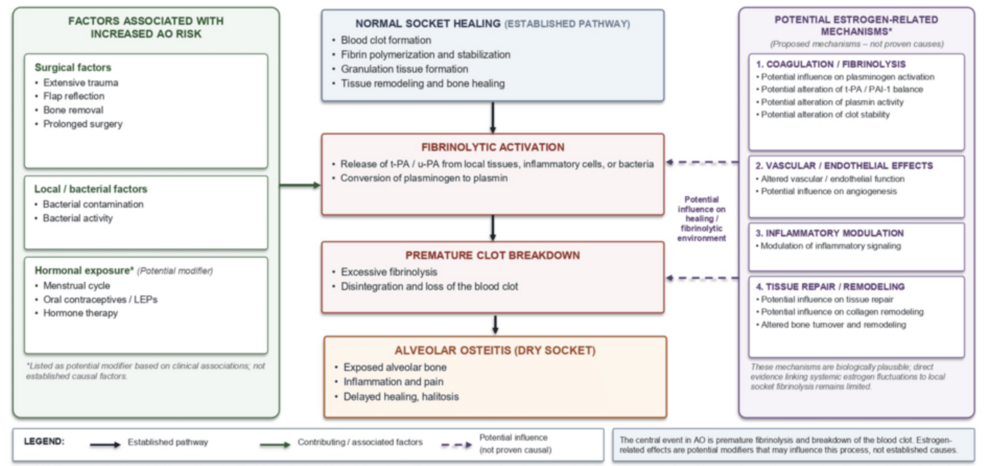
Estrogen and Dry Socket Risk: Narrative Review Synthesizes 15 Studies on Menstrual Cycle, Contraceptives, and Alveolar Osteitis After Mandibular Third Molar Extraction
Dry socket strikes up to 30% of patients after complex lower wisdom-tooth removal, compared with 1% to 5%...