
Newark Bay Bridge Breakground: A $7 Billion Bet on New Jersey’s Future
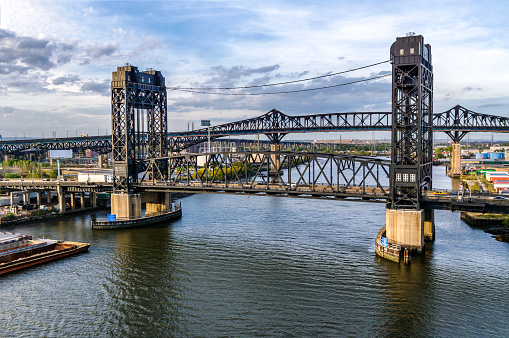
Standing on the grounds of the former Marist High School in Bayonne, Governor Mikie Sherrill didn’t just break ground today—she broke with New Jersey’s recent history of deferring its most critical infrastructure needs. The event, covered by Hudson County View, marked the start of a nearly $7 billion project to replace the Newark Bay Bridge, a structure so vital and so deteriorating that its failure would be catastrophic. “We can’t afford to wait, and risk the worst-case scenario,” Sherrill said, directly referencing the 2007 Minneapolis bridge collapse that killed 13 people and cost commuters $400,000 a day in delays. This is no small repair; it’s the largest single infrastructure project in the history of the New Jersey Turnpike.
The Artery That Connects a State
The numbers tell the story of the bridge’s importance. More than 65,000 vehicles cross the Newark Bay Bridge every single day. Over the course of a year, that figure balloons to 31 million vehicles. This single structure is the central artery for the ports of Hudson County, carrying millions of dollars worth of goods from docks to stores across the state and beyond. “It connects us, getting millions of New Jerseyans to work, to school, and back home again,” Sherrill stated. For 70 years, this steel arch bridge has borne that weight, but time and traffic have taken a heavy toll. The governor called its condition “dire,” a word rarely used about public assets unless the evidence is overwhelming.
There is a human cost to this aging infrastructure, and an economic one. The bridge is one of over 400 in New Jersey that need a major fix or full replacement. The state’s most important transit infrastructure is, in many cases, more than a century old. The risk is not abstract. A collapse here would halt the movement of not just commuters, but the lifeblood of the regional and national economy. As Sherrill put it, the cost of a potential collapse would be an “immense loss of life, as well as the disruption of livelihoods.”

“The Newark Bay Extension Bridge was built in 1956. When it was opened, it was the most advanced engineering of that age, and we are about to replace that with the most advanced bridge project for the 21st century.”
Kris Kolluri, Executive Director of the New Jersey Turnpike Authority, put the project’s scale into perspective. Speaking on the 75th anniversary of the NJTA, he called the groundbreaking historic. The new bridge, a cable-stayed design, will be “the gold standard,” he claimed—cheaper, easier, and faster to build than its predecessor, with a projected lifespan of 100 years. This modern engineering feat stands in stark contrast to the bridge it will replace, which was itself a marvel when it opened in 1956. The project is financed entirely through Turnpike debt issuance, with no direct taxpayer or federal funding, a point Kolluri emphasized to show its financial independence.
Jobs, Unions, and the Price of Progress
The project is not just about concrete and steel; it’s about people. Sherrill announced that the bridge replacement will create almost 19,000 jobs, including thousands of union construction jobs. Mike Hellstrom, the Eastern Regional Manager for the Laborers’ International Union of North America, praised the governor’s commitment to a project labor agreement, which ensures local communities have access to good, middle-class careers. Hellstrom said, highlighting her relentless focus on getting major projects done.
This raises the inevitable question of how to pay for it all. When pressed on whether she would continue her predecessor’s three percent annual fare hike, Sherrill was pragmatic. “We are going to make sure that we’re not kicking the can down the road on anything,” she replied, framing the toll increases as a necessary investment to ensure every tax dollar is spent wisely. It’s a politically delicate balance, acknowledging that progress has a price that will be borne by the very drivers who rely on the road.
The plan, however, is not without its critics. While the $6.8 billion program focuses on safety and reliability, some had hoped for more. Kolluri clarified that current plans do not include adding additional lanes from the Newark Bay Bridge to the Holland Tunnel, a key request from local mayors and residents who feared increased traffic and environmental impact. “What we have committed to in this plan… is not to add additional capacity from here to all the way to Jersey City, which was an important ask,” Kolluri stated, a direct acknowledgment of the pushback from community stakeholders.
We broke ground on the Newark Bay Bridge replacement, marking the largest single infrastructure project in the New Jersey Turnpike's 75-year history. This nearly $7 billion investment will create almost 19,000 jobs and deliver a safer, more reliable connection for the thousands… pic.twitter.com/2yca7dgvmt
A Legacy of Building, and a Promise to Finish
“75 years ago when the Turnpike opened, New Jersey was known for building big things,” she reflected, noting the state’s history of constructing the nation’s tallest skyscrapers and biggest bridges. “But somewhere along the way, we stopped. Now we’re bearing the consequences.” Her administration, she declared, is on a mission to “once again make New Jersey a state that builds.” This project, along with the recently completed Portal North Bridge, is the first step in that comeback.
The timeline is aggressive. The two trusses supporting the new bridge are already under construction. Traffic will continue to use the old bridge until the new one opens in 2031. As New Jersey Department of Transportation Commissioner Priya Jain put it, “Let’s get it done.” Let’s get it done on time. Let’s get it done on budget.”
The shadow of the land where the event took place looms over the project. The NJTA acquired the former Marist High School property for $31.1 million through eminent domain, a sale first reported by Hudson County View to have been acquired by the Alessi Organization for just $11.4 million. In March 2023, the New Jersey Comptroller’s Office announced that the city had ignored an Open Public Records Act (OPRA) subpoena related to the land sale. Kolluri declined to comment on the ongoing litigation, but the controversy shows that even the most essential public projects can become entangled in complex legal and financial disputes.
The new Newark Bay Bridge will be a monument to what a state can accomplish when it decides to stop deferring problems and start solving them. It will stand as a promise to the people of New Jersey that their safety and their future are not being kicked down the road for someone else to handle.
Keep reading

James Gates sues OpenAI alleging ChatGPT assisted wife’s plot
A North Carolina man has filed a lawsuit against OpenAI, alleging that its ChatGPT chatbot was used to...

Wyoming girls state swimming championships begin this Thursday
The Wyoming High School girls’ state swimming and diving championships kick off Thursday, Friday, and Saturday in Gillette....

Mitchell Robinson takes on new role as Celtics face early slump
Robinson's Rebound: A New Role for Boston's Center Seven games into the season, the Boston Celtics have their...

WVU Injury Update: Sieg, Weaver-Bomar Trending to Play at Texas Tech
West Virginia Mountaineers Get Key Injuy Boost: S Matt Sieg, WR Armoni Weaver-Bomar Trending to Play at Texas...