Governor Pritzker Challenges FEMA Denial of Illinois Disaster Aid
Governor JB Pritzker formally appealed the Trump administration’s refusal to grant federal disaster relief to Illinois on Thursday, pushing back against a decision that left state officials without an explanation for the denial of resources following severe August storms. Capitol News Illinois reported that the state has now provided updated damage assessments, placing the cost of eligible public assistance at $43 million—a figure that significantly exceeds the $24.9 million threshold FEMA requires for a major disaster declaration.
Gov. Pritzker's office says FEMA has denied federal disaster assistance for Illinois related to August's Derecho storm. But FEMA has approved assistance for Indiana – including Lake and LaPorte Counties.
The original request, submitted by the governor last month, sought federal support for eight counties battered by tornadoes, flooding, and severe winds. While the state initially argued that its collective damage met federal criteria, the agency’s rejection stalled recovery efforts in Champaign, Cook, Ford, Fulton, McLean, Tazewell, Vermilion, and Will counties. The appeal now clarifies that six of those counties, including the densely populated Cook County, individually surpass the required cost thresholds for assistance.
The Disputed Thresholds and Political Tensions
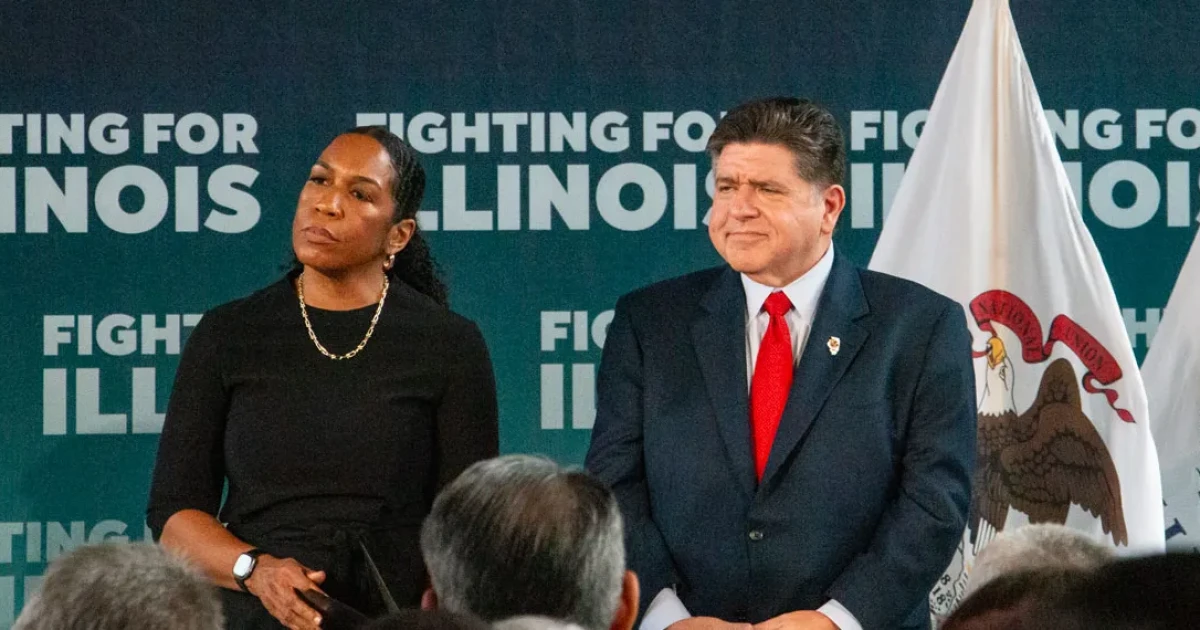
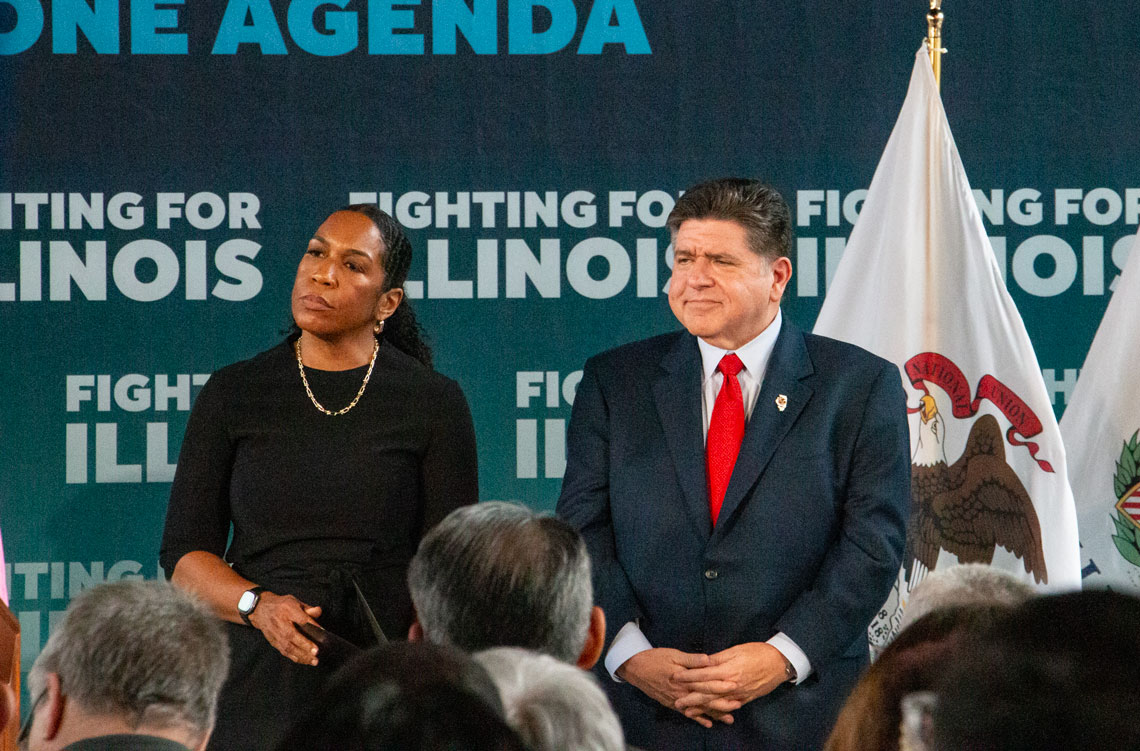
For state officials, the lack of transparency regarding FEMA’s decision-making process has become a primary point of contention. Deputy Governor Bria Scudder noted that the administration’s handling of the request has raised questions about whether political considerations are influencing the distribution of federal aid. “Our challenge has been what’s the standard?” Scudder told Capitol News Illinois. “It seems as though this administration is playing politics with disaster assistance.”
Data suggests that the friction goes beyond a single application. A Politico analysis referenced in the state’s reporting found that during the current administration, disaster requests from Democratic-led states have seen a 23% approval rate, a sharp decline compared to the 89% approval rate for states led by Republicans. Historically, administrations—including the first term of the Trump presidency—maintained approval rates between 70% and 90% regardless of the state’s political leanings. This shift in federal responsiveness is occurring at a time when states are facing increasing pressure to shoulder the financial burden of climate-related emergencies independently.
The Economic Strain on Local Infrastructure
The stakes for Illinois communities are not merely administrative; they are immediate and fiscal. The state has already spent $3.4 million in response to the August weather events, while Cook County alone has incurred costs exceeding $8 million. With insurance claims being denied for many residents, local governments are struggling to bridge the gap between their limited budgets and the rising costs of repairing police stations, fire stations, hospitals, and critical infrastructure like the damaged levy in Fulton County.
Support for the governor’s appeal has crossed party lines, with 18 state lawmakers—including 12 Republicans—submitting statements to the agency. “Local governments cannot be left to pay for the full financial burden of these horrific storms as they recover and repair critical infrastructure and continue to provide the essential services residents urgently need,” wrote Rep. Ryan Spain, R-Peoria. The state’s appeal also highlights that FEMA has already validated these costs through the review of contracts and payments, leaving little room for ambiguity regarding the financial reality on the ground.
Systemic Cuts to Emergency Capabilities
Beyond the immediate recovery funds, Illinois is grappling with a broader reduction in federal support for emergency preparedness. During a news conference on Wednesday, Bernie Lyons, CEO of the Mutual Aid Box Alarm System (MABAS), warned that federal grant cuts—administered through the Department of Homeland Security—are actively degrading the state’s rescue capabilities. The funding shortfall is set to force the retirement of the Illinois Water Rescue 1 team by 2027 and will likely downgrade the Illinois Task Force 1 urban search and rescue team to a lower capacity level.
These cuts mean fewer personnel, less training, and diminished equipment, forcing the state to potentially rely on out-of-state teams during future crises. As Pritzker pushes for a new congressional approach to FEMA, the state continues to wait for a response on the current appeal. For now, the administration remains focused on the practical necessity of recovering the $43 million in storm-related damages, even as the federal government signals a broader intent to shift the responsibility for disaster recovery away from Washington and onto the states.
Keep reading

Frankfort faces Keyser in high-stakes conference football on Nov 6
The Frankfort Barracudas face the Keyser varsity football team in a high-stakes conference matchup on Friday, November 6,...

Tara Mitchell Shares Potawatomi History With Topeka Students
Tara Mitchell shares tribal history at TCALC Students at the Topeka Center for Advanced Learning & Careers (TCALC)...

Nancy Kay Besel dies in Indianapolis after battle with brain cancer
A Life Defined by Devotion: Remembering Nancy Kay Besel The rhythm of a life is often measured not...

Boise State enters compete month with championship Aspirations
Boise State football coach Spencer Danielson has a specific name for the final stretch of the college football...