
The Indian government is considering a special session of Parliament to push through the Delimitation Bill, 2026, according to The Hindu.
This legislative push is tied to the government’s goal of operationalizing the Women’s Reservation Act, 2023. To achieve this, the proposed amendment to the Delimitation Bill would increase the Lok Sabha’s strength from 543 seats to a maximum of 850, based on the 2011 Census.
The stakes for this session are exceptionally high because the government must secure a two-thirds majority to pass the Constitution Amendment Bill. This requires 361 votes in a House that currently has three vacancies among its 543 seats. While the government has not released specific dates or the intended duration for this session, The Hindu reported that officials are confident, claiming they have “at least 15-16 more votes than needed.”
Political tension is mounting as the Opposition views the move with deep skepticism. Jairam Ramesh, the Congress communications chief, dismissed the government’s confidence as empty rhetoric.
“He [Amit Shah] had said the same thing seven months earlier, but on April 17 faced a humiliating defeat in the Lok Sabha by a decisive margin, falling short by over 50 votes. He is the master of bluff and bluster. His bulldozer did not work then and will not work again,” said Jairam Ramesh, according to The Hindu.
The government's current strategy follows the April 17 failure of a similar Constitution Amendment Bill to gather enough votes during a special sitting of the Budget Session. This failure has set the stage for a high-stakes rematch in the coming months.
A struggle over seat ratios
The delimitation process is not just about increasing the total number of seats; it is a sensitive issue of regional representation. To address concerns from southern Indian states, the government previously suggested a plan to increase Lok Sabha seats for all states by 50%.
This approach aims to maintain existing inter-state seat ratios based on the 1971 Census, a move intended to prevent southern states from losing political influence due to population shifts. While the version of the Delimitation Bill circulated in April lacked this specific amendment, The Hindu reported that there is ongoing discussion regarding a new amendment to include the 50% increase.
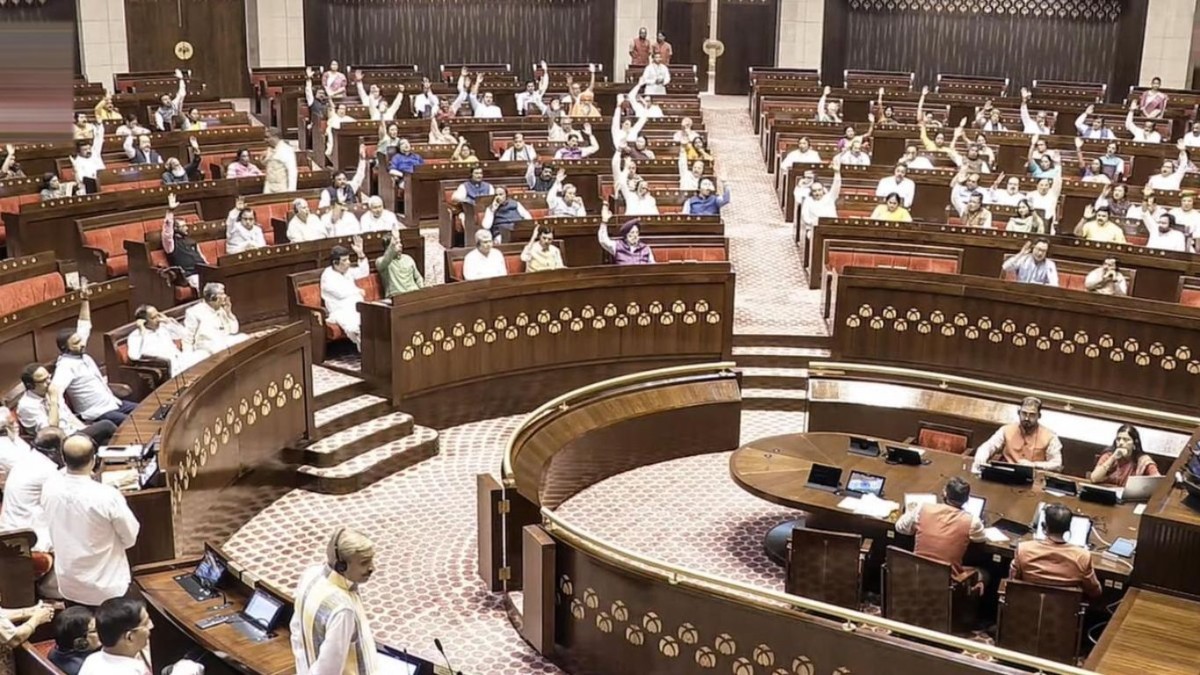
The timing of this potential session is also notable for its procedural unusualness. The Monsoon Session, which was adjourned sine die on August 13, has not yet been prorogued.
This has resulted in a period of 91 days where the session remains unprorogued, breaking the 87-day record previously set in 2008, The Hindu reported. Under parliamentary rules, a fresh session requires at least 14 days’ notice, whereas an extended sitting of the current session would only require two days.
Some observers suggest the timing may be imminent. Whispers in the Corridors reported that a “Monsoon Part II” session might begin as early as November 30.
Allegations of political manipulation
The Opposition has framed the delimitation exercise as a threat to the country’s democratic foundations. K C Venugopal, AICC general secretary, accused the BJP of attempting to manipulate various political parties to ensure the bill’s passage.
Speaking to reporters in Kannur, Venugopal suggested the government is waiting to see if it can win over parties such as the DMK, Shiv Sena, and NCP before moving forward. ThePrint reported that Venugopal characterized the move as an “attack on democracy” and an attempt to sabotage the Constitution by denying people their votes.
The debate has also turned toward the independence of electoral oversight. Venugopal leveled harsh criticisms against Chief Election Commissioner Gyanesh Kumar, alleging that an official is directly aiding attempts to “murder democracy,” ThePrint reported.
The core of the conflict lies in two fundamentally different visions for India’s representation. The government views the expansion of the Lok Sabha as a necessary step to fulfill the mandate of the Women’s Reservation Act before the 2029 parliamentary elections. Conversely, the Opposition argues that the current method of delimitation and the pursuit of these numbers through political maneuvering undermines the fairness of the electoral system.
The upcoming session will determine whether the government can bridge the 50-vote gap that stalled its progress in April, or if the claims of “bluster and bluster” will hold true in the face of a unified Opposition.

Liver Proteins May Protect Brain Cells and Memory in Alzheimer’s Mice
Liver-derived proteins may offer a new way to protect brain cells and improve memory in Alzheimer’s disease models,...

CDC Reports Six Measles Deaths as US Faces Major Resurgence
Six measles-related deaths have been reported in the United States this year, according to new data from the...

Norway and Indonesia Sign Article 6.2 Carbon Deal and US$100M Grant
Norway is providing a US$100 million grant to Indonesia following the country's success in reducing deforestation and carbon...

DJ Khaled Lost 75 Pounds Using Wegovy and Lifestyle Adjustments
DJ Khaled lost 75 pounds through a combination of the GLP-1 medication Wegovy and significant lifestyle adjustments, the...