
Six measles-related deaths have been reported in the United States this year, according to new data from the Centers for Disease Control and Prevention (CDC).
The figure, which The Guardian reports, is twice the number of deaths recorded in 2025. This surge comes as the country grapples with its most significant resurgence of the highly infectious virus since 1991. The current outbreak has already resulted in more than 5,400 reported cases nationwide, according to a tracker from the Johns Hopkins University International Vaccine Access Center.
The scale of the outbreak has placed the nation’s long-held status as a measles-free country in jeopardy. The United States was officially declared to have eliminated the virus in 2000, but a meeting is currently underway to determine if that status will be formally lost.
Measles elimination ends when one strain spreads nonstop for a year. Three chains of measles transmission traced back to Texas have been going for over a year. Save and send to a parent: https://t.co/gbtkh8YHaQ Read & subscribe for free: https://t.co/yjIDWlTmf2 pic.twitter.com/oFPVYqvXJ1
A dispute over mortality data
While the CDC’s official count stands at six, the numbers have become a flashpoint for political and scientific disagreement. A discrepancy exists between federal tallies and the figures reported by individual states, particularly in Pennsylvania, which has been the hardest-hit state in this outbreak.
According to Al Jazeera, the federal count has been at the center of a dispute between Pennsylvania Governor Josh Shapiro and U.S. Health Secretary Robert F. Kennedy Jr. regarding how measles deaths are classified. Pennsylvania reports “measles-associated” deaths—meaning a person dies within 30 days of developing symptoms—whereas the CDC’s tally has fluctuated based on recent changes in data tracking.
In August, Pennsylvania reported that two unvaccinated people died of measles. The CDC initially included those deaths in its national count but later removed them after Kennedy questioned whether the virus had actually caused or contributed to those fatalities, Al Jazeera reported.
Following this controversy, the CDC changed its methodology. On 4 September, the agency published a note on its website stating it is now using data from the National Center for Health Statistics (NCHS) to track mortality trends. This shift followed reports from Reuters that Kennedy had requested the CDC director, Erica Schwartz, not include certain Pennsylvania deaths in the official tally.
“. experts convening on Tuesday to decide whether the United States should lose its official designation as a nation that has eliminated measles.”@nytimes https://t.co/YAozbJwKeU pic.twitter.com/PtWLnjXHqQ
Infectious disease experts have expressed concern over these classification shifts. Epidemiologists told Al Jazeera that tracking “measles-associated” deaths has long been the standard used by both the CDC and the World Health Organization.
Declining vaccination rates drive regional surges
The resurgence is closely tied to a decline in immunity across the population. Data shows that vaccination coverage among U.S. kindergarteners has dropped from 95.2% during the 2019-2020 school year to 92.4% during the 2025-2026 school year, according to Al Jazeera.
PAHO's commission is meeting this week on whether the US keeps its measles elimination status. The US had 85 cases the year it eliminated measles in 2000. This year it's past 5,100. It may come down to sequencing, whether outbreaks across states trace to one lineage for 12… pic.twitter.com/R9lZIsJTmX
The impact is visible in the demographic breakdown of those falling ill. Children and teenagers account for approximately 59% of all confirmed cases. Specifically, children under five make up 18% of cases, while those between the ages of five and 19 represent 41%, Al Jazeera reported.
The geographic spread is widespread, with active outbreaks reported in nearly every state. The following table compares the infection and death trends reported by various news outlets:
My comments with @ABC @MaryKekatos about meetings this week to examine America’s measles elimination statushttps://t.co/QxvE5wulz0
| Metric | 2025 Data | 2026 Data (to date) | Trend |
|---|---|---|---|
| Total U.S. Cases | 2,289 | Over 5,182 | More than doubled |
| U.S. Deaths | 3 | 6 | Doubled |
| Ohio Cases | 40 | 202 | Five-fold increase |
The history of a preventable crisis
The current crisis stands in stark contrast to the medical milestones of the 20th century. Before the first measles vaccine was licensed in 1963, ABC News reported that millions of people were infected annually and hundreds died each year.
The development of the vaccine, including an inactivated version produced by Pfizer in 1963, allowed for a massive reduction in disease. By 1981, the CDC reported that the number of cases was 80% lower than the previous year. This momentum eventually led to the 2000 elimination declaration.
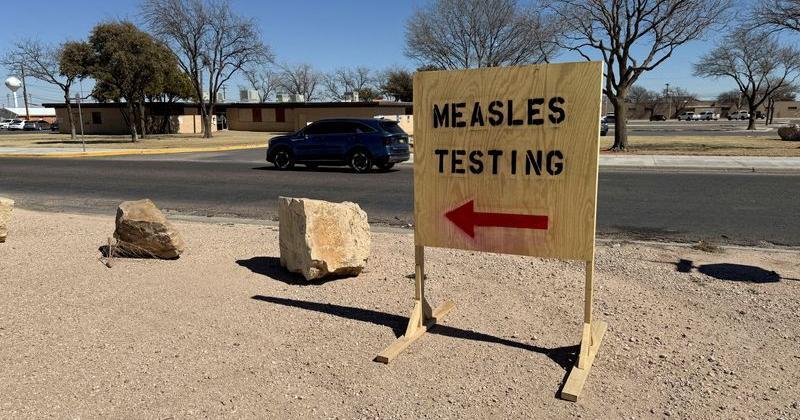
The loss of elimination status would place the United States in a category shared by Canada and several nations in Europe and Asia where the virus has recently made a comeback. Experts warn that as vaccination rates fluctuate, the risk of losing these hard-won public health victories increases.
The CDC is currently working with the U.S. Council of State and Territorial Epidemiologists to establish a standardized definition for measles deaths, Al Jazeera reported.
Related reading
- Liver Proteins May Protect Brain Cells and Memory in Alzheimer’s Mice
- Government Considering Special Session for Delimitation Bill: The Hindu
- Gold (XAU/USD) Price Forecast: Bullish Reversal Faces Critical Support Test (newsarchyuk.com)
- Best Buy Cuts Prices on LG, Samsung, and Sony OLED TVs, Mashable Reports (world-today-news.com)

Liver Proteins May Protect Brain Cells and Memory in Alzheimer’s Mice
Liver-derived proteins may offer a new way to protect brain cells and improve memory in Alzheimer’s disease models,...

Government Considering Special Session for Delimitation Bill: The Hindu
The Indian government is considering a special session of Parliament to push through the Delimitation Bill, 2026, according...

Norway and Indonesia Sign Article 6.2 Carbon Deal and US$100M Grant
Norway is providing a US$100 million grant to Indonesia following the country's success in reducing deforestation and carbon...

DJ Khaled Lost 75 Pounds Using Wegovy and Lifestyle Adjustments
DJ Khaled lost 75 pounds through a combination of the GLP-1 medication Wegovy and significant lifestyle adjustments, the...