
Norway is providing a US$100 million grant to Indonesia following the country’s success in reducing deforestation and carbon emissions between 2021 and 2023.
This funding, announced during the 31st United Nations Climate Change Conference (COP31) in Antalya, Turkey, serves as a results-based contribution for Indonesia’s measurable achievements in forest and land use. The announcement expands a long-standing climate and forestry partnership between the two nations.
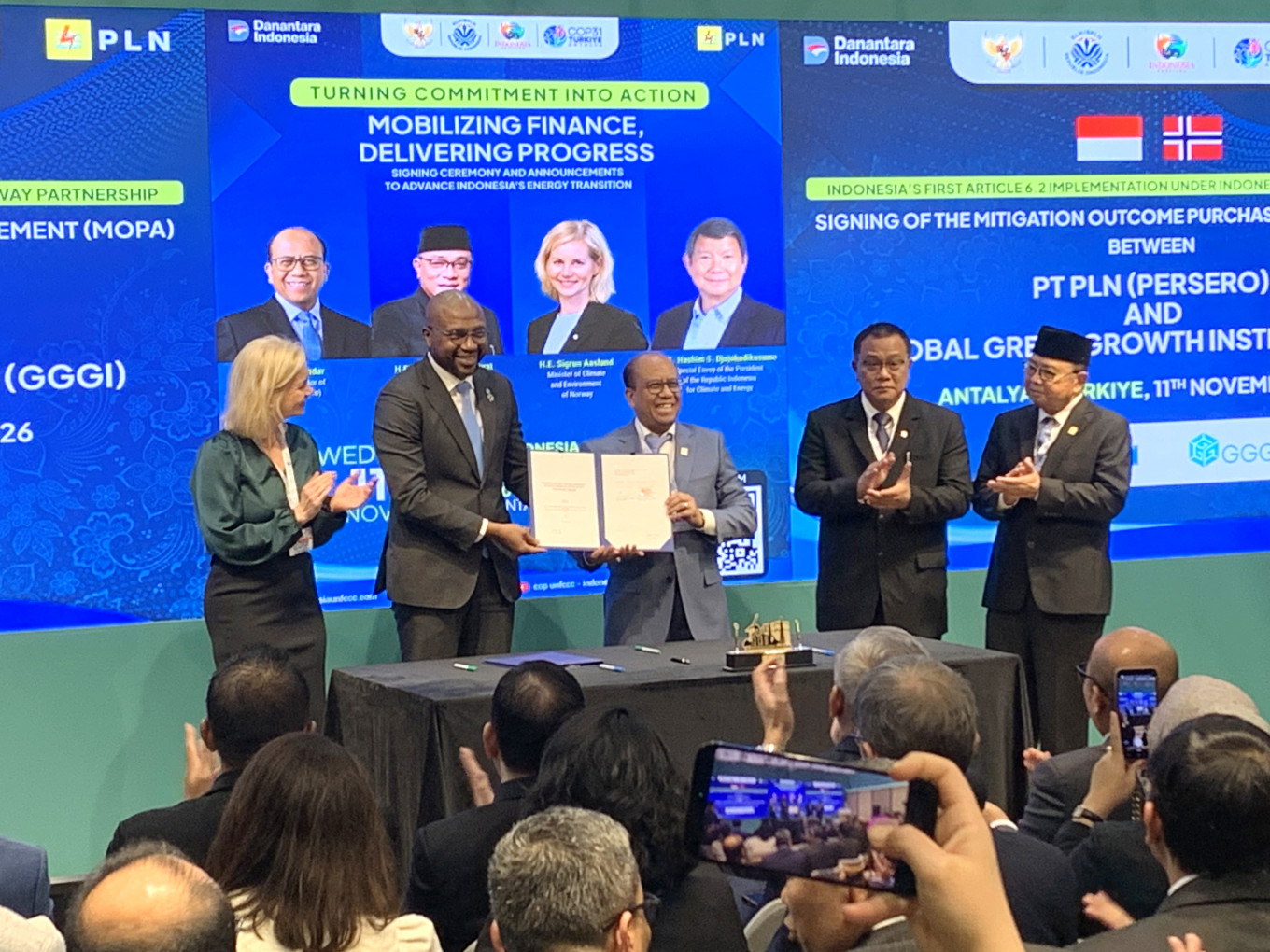
While the grant addresses forest conservation, a much larger commercial transaction is simultaneously reshaping the region’s energy landscape. Indonesia and Norway have signed a Mitigation Outcome Purchase Agreement (MOPA), which The Jakarta Post reported is a legally binding contract for the sale of carbon credits.
This agreement is the first in Indonesia to operationalize Article 6.2 of the Paris Agreement, a framework that allows countries to cooperate on emission reductions through bilateral arrangements.
“Indonesia successfully achieved measurable, verified emission reduction as Norway recognized the achievement through the result-based contribution, supporting further implementation,” said Hashim Djojohadikusumo, the president’s special envoy for climate and energy, as reported by ANTARA News.
A massive carbon trade
The MOPA represents a massive scale of operation for international climate finance. Under the terms of the deal, Norway will purchase up to 12 million tonnes of carbon dioxide equivalent in emissions reductions. These reductions will be generated by solar power projects developed by the state-owned utility firm PLN by 2038, according to The Jakarta Post.

The economic value of these credits is substantial. The carbon units are priced between US$20 and $40 per tonne of carbon dioxide equivalent. This transaction is noted as being among the largest carbon trades ever recorded under the United Nations Framework Convention on Climate Change (UNFCCC) Secretariat.
The deal was facilitated by the Global Green Growth Institute (GGGI), an intergovernmental organization established in 2012. The agreement was supported through the Norwegian Article 6 Climate Action (NACA) Fund, which is part of GGGI’s Carbon Transaction Facility. This facility also includes Article 6 funds from Sweden and Singapore to help governments and the private sector engage in carbon markets.
The signing of the MOPA at the Indonesia Pavilion was witnessed by Moh Jumhur Hidayat, Indonesia’s Minister of Environment and Head of the Environmental Protection Agency, and Sigrun Aasland, Norway’s Minister of Climate and Environment.
US$100 million grant supports Indonesian forest protection
Beyond the solar energy credits, the US$100 million grant for forest protection will be channeled through the Indonesian Environment Fund (IEF), known as BPDLH. This money is intended to support Indonesia’s goal of turning its forestry and land use sector into a net carbon sink by 2030.
The funding will target specific environmental priorities, including forest fire prevention and preparedness. It also aims to encourage development approaches that reduce the pressure placed on natural resources. Norway’s Minister of Climate and Environment, Sigrun Aasland, said that the rate of deforestation in Indonesia between 2021 and 2023 was the lowest on record, according to Ecobiz Asia.
“It is the result of ambitious policies, strong leadership, and sustainable commitment; and Indonesia has shown the outcome of balanced ambition and action,” said Sigrun Aasland.
A critical component of this environmental strategy involves the recognition of local rights. Indonesia has committed to recognizing 1.4 million hectares of customary forests over the next four years. This move is expected to increase the involvement of local and Indigenous communities as guardians of state forests.
“We laud Indonesia’s efforts to strengthen the roles of the customary and the local communities as guardians of state forests,” Aasland said.
The shift to implementation
For years, international climate policy has focused on the “readiness” of developing nations to participate in carbon markets. This latest deal suggests a shift toward actual operationalization. The GGGI said that the agreement helps address financial, regulatory, and grid-related constraints that have historically slowed renewable energy investment in Indonesia.

By providing additional incentive payments, the program can make renewable energy projects financially viable even when standard power purchase prices are insufficient. This creates a direct link between international carbon market cooperation and national energy priorities.
The financial scale of the partnership between these two nations is evidenced by the cumulative support provided to Indonesia’s forestry sector. The following table outlines the recent financial milestones in the Indonesia-Norway partnership:
| Funding Type | Amount (USD) | Purpose/Period |
|---|---|---|
| Previous Result-Based Contributions | Up to $216 million | Forest and land use emissions reduction |
| New Result-Based Contribution (2026) | $100 million | Deforestation reduction (2021–2023) |
While the solar energy deal focuses on the future transition to a low-carbon power system, the immediate focus remains on maintaining the progress made in forest conservation. Indonesia’s Deputy Minister of Forestry, Rohmat Marzuki, said that these results-based contributions help sustain work involving ecosystem restoration and forest fire control.
The partnership between Oslo and Jakarta has now been extended through 2030.
Worth a look

Liver Proteins May Protect Brain Cells and Memory in Alzheimer’s Mice
Liver-derived proteins may offer a new way to protect brain cells and improve memory in Alzheimer’s disease models,...

Government Considering Special Session for Delimitation Bill: The Hindu
The Indian government is considering a special session of Parliament to push through the Delimitation Bill, 2026, according...

CDC Reports Six Measles Deaths as US Faces Major Resurgence
Six measles-related deaths have been reported in the United States this year, according to new data from the...

DJ Khaled Lost 75 Pounds Using Wegovy and Lifestyle Adjustments
DJ Khaled lost 75 pounds through a combination of the GLP-1 medication Wegovy and significant lifestyle adjustments, the...