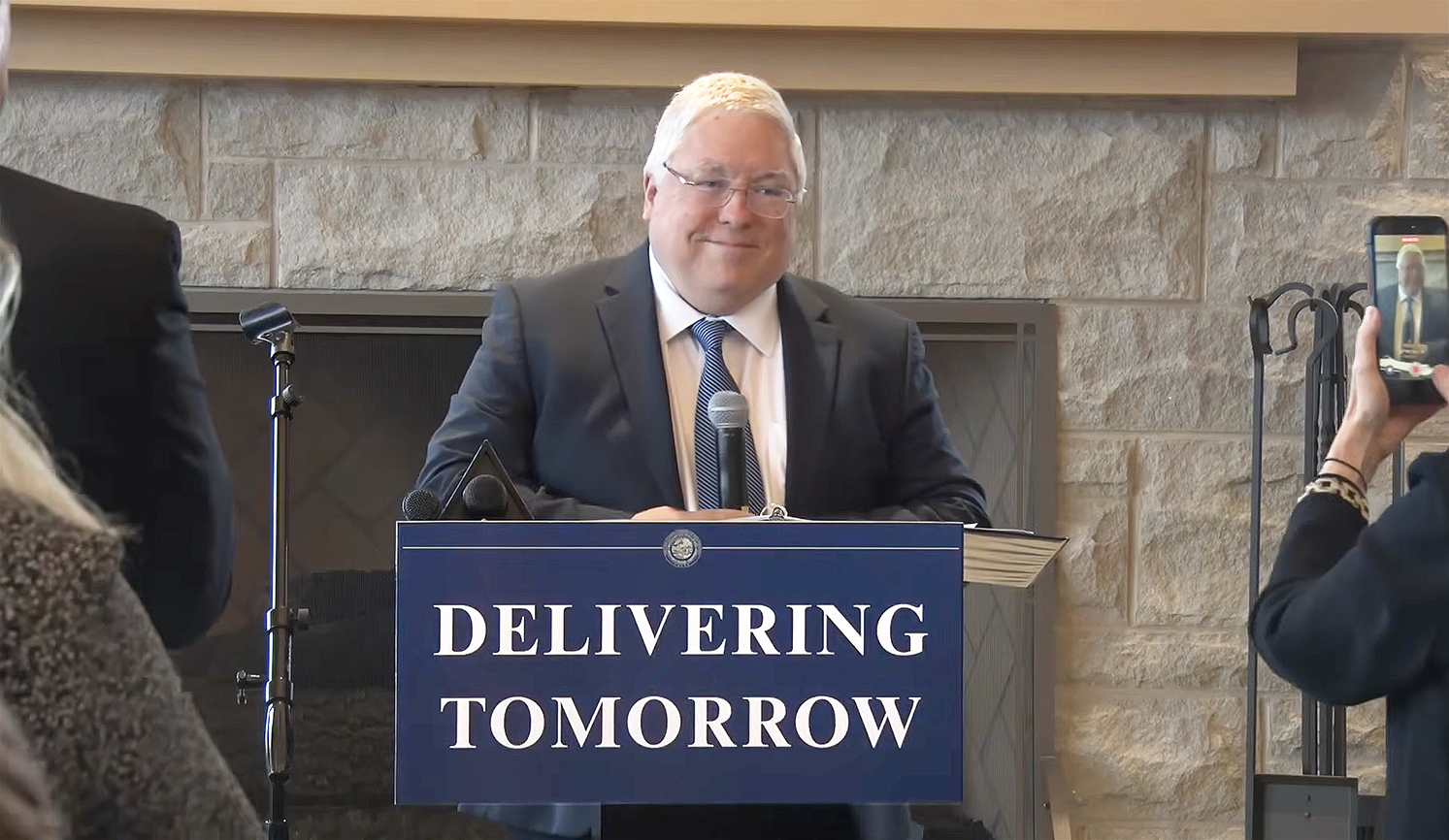
For the families of Greenbrier Valley, the sound of a newborn’s cry will soon echo in a familiar place. Governor Patrick Morrisey announced today that labor and delivery services will return to Greenbrier Valley Medical Center, a critical lifeline restored through a new partnership between Vandalia Health and the West Virginia School of Osteopathic Medicine. The move, detailed in a report from the governor’s office, is backed by a nearly $4 million Rural Health Transformation Program award to also establish the state’s second freestanding birthing center.
This isn’t just about hospital beds; it’s about a community’s future. The closure of these services created a dangerous gap, forcing expectant mothers to travel long distances for routine and high-risk care. Now, a coordinated system is being built to serve mothers, babies, and families for years to come.
A New Model for Maternal Care
The agreement hinges on an Academic Integration Letter of Intent signed by Vandalia Health and WVSOM. Under this plan, WVSOM will become Vandalia Health’s primary academic affiliation, a relationship designed to strengthen the entire healthcare ecosystem. The phased implementation begins on July 1, 2027. This partnership goes beyond simply reopening a wing; it establishes a rural obstetrics training program based right in Greenbrier County, a strategic move designed to recruit and retain the physicians the region desperately needs.
The financial engine for this revitalization is the nearly $4 million award from West Virginia’s Rural Health Transformation Program. This funding will support two parallel tracks of care. The first is the new community-based birthing center, offering a more intimate setting for low-risk deliveries. The second is the enhanced support system for more complex pregnancies, which will expand access to prenatal and postpartum care, women’s health services, birth preparation, lactation support, and telehealth. Services will be introduced as staffing, facilities, and clinical arrangements are finalized.
What makes this effort especially important is that we are bringing partners together around a coordinated approach to maternal care rather than treating each level of care separately. For families, that means a clearer path between community-based services and hospital care, with the right level of support available when they need it.
That’s Dr. Arvin Singh, West Virginia’s Secretary of Health, speaking directly to the heart of the matter. The new model creates a clear pathway, ensuring a mother can transfer from a birthing center to a hospital with surgical capabilities, like Greenbrier Valley Medical Center, without delay. This integrated approach addresses a critical failure point in rural healthcare, where services are often fragmented and difficult to find.
A Statewide Crisis, a Local Solution
The challenge facing Greenbrier Valley is far from unique. According to a federal Government Accountability Office report, more than half of all rural counties in the United States do not have a hospital that provides labor and delivery services. This statistic shows the size of the crisis and supports West Virginia’s targeted approach. The state is also a participant in the federal Transforming Maternal Health Model, an initiative announced in 2023 that provides up to $17 million over a decade to improve outcomes. West Virginia entered the program’s third year in January 2027, focusing on patient safety, workforce, and care coordination.
WVSOM President James W. Nemitz sees this effort as both a solution and a responsibility. “The challenge of providing OB/GYN and maternity healthcare in rural areas is not just a Greenbrier Valley issue,” he stated. “What an appropriate use of Rural Health Transformation Program funding. We are proud of Dr. Drema Hill’s involvement and look forward to working with the other partners and Gov. Morrisey’s team.” This perspective frames the announcement not as a single political victory, but as a necessary and pragmatic response to a decades-long exodus of healthcare services from rural America.
The Economic Stakes
Access to quality healthcare is the bedrock of any thriving community. When families have to leave to deliver a baby, they often don’t return. This “healthcare-induced migration” weakens the local tax base, drains consumer spending, and makes it exponentially harder for local businesses to attract and retain employees. By restoring this essential service, the Morrisey administration is directly addressing the economic anxieties that plague small towns. It sends a powerful message: this community is a place where families can put down roots and businesses can invest with confidence.
The initiative isn’t just about what it brings back; it’s about what it prevents. It prevents financial hardship from medical travel and missed work. It prevents the trauma of a medical emergency becoming a logistical nightmare. It prevents a generation from feeling forced to choose between their hometown and their family’s health. This is the quiet, unspoken cost that communities across West Virginia and rural America have been bearing, and today, Greenbrier Valley got a reprieve.
The Final Hurdles
While the announcement is a significant victory, it’s important to note the agreement is not yet final. The signed Letter of Intent remains subject to final agreements and necessary approvals. The path from announcement to fully operational services is long, with implementation not officially beginning until 2027. The success of this ambitious plan will depend on the smooth execution of these phases, from securing final funding to staffing the new facilities with qualified professionals. The political will is clear, but the logistical challenges remain.
Still, the direction is undeniable. For a region that has seen critical services disappear, this is a powerful signal of reinvestment. It’s a commitment to building a system that works together, a model that could very well serve as a blueprint for other rural areas grappling with the same heartbreaking exodus of care. The story of Greenbrier Valley’s labor and delivery unit is, for now, a story of hope being restored.
Related reading

Gov. Kemp declares emergency in four Georgia counties amid flooding
Georgia-Tennessee Border Under Water as Rains Trangle Dozens "I've never seen flooding like this in my life," McCaysville...

Heavy Rain and Flash Flood Risk for Eastern Mass and Rhode Island
Eastern Massachusetts and Rhode Island are bracing for a prolonged and heavy rainfall event on Friday, with forecasters...

Mike Elko Acknowledges South Carolina’s Surge ahead of Texas A&M game
Mike Elko Acknowledges South Carolina's Surge as Aggies Prepare for Crucial Clash As Texas A&M prepares to face...

US DOJ Sues Penn State Over Undocumented Tuition
Lawsuit Targets Penn State's Tuition Policy The U.S. Department of Justice has filed a lawsuit, this time against...