
Gulf nations intercepted a wave of hostile missiles and drones on Tuesday following an American military strike on Qeshm Island, intensifying a nine-month regional conflict that continues to rattle global energy markets.
The nine-month-old war began when US and Israel struck Iran on February 28, eventually widening into broader strikes on US assets across the Middle East. On Tuesday, US fighter jets targeted a Revolutionary Guards missile launch site on Qeshm Island in the Strait of Hormuz, according to a US military official who spoke on condition of anonymity.
The military official said that the strike was carried out in response to Iranian attacks on US personnel and assets. Iranian media, citing an Iranian official, countered that the American attack caused no damage to infrastructure.
The retaliatory cycle quickly rippled across neighboring Arab states hosting American military installations. The Iranian army announced it had targeted US drone and missile installations at Kuwait’s Ali Al Salem air base. Kuwait’s army confirmed on Tuesday evening that its air defenses had successfully countered hostile drone attacks without providing further operational details.
Meanwhile, neighboring Bahrain reported intercepting Iranian aerial attacks for the third time in a single week. Bahraini officials accused Tehran of maintaining a systematic hostile approach toward the island nation, which serves as home to the US Navy’s Fifth Fleet.
🚫 CLAIM: Iran's Islamic Revolutionary Guard Corps (IRGC) claimed its drones hit a U. S. military radar system at a base in Bahrain early this morning. This is FALSE. ✅ FACT: Multiple Iranian one-way attack drones launched by the IRGC today towards Bahrain were intercepted… pic.twitter.com/xMnLdFMSEs
The conflict also extended into Yemen and Saudi Arabia. The Saudi-led coalition fighting Iran-aligned Houthi forces announced it had destroyed a cruise missile launched toward the Saudi capital of Riyadh. The Houthis have simultaneously tightened control over the Bab el-Mandeb Strait opposite Hormuz to squeeze Gulf oil producers.
Maritime commerce through the crucial Strait of Hormuz has faced severe disruptions, threatening global energy supplies. UAE state oil firm ADNOC reported that 11 crew members sustained injuries and one person remained missing after a company ship was struck in the waterway.
The British maritime security agency, UKMTO, confirmed that the tanker had been hit a day earlier by an unknown projectile approximately 13 nautical miles north of Khasab, an Omani town overlooking the strategic corridor. A separate liquefied petroleum gas tanker off Khasab was abandoned by its crew due to rising security threats.
🚨U. S. military official: "Earlier today, U. S. fighter aircraft used precision munitions to strike an Islamic Revolutionary Guard Corps (IRGC) missile launch site on Qeshm Island in self-defense. The strike was in response to IRGC aggression targeting U. S. personnel and assets.…”
Crude oil markets reacted to the shifting maritime flows and persistent supply bottlenecks. US West Texas Intermediate futures dropped 1.2% to settle at $84.9 a barrel, while Brent crude fell 0.48% to $92.7 per barrel. The International Energy Agency said that global oil supplies have started surpassing demand for the first time since the outbreak of the war.
Washington has simultaneously wrestled with domestic security concerns stemming from the confrontation. President Donald Trump told reporters that the United States was taking seriously the possibility of an Iranian plot targeting Washington involving a dirty bomb, following a CNN intelligence report. US Secretary of State Marco Rubio downplayed the reports, stating he did not believe any imminent threat faced the capital. Iran’s Foreign Ministry dismissed the allegations as baseless.
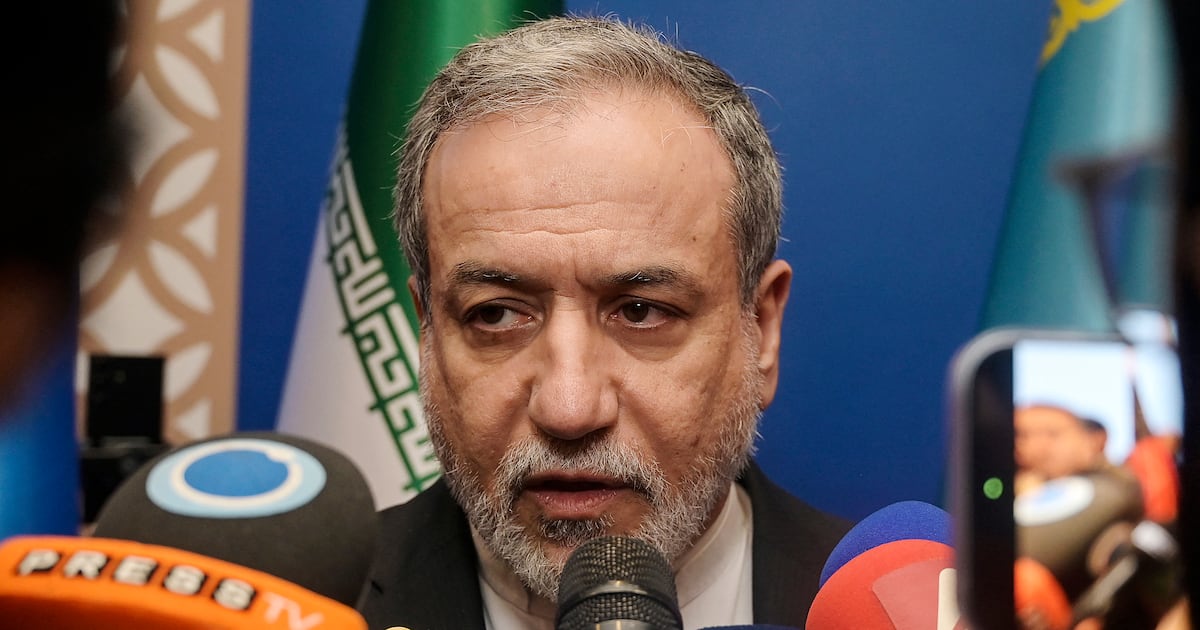
Diplomatic channels remained active despite the military escalations. Qatari and Iranian officials held meetings on Tuesday aimed at bridging perspectives and narrowing the gap between proposals on the ground, according to Qatari spokesperson Majed Al Ansari.
Those talks followed a visit to Oman by Iranian Foreign Minister Abbas Araqchi, who met with Oman’s Sultan Haitham bin Tariq to discuss safeguarding maritime corridors and ensuring the smooth flow of international shipping through the Strait of Hormuz.
“These efforts aim to expand areas of mutual understanding among the concerned parties and prevent the widening of the crisis and its repercussions.”
Oman’s Foreign Ministry
“to end the state of neither war nor peace,” Supreme Leader Mojtaba Khamenei said.
As I emphasized in my comments @cnni , the Iranian attacks in Bahrain are yet another reminder that the current status quo in the Gulf is fundamentally unsustainable. The Trump administration may have no desire for another major war, but Tehran views the continued U. S. naval…
More on Gulf
Iran destroys American MQ-9 drone in the skies over the Strait of Hormuz — Fars pic.twitter.com/vTPRkqeY4W
BREAKING: The U. S. has reportedly launched strikes on an Iranian air-defense site on Qeshm Island in retaliation for Iran’s drone attack on a U. S. radar installation in Bahrain earlier today. Residents reported hearing an explosion northwest of Qeshm city, with smoke seen rising…
An Iranian official blamed the United States for a Tuesday attack on areas of Qeshm island in southern Iran, saying it caused no damage to residential or commercial areas or vital infrastructure, Mehr News Agency reported. Ahmad Nafisi, deputy governor of Hormozgan province for…
BREAKING: U. S. fighter jets carried out precision strikes on an IRGC missile launch site on Iran's Qeshm Island in “self-defense,” according to Axios's @BarakRavid. U. S. military official: “The strike was in response to IRGC aggression targeting U. S. personnel and assets. U. S.… pic.twitter.com/UqQkE2PCG2”
Iran is currently retaliating against US attack on Qeshm Island 🇰🇼 2 sites in northern Kuwait were struck a few hours ago, with some reports suggesting Iran struck HIMARS systems, but this detail is not confirmed. 🇧🇭 Ongoing attack against US military sites in Bahrain https://t.co/4deSLylPZQ pic.twitter.com/nXKWV1uAs2
BREAKING: An Iranian official says the US attacked Qeshm Island in the Strait of Hormuz, per Iran’s Mehr News Agency. The official said residential and commercial areas and infrastructure weren’t damaged. The US hasn’t confirmed the strike.
Keep reading

Ford Unveils 2028 Mustang GTD 1901 Edition Honoring 1901 Sweepstakes Victory
Ford unveiled the 2028 Mustang GTD 1901 on Monday, a special edition replacing the Spirit of America to...

Cambodia Targets 70% Clean Energy by 2030 With 1,100MW Solar Farm and ADB-Supported Grid Expansion
Cambodia targets 70 percent renewable energy by 2030 as construction begins on a 1,100-megawatt solar farm in Pursat...

Myanmar Leader Reviews ASEAN Ties, Accuses Bloc of Unfair Treatment
“ASEAN has never exerted political pressure on or subjected any other member state to indignity, but we see...

Xi Opens APEC in Shenzhen With Call to Remove Trade Barriers
On Wednesday in Shenzhen, Chinese President Xi Jinping opened the Asia-Pacific Economic Cooperation summit with a direct call...