Two hundred government schools. That’s the footprint of Haryana’s new SAATH project, a structured school-based mental health initiative covering students from Class VI to Class XII, and it is the number that frames everything else about the plan, The Tribune reported.
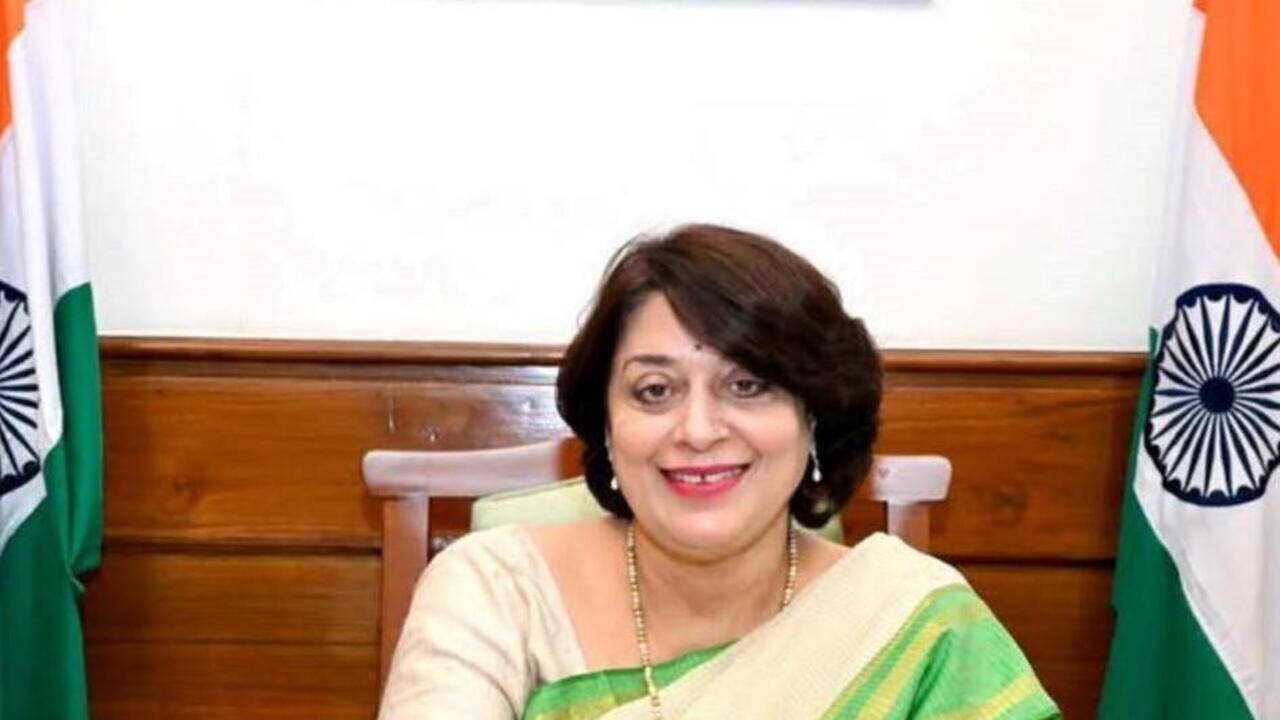
The project, spearheaded by Dr. Sumita Misra, was unveiled on Monday with a simple premise: catch psychological distress early — exam anxiety, depression, bullying, digital addiction — before it hardens into crisis. Repeated incidents involving students in schools prompted the state to build what officials describe as a coordinated support network linking the Health and School Education Departments, teachers, parents, student volunteers, counsellors, clinical psychologists, and psychiatrists.
122 Counsellors and 400 Teachers Form the Backbone
The arithmetic of the rollout is where the plan gets concrete. The Health Department has trained 122 counsellors, who will coordinate with two designated teachers in each of the 200 schools, creating a network of roughly 400 trained teachers, according to Hindustan Times and The Times of India. Those teachers will receive structured training on child and adolescent mental health, early warning signs, supportive communication, confidentiality, and referral procedures. Officials plan two distinct levels of training modules for the designated teachers.

The framework then runs on a five-stage identification and referral mechanism. It starts in the classroom, where class teachers observe behavioural changes — persistent sadness, social withdrawal, declining academic performance — and record interventions in a class-wise assessment and counselling register. Class teachers will watch for behavioural or emotional shifts and engage supportively with pupils. Student health ambassadors, per ET Education, will facilitate peer awareness but act only as peer-support facilitators, never undertaking diagnosis or treatment. Designated teachers and health department counsellors will offer support and counselling within their professional limits. Students needing specialised assessment move to designated Adolescent Friendly Health Clinics for clinical psychologists; those needing psychiatric care are referred to mental health clinics for evaluation and treatment.
Two Tiers, Two Sets of Pressures
The programme deliberately splits its approach by age. For Classes VI to VIII, the focus lands on puberty-related changes, self-confidence, parent-child communication, bullying, peer rejection, gaming addiction, sleep deprivation, and family stress. The focus for younger students also includes emotional awareness and examination anxiety. For Classes IX to XII, the emphasis shifts to board examination pressure, competitive entrance tests, career uncertainty, body-image issues, substance-use risks, relationship distress, and emotional exhaustion. For senior students, the programme also addresses peer pressure and unhealthy eating patterns. Across both tiers, special weight is placed on recognising warning signs of self-harm and suicidal tendencies, with provisions for immediate referral to mental health professionals.
Parents are not left out of the loop: parent-teacher meetings are meant to sensitise them to changes in their children’s behaviour, sleep, mood, and academic performance. The stated target, per The Times of India, is to reach students of Classes IX to XII in all identified schools within a year.
What the Numbers Don’t Cover
For all its structure, the plan’s scope has a built-in limit worth sitting with: 200 government schools is a pilot-scale footprint in a state with thousands of schools, and the initiative covers only Classes VI to XII, leaving primary-school children outside its net. Dr. Brahm Deep, director of mental health in Haryana, told The Times of India that early identification and timely intervention could prevent psychological difficulties from developing into serious mental health conditions — an argument that cuts both ways, since it also implies that students outside the 200 schools, or below Class VI, remain dependent on whatever informal support already exists.
There is also a quiet design choice embedded in the five-stage model: the first line of detection is the classroom teacher, not a clinician. That keeps costs down and reach wide, but it means the entire pipeline hinges on teachers spotting distress accurately and referring upward — a responsibility the training modules are meant to carry.
The project arrives at a moment when school-based mental health programmes across India are still mostly pilot projects rather than settled systems; Haryana’s bet is that a formal referral ladder — teacher, ambassador, counsellor, psychologist, psychiatrist — can be standardised across 200 schools within twelve months.
Keep reading

Jane Fonda Adjusts Routine at 88: Slower Cardio, Strength, and Balance Workouts Backed by Science
At 88, Jane Fonda still exercises every day, but the pace has changed. "I essentially do everything I...
NC Labels Aga Ruhullah Mehdi’s Resignation as BJP’s Operation Lotus in J&K
The resignation of Srinagar Lok Sabha member Aga Syed Ruhullah Mehdi from the National Conference has vacated the...

Indonesia revises electric bus target to 90% by 2040, 100% by 2045—Muiz Thohir
Think you have a budget challenge? Try electrifying an entire country's public bus system. Indonesia, a sprawling archipelago...

Thousands of Blood Pressure Medication Bottles Recalled Nationwide Due to Dissolution Failure
"Failed dissolution specifications." That dry, technical phrase from the Food and Drug Administration's enforcement report is the reason...