
Hawaii's statewide median age climbed to 42.1 years, up from 40.6 in 2020 and 38.6 in 2010.
By 2035, Americans 65 and older are projected to outnumber children under 18. The U.S. Census Bureau’s main projection puts that crossover as early as 2029.
That demographic crossover, tracked by the U.S. Census Bureau, is already reshaping housing markets nationwide, and the tension is especially visible in Hawaiʻi.
The latest State of Hawaii Data Book, released last month by the Department of Business, Economic Development and Tourism, shows the state’s population shrank 0.15 percent between July 1, 2024, and July 1, 2025, extending a decline that began in 2015. At the same time, the statewide median age climbed to 42.1 years, up from 40.6 in 2020 and 38.6 in 2010.
“You are a person to love, not a problem to solve,” Jen Wilkin wrote in Dust to Dust: Aging Wisely in an Anti-Aging World, a sentiment Hawaii Real Estate Market & Trends | Hawaii Life highlighted while asking whether the islands’ housing stock and services can honor that promise for kūpuna.
Hawaiʻi’s median single-family home price topped $1 million for the first time in 2025, according to the Data Book. Only Hawaiʻi County came in lower, at $550,000.
Condo prices eased slightly, falling to a $539,000 median from a $560,000 peak in 2024, though Kauaʻi County bucked the trend with a year-over-year increase. Construction costs have surged alongside values: the Honolulu Construction Cost index rose 25.47 percent for single-family homes and 23.77 percent for high-rises between 2020 and 2025.

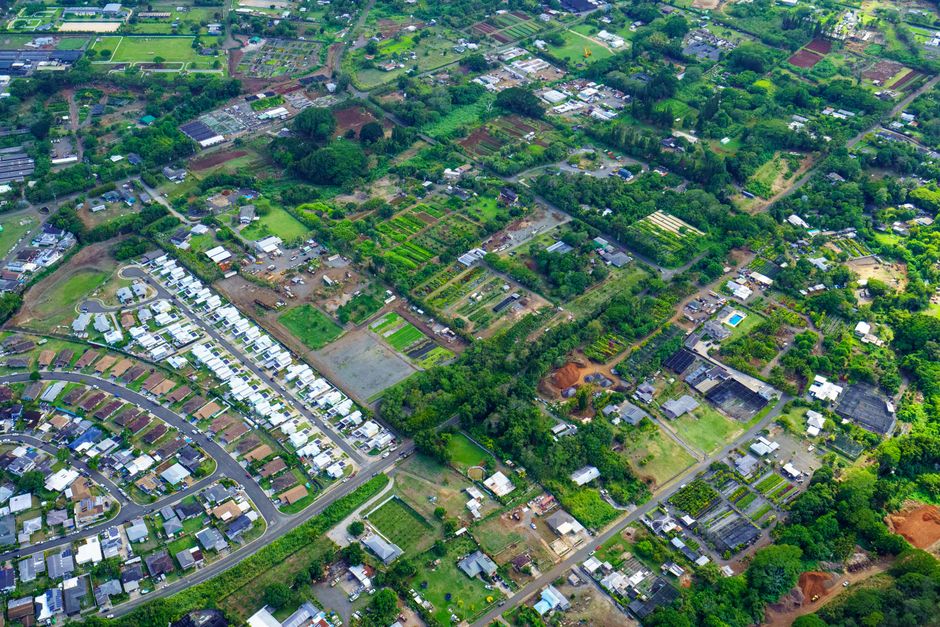
Those numbers collide with what older residents actually need. On Oʻahu, a homeowner may want to trade a large house and yard for a smaller, single-level home in the same neighborhood, but affordable, accessible inventory is scarce.
The National Association of REALTORS® 2026 generational trends report found baby boomers accounted for 42 percent of recent buyers and 55 percent of recent sellers nationally; older boomers had typically stayed in the home they sold for 15 years.
The Data Book also shows real per capita income growing 14.54 percent from 2018 to 2024, outpacing the national 13.31 percent gain. Grassroot Institute president Keli‘i Akina argued the numbers still mask a squeeze on working families and business owners.
“Hawaii lawmakers continue to make life hard for those who supply the many goods and services we need to live and prosper, namely through high taxes, excessive regulations and too many burdensome permitting and licensing requirements,” Akina wrote.
That regulatory climate affects the supply of care as much as housing. In-home help, adult day programs and respite care can ease pressure on family caregivers and keep kūpuna connected to their communities. Honolulu’s Elderly Affairs Division offers a starting point for families searching for local services.
An August 2026 comparison guide published by Hawaii Real Estate Market & Trends | Hawaii Life lists housing arrangements, fees and services at Oʻahu communities including The Ivy at Hawaiʻi Kai, One Kalakaua, Arcadia and Kahala Nui. The guide is intended as a starting point; families are urged to verify current pricing, availability and care options directly with each community.
The question remains whether policy, construction and community planning can move fast enough to meet a demographic shift that the Census Bureau projects could arrive as early as 2029.
Isofy Adds 60 Jobs at North Charleston Headquarters
isofy will add 60 jobs at its North Charleston headquarters, the company announced today. The network software company,...

UofA Alum Julia Soule Presents Research on Ozarks Trail History and Meaning
University of Arkansas alum Julia Soule argues that the trails threading the Ozarks are not neutral ground but...

Forty-seven artists and collectives fill the fifth edition of Greater New York at MoMA PS1
Forty-seven artists and collectives fill the fifth edition of Greater New York at MoMA PS1, a survey delayed...
Diocese of Harrisburg Holds First STREAM Competition: Students Build Emergency Shelters
Twenty teams of middle-school engineers huddled over craft sticks, straws and foil Wednesday, racing to build emergency shelters...