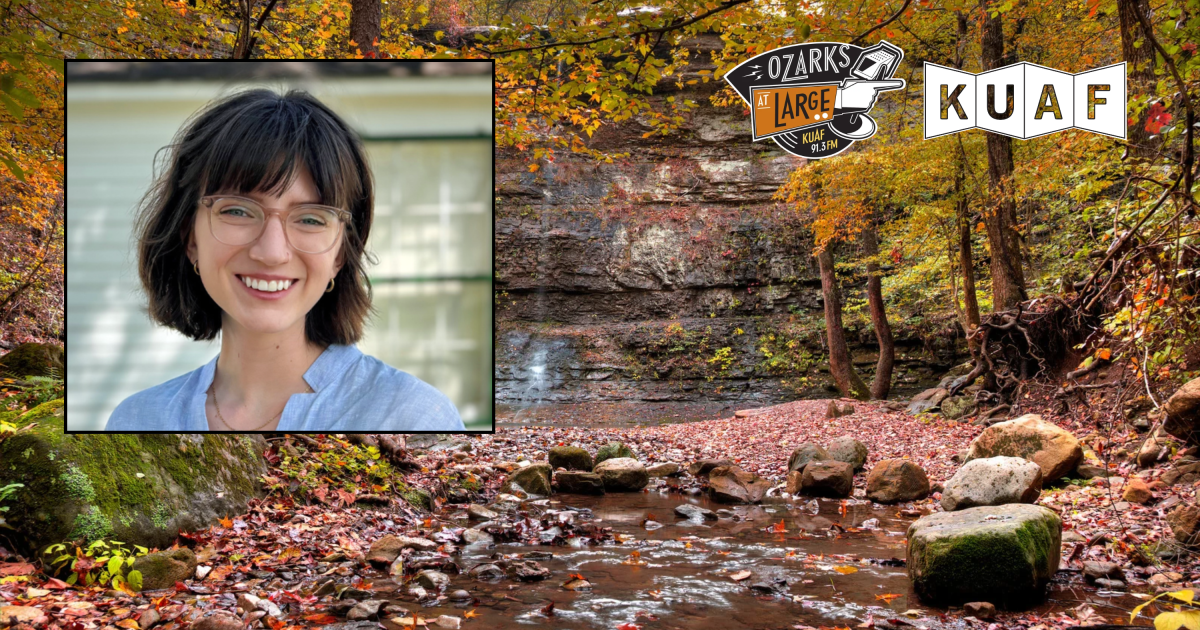
University of Arkansas alum Julia Soule argues that the trails threading the Ozarks are not neutral ground but contested terrain shaped by shifting power — from New Deal public works to modern private philanthropy — and that the "personal" awe hikers feel is inextricably bound to who built the path under their boots.
Soule, now a joint degree candidate at the Yale School of the Environment and Yale Divinity School, presented her research Thursday evening as part of the Pryor Center Research Fellowship Program at the David and Barbara Pryor Center for Arkansas Oral and Visual History.
The talk, drawing on summer field interviews conducted on Ozark trails, frames outdoor recreation as a lens for examining how implicit beliefs about nature allocate access and meaning across Arkansas.
“We often think of outdoor recreation as a very private or internal thing,” Soule told KUAF 91.3. “It’s my time with myself outdoors, but there’s always an external factor going on there.”
“What’s interesting to me about those shifts in how trails develop in Arkansas is that that also determines what people see when they go out to recreate in Arkansas. The kinds of trails you’re on determine the kind of views you see, the kind of physical experience you have.”
Soule traces three distinct eras of trail-making in the state. The Civilian Conservation Corps built many of Arkansas’s most familiar hiking trails in the 1920s and 1930s using federal public funds and local labor — a process she describes as ostensibly democratic, tied to elected officials and public policy.
The 1960s and 1970s brought the canoe boom and the establishment of the Buffalo National River under federal management. Now, she says, a third wave is rising: private trail development driven by philanthropies and private actors, often in partnership with the state but operating outside the public accountability mechanisms that defined the CCC era.

The shift matters because trail design dictates experience. A technical, rocky path through Devil’s Den State Park demands a different body and yields a different view than a graded, accessible loop. Add mountain bikes or canoes, and the sensory input changes again. Soule’s argument is that these physical differences are not accidental; they are the fingerprints of the institutions — federal, state, or private — that funded and aligned the corridors.
Her fieldwork this summer tested that theory on the ground. Approaching strangers with a microphone, she asked hikers to excavate the language of their own sensations. “What does it feel like to hike today? What did you see?” she would ask.
When a respondent offered “beautiful,” she pressed: “What does seeing something beautiful feel like?” When they answered “awe,” she asked what awe feels like. The interviews routinely resolved into language inflected with spiritual or secular meaning — words like transcendence, grounding, or connection — that the hikers themselves identified as the core of the experience.
That intensity of personal meaning, she contends, coexists uneasily with the external forces that made the moment possible. The land may be federally managed or privately developed; the access may be free or gated; the trail may have been cut by a CCC crew in 1933 or a contractor in 2023. The hiker’s awe is real, but its stage was set by someone else’s power.
The privatization trend sharpens the stakes. In Northwest Arkansas, the Walton Family Foundation has been a primary driver of trail networks that have rebranded the region as a mountain-biking destination. Some of those trails are public; others carry fees or access restrictions.
Soule points to the “social extraction” documented in gateway communities like Jackson Hole, Wyoming, where ecotourism inflates housing costs and displaces the service workers who sustain the visitor economy. Northwest Arkansas, she notes, is already grappling with rising rents and eroding renter protections as the outdoor-rec economy scales.
“I think there’s been great attention to what outdoor recreation can potentially do to things like cost of living in an area. I’ve seen attention to that in Northwest Arkansas, and I think people in Northwest Arkansas in particular have been quite attentive to rising cost of living, to things like renters’ protections that can come into conflict with an emerging ecotourism industry.”
She contrasts the current model with the Works Progress Administration and CCC legacy. “You voted for people who voted for the policies that built these trails, and in that way, you had a direct say in what those trails looked like and how they were built,” she said.
“That element of democratic and local control is important and gets complicated with privatization.” Municipal zoning and public comment periods still exist, but the scale and speed of private development in Northwest Arkansas have outpaced the civic infrastructure designed to mediate it.
Soule’s own trajectory mirrors the landscape she studies. She grew up in Bryant, flipping through Tim Ernst guidebooks with her father on spring-break waterfall hunts — three-hour drives or 40-minute jaunts, chosen at random.
At the University of Arkansas in Fayetteville, the outdoors expanded from scheduled backpacking trips into daily rhythm: farm work at Apple Seeds, spontaneous trail runs, a relationship with the land that no longer required a guidebook. Graduate school at Yale shifted her questions from nonprofit management toward the ideological substrate of conservation: what people think nature is, and who gets to decide.

The Pryor Center fellowship, which supports research grounded in Arkansas oral history, gave her a platform to return those questions home.
“Razorback Stadium was originally a WPA program,” she said. “It’s fascinating to drive around the state and see what has the longevity there.”
The Ozarks span nearly 47,000 square miles across northern Arkansas and southern Missouri, with small portions in Oklahoma and Kansas, making it the most extensive highland region between the Appalachians and the Rockies.
Geologically a dissected plateau of limestone and dolomite rather than a true mountain range, its highest point is Wahzhazhe Summit at 2,561 feet in the Boston Mountains of Arkansas. The name derives from the French aux Arcs, short for aux Arcansas, referencing the Quapaw people and a trading post at Arkansas Post.
The next phase of her research will widen the interview pool beyond hikers to include land managers, trail builders, and residents in communities abutting the new private networks.
She wants to know whether the democratic promise of the CCC era can survive a funding model that answers to donors, not voters — and whether the awe on the trail can remain a public birthright when the path to it is privately paved.
Keep reading

Gov. Hochul: MTA Hits 200 Stations With Platform Barriers; Safety Satisfaction up ~10 Points
Subway safety satisfaction has climbed roughly 10 percentage points since the MTA started installing platform barriers in January...
Denver City Attorney Miko Brown Initially Denied, Then Acknowledged Staying at Law Firm President’s Home
"Information is being hidden from us, which means it's being hidden from the people of the city," Councilwoman...
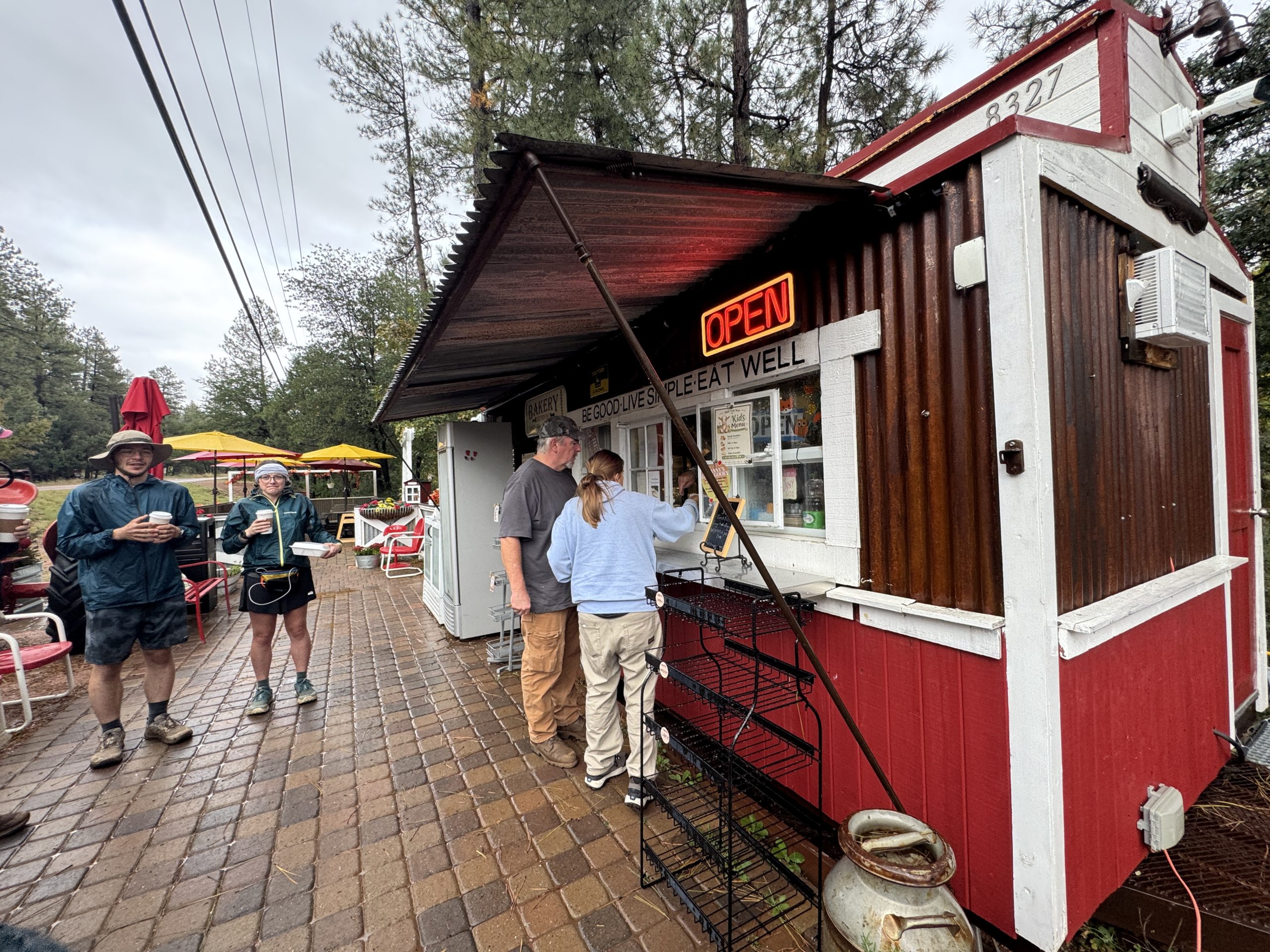
Trail Journal: Zero Days in Strawberry Amid Rain and Flash Flooding
In a trail journal entry for The Trek, a long-distance hiker describes spending rest days in Strawberry, Arizona,...

Stevens Beats UMass Boston 3-1 Behind Sturt’s Fourth-Set Serving Run
The match turned decisively in the fourth set, where Stevens ripped off a 5-0 run behind the serve...