The Home Builders Association of Michigan (HBAM) secured a legal victory against the City of Troy after a 15-year battle over privatized permit fees, NAHB reported.
The long-running dispute, which began in 2010, centered on whether the city’s method of collecting building permit fees violated state law and the Michigan Constitution. After more than a decade of litigation and multiple appeals to the state Supreme Court, a settlement was reached earlier this year following a $700,000 award to HBAM in October 2025.
The outcome ends a period of legal and financial uncertainty for the local housing industry. The case serves as a high-stakes example of how municipal attempts to offset government operating costs can collide with strict regulatory frameworks designed to protect taxpayers and industry participants.
The legal fight over permit revenue
Following the housing market collapse in the late 2000s, the City of Troy sought to reduce government operating expenses by contracting a private firm to manage its building permit process. Under this arrangement, the private firm collected permit fees and conducted inspections, remitting up to 25% of those fees to the city to cover “direct and indirect costs” for the building department.
HBAM challenged this structure on two primary legal fronts. First, the association argued that the remittances violated the Michigan Single State Construction Code Act, which mandates that building department fees must roughly match the actual cost of providing those services and can only be used for running the department.
Second, HBAM contended that the fees acted as “taxes” masquerading as service charges, which would violate the Headlee Amendment of the Michigan Constitution by imposing new taxes without a public vote.
The litigation was characterized by a repetitive cycle of lower court rulings and Supreme Court interventions. While lower courts frequently sided with Troy, the Michigan Supreme Court issued two unanimous rulings that favored the builders:
- In June 2015, the justices ruled that HBAM was not required to exhaust administrative remedies before seeking judicial relief.
- In August 2019, the court again ruled in favor of HBAM, sending the issue of eligible indirect costs back to the Circuit Court.
Accounting battles and the cost of persistence
As the case progressed, the financial stakes grew for the builders. To defend its revenue stream, the City of Troy canceled its contract with the private permitting firm and utilized different accounting methods to distinguish between direct and indirect costs. This move required HBAM to employ specialized experts to untangle the city’s finances.
Patrick Anderson, Principal and CEO of the Anderson Economic Group (AEG), provided testimony and two separate studies of Troy’s finances to the Circuit Court. On Feb. 2, 2023, the court determined that Troy had indeed broken the law by charging fees that did not match the cost of providing building services, effectively ruling the fees were an illegal tax.

The battle highlights tension in municipal governance. From the city’s perspective, such fee structures are often viewed as necessary tools to maintain essential services during economic downturns without raising general taxes. However, for the construction industry, these “hidden taxes” can distort the true cost of development and create unpredictable overhead for builders and, ultimately, homebuyers.
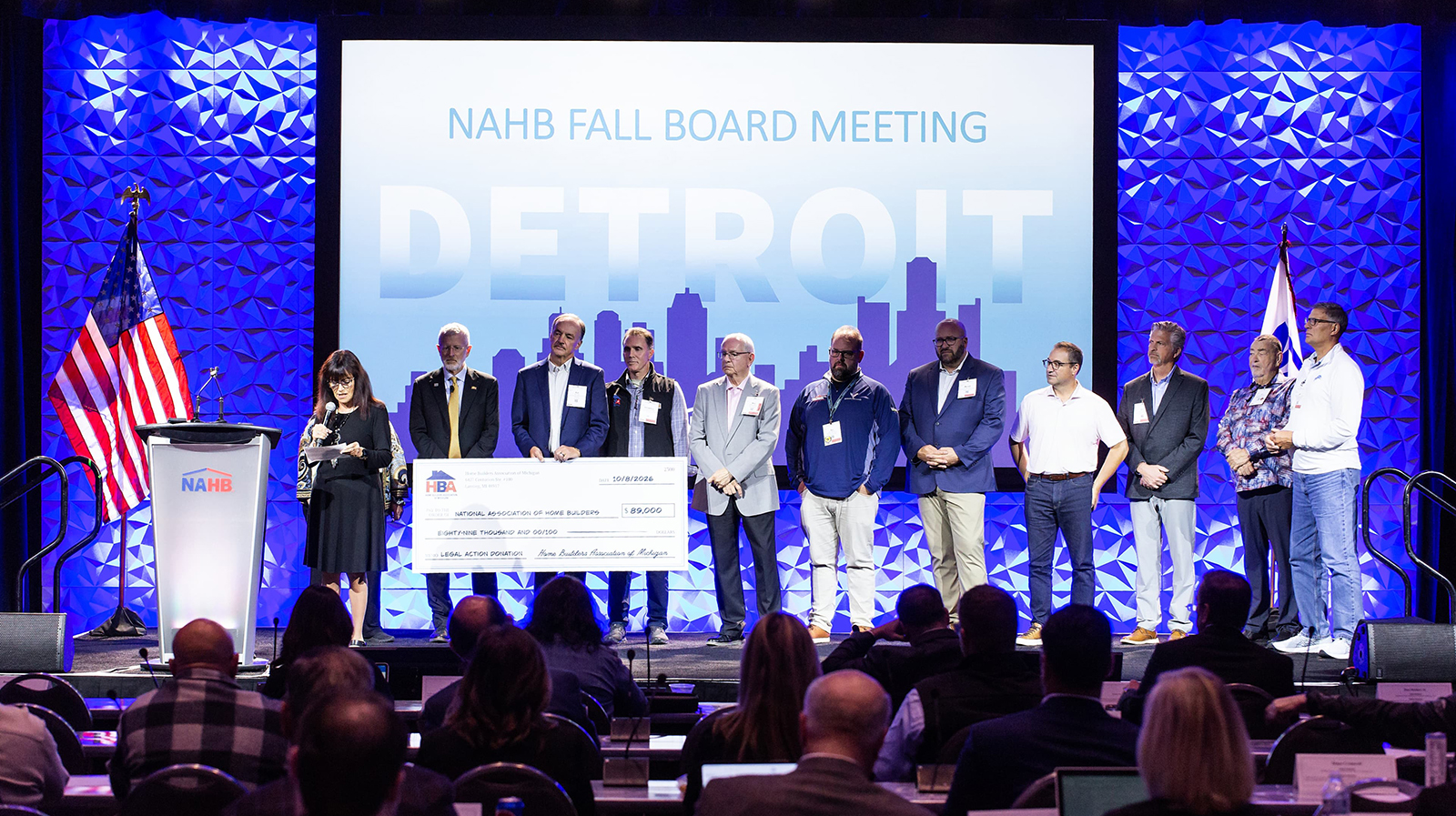
The resolution of this case was supported by continuous assistance from the NAHB Legal Action Fund, which provided grants and advice throughout the 15-year period. To recognize this support, HBAM returned $89,000—a proportional share of the settlement—to the fund during the NAHB Fall Leadership Meetings in October.
While the Troy case is settled, the precedent regarding the separation of permit fees and general government revenue remains a critical watchpoint for municipalities across Michigan. The NAHB continues to accept applications for legal grants for cases to be decided at IBS 2027.
Worth a look

New Mexico Lawmakers Consider New Office for MMIP Crisis
New Mexico legislators may soon consider establishing a permanent state-level office to address the crisis of Missing and...

Prologis Files Federal Lawsuit Over Trenton Data Center Ban
Prologis filed a federal lawsuit on Thursday, Nov. 12, challenging a recent voter-approved ban on data centers in...

House Democrats Nominate Alexis Simpson as Next Speaker
Rep. Alexis Simpson has been selected by House Democrats to serve as the next Speaker of the House....

Former NC Rep Jason Saine Indicted in Greater Carolina Corruption Case
“I do not understand why I have been charged in this case,” former N.C. Rep. Jason Saine told...