
New Yorkers on Medicaid will keep their coverage through July despite new federal work requirements that take effect in January, after Gov. Kathy Hochul said Thursday the state will use a six-month reprieve offered by the Trump administration.
The delay affects roughly 2 million of the 6 million residents enrolled in the program who risk losing insurance under the new rules, the governor’s office said. Hochul's office also announced a $213 million investment to help vulnerable New Yorkers complete enrollment and documentation requirements.
“New Yorkers should not lose their health coverage because of new federal red tape,” Hochul said.
The work requirements, finalized by the Centers for Medicare and Medicaid Services, mandate that adult enrollees work 80 hours a month, perform equivalent community service, enroll in an educational program, or prove they qualify for an exemption. States must still verify eligibility during the six-month window, according to a letter from CMS Deputy Administrator Daniel Brillman.
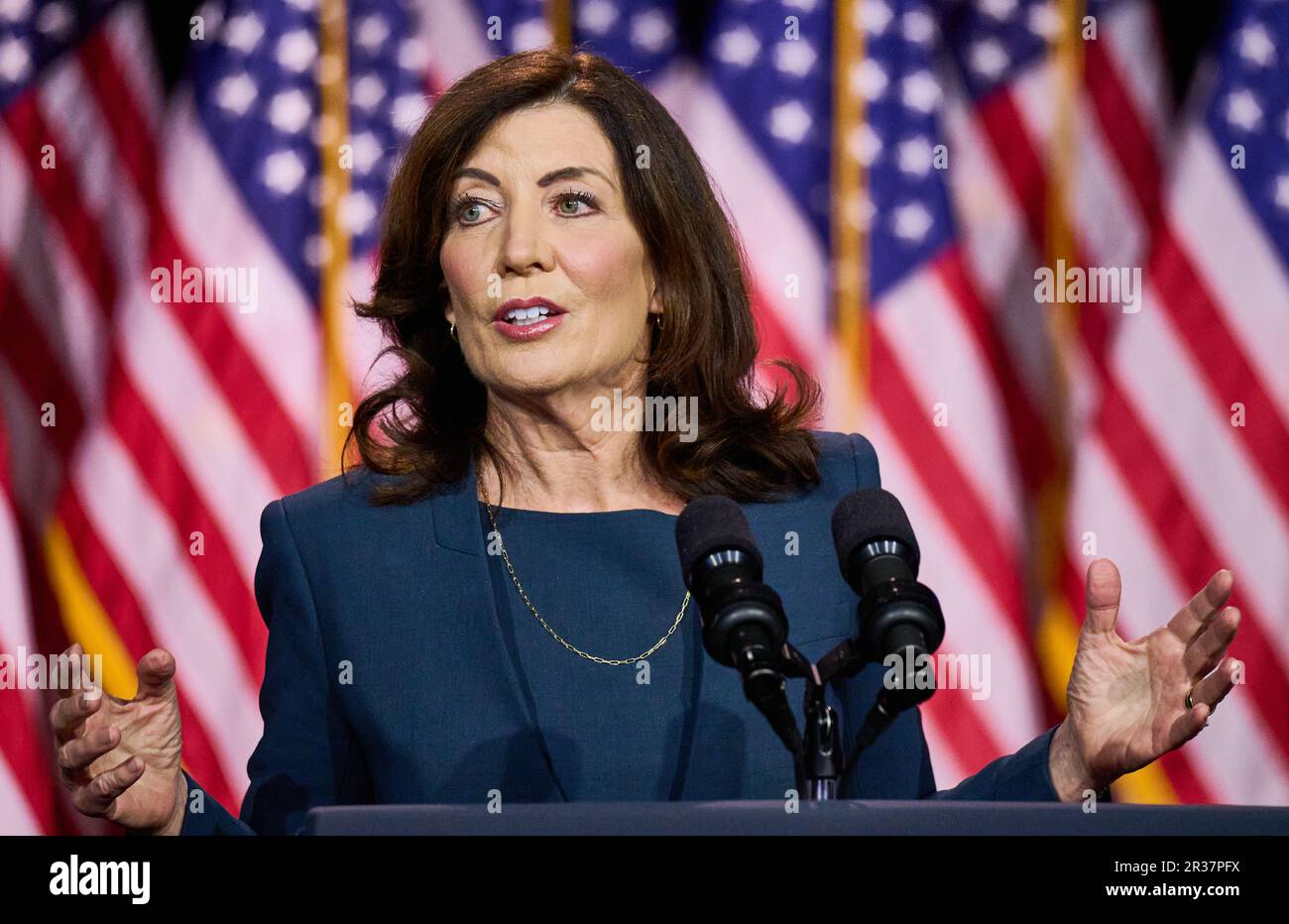
“I did a lot of research on this because I was very nervous to lose my Medicaid coverage,” Sarah Whitlock, a Brooklynite on Medicaid, said at the event. “We rely so much on it in my family.”
Whitlock, a part-time social worker, said she does not always meet the 80-hour threshold but likely qualifies for an exemption because she has children under 14. “That’s a huge relief,” she said. “But I still don’t know how to prove that or where to send this documentation.”
The state attorney general has projected the requirements could add 475,000 people to the uninsured rolls, a 45 percent increase.
Healthcare providers warned the fallout would cascade into the city’s safety-net system. “You could get much longer waits for specialty care because we are the only group that provides specialty care to people who can’t pay,” said Dr. Mitchell Katz, president and CEO of NYC Health and Hospitals, at the Bronx forum.
Dr. Alister Martin, the city health commissioner and an emergency physician, said delayed care often ends up in emergency rooms. The city is partnering with community groups to help residents stay enrolled.
Alaila Abreu, a community health worker on the city’s new Health and Affordability Resource Team, said clients are already juggling rent, food insecurity, and medical bills. “It’s a lot of things all bunched up into one,” she said.
Kathy Hochul, born in Buffalo in 1958, became New York’s first female governor in August 2021 after Andrew Cuomo resigned. She previously won a 2011 special election for a U.S. House seat, the first Democrat to hold the district in 40 years, and served as Erie County clerk. Hochul won a full gubernatorial term in 2022 in the state’s closest race since 1994.
Hochul said the state has also requested a geographic exemption for Bronx residents based on the borough’s high unemployment rate. Advocates at the forum said the federal cuts have renewed momentum for universal coverage proposals, including the New York Health Act and federal Medicare for All legislation.
Related reading

BBC Inside Science: China Emissions Plateau as COP31 Electrification Plans Advance
The UN climate summit COP31 opened in Antalya, Turkey, on Thursday with a formal focus on implementation and...

Justice Varma Tells Lok Sabha Removal Proceedings Infructuous After Resignation
Justice Yashwant Varma has told Parliament that the move to remove him from the bench died the moment...

GTA 6 Money Guide: Best Early, Mid, and Late-Game Cash Methods
Rockstar's latest crime simulator hands players a tiered economy where the fastest cash shifts from stolen sedans to...

EU Council Approves Indonesia Trade and Investment Deals for Signing
EU governments gave the green light Wednesday for the signing and provisional application of a sweeping trade and...