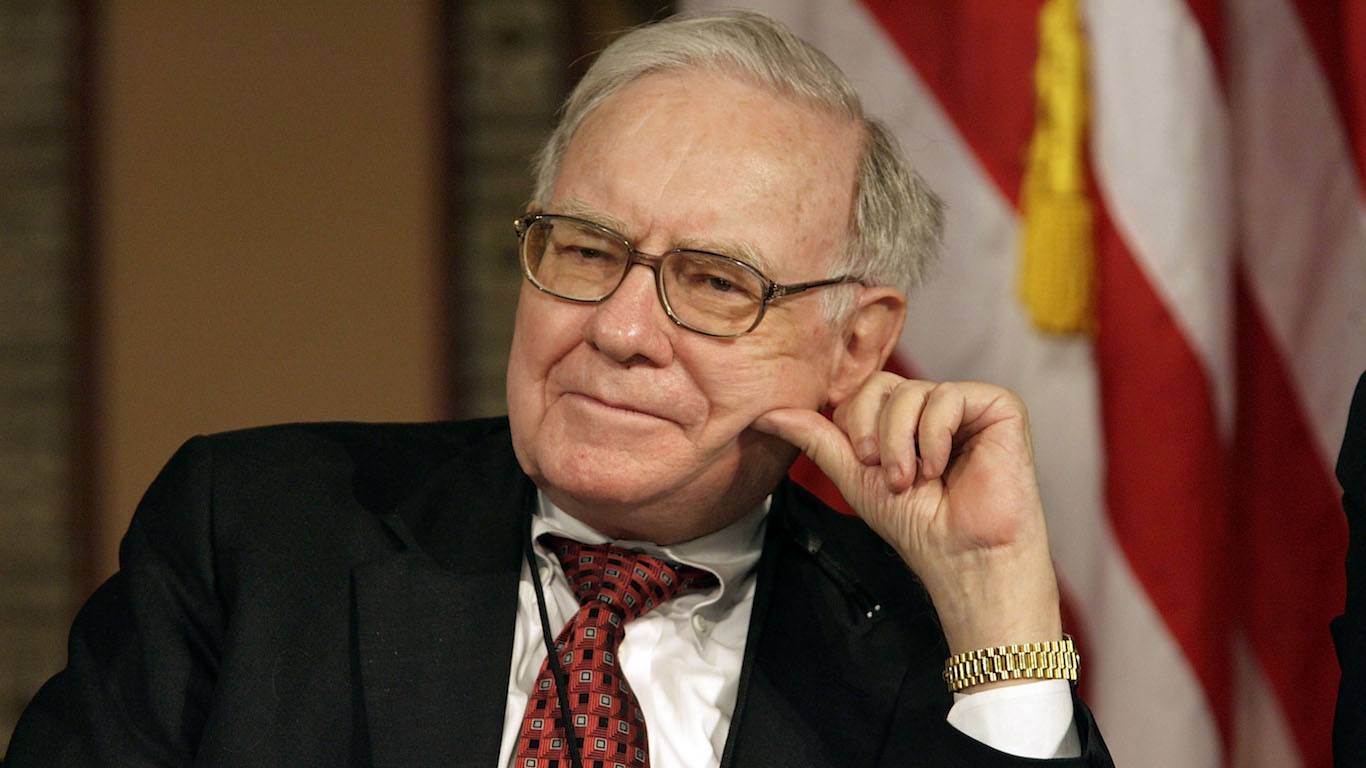
In 1957, Dr. Carol Angle, a 29-year-old pediatrician at the University of Nebraska College of Medicine, walked into a night class at the University of Omaha to hear an instructor she had been told was a “bright kid.”
That instructor was a 27-year-old Warren Buffett. What began as a $10,000 investment of the Angles’ life savings eventually ballooned into a holding worth $300 million by 1998, a figure that has continued to climb in the decades since.
This story is often framed as a simple tale of stock-picking genius, but the reality is a study in the extreme volatility of long-term concentration. For the average investor in today’s market, where Goldman Sachs called chip stocks oversold and index funds remain the standard, the Angle family’s journey shows the cost of holding a single, massive position through decades of turbulence.
The Classroom Origins of Emdee, Ltd.
Buffett’s early partnership model relied on a small circle of trust. After that initial class, where he used a slide rule to demonstrate the mechanics of compound interest, the Angles became early evangelists for his approach.
By August 1960, they had organized a dinner for their physician colleagues to introduce them to the young investor. The pitch was simple but persuasive. Dr. William Angle stood up at the end of the evening and declared, “I’m putting $10,000 in. The rest of you should, too,” a moment captured in Forbes reporting from 1998.
This led to the formation of Emdee, Ltd., a partnership named as a play on the physicians’ credentials. While the broader market, as tracked by the Dow Jones Industrial Average with dividends, saw five losing years between 1961 and 1969, Buffett’s partnership never recorded a single annual loss. When he wound down the partnership in 1969, he distributed shares of a textile company the firm controlled: Berkshire Hathaway.
The Price of Staying the Course
The headline number—a multi-billion dollar return—often obscures the psychological endurance required to achieve it. The road was anything but linear. According to Berkshire Hathaway’s own 2017 shareholder letter, the stock endured four significant drawdowns, including a 59.1% drop between 1973 and 1975 and a 50.7% decline from September 2008 to March 2009.
For a family holding a $300 million stake, those percentages represented nine-figure paper losses. Yet, the Angles never sold. Carol Angle, who remained on the faculty at the University of Nebraska Medical Center as director of clinical toxicology, maintained a lifestyle that remained grounded in Omaha.
As she noted in that 1998 Forbes profile, “There isn’t that much to spend money on in Omaha, and if you do, you’re highly suspect.”
The Mechanics of Generational Wealth
The math behind the Angles’ success exposes why many financial advisors suggest diversification, yet it also highlights the unique tax advantages of a buy-and-hold strategy. If the family had invested $30,000 in the S&P 500 in 1961 with dividends reinvested, they would have roughly $23.7 million today. By sticking with Berkshire Hathaway, that same $30,000 stake grew into an estimated $4.52 billion.
The "step-up in basis" rule for inherited assets drives much of this long-term wealth accumulation. Because shares held until death are valued at the market price at the time of the owner’s passing, the embedded capital gains tax is never triggered. For a position that grows from $30,000 to billions, this tax treatment is often more significant than the market returns themselves.
The Angle story serves as a checklist for those currently holding a single, dominant position in their portfolio. It requires a high risk tolerance, a secondary source of income to survive market bottoms, and a long-term commitment that ignores the noise of quarterly volatility.
It is a reminder that while the math of compound interest is a miracle, the human capacity to watch half of one’s net worth disappear without panic is the true engine of such extraordinary outcomes.
Keep reading

Pet Custody in New Mexico Divorce: How Property Laws Affect Your Animals
For many couples going through a split, the hardest question in a divorce is not who keeps the...

Tower Hill Beats Newark Charter 3-1 in DIAA Girls Volleyball
Tower Hill secured a spot in the next round of the DIAA Girls Volleyball Tournament on Monday, overcoming...

Concord University Men’s Soccer Qualifies for NCAA Division 2 Tournament
Concord University Men’s Soccer has officially secured a spot in the NCAA Division 2 Tournament for only the...

Former CFO Jon Paul Calls Claims for Nonprofit Funds Outrageous
A divorced couple accused of embezzling funds from a struggling Nevada nonprofit now claims that the organization owes...