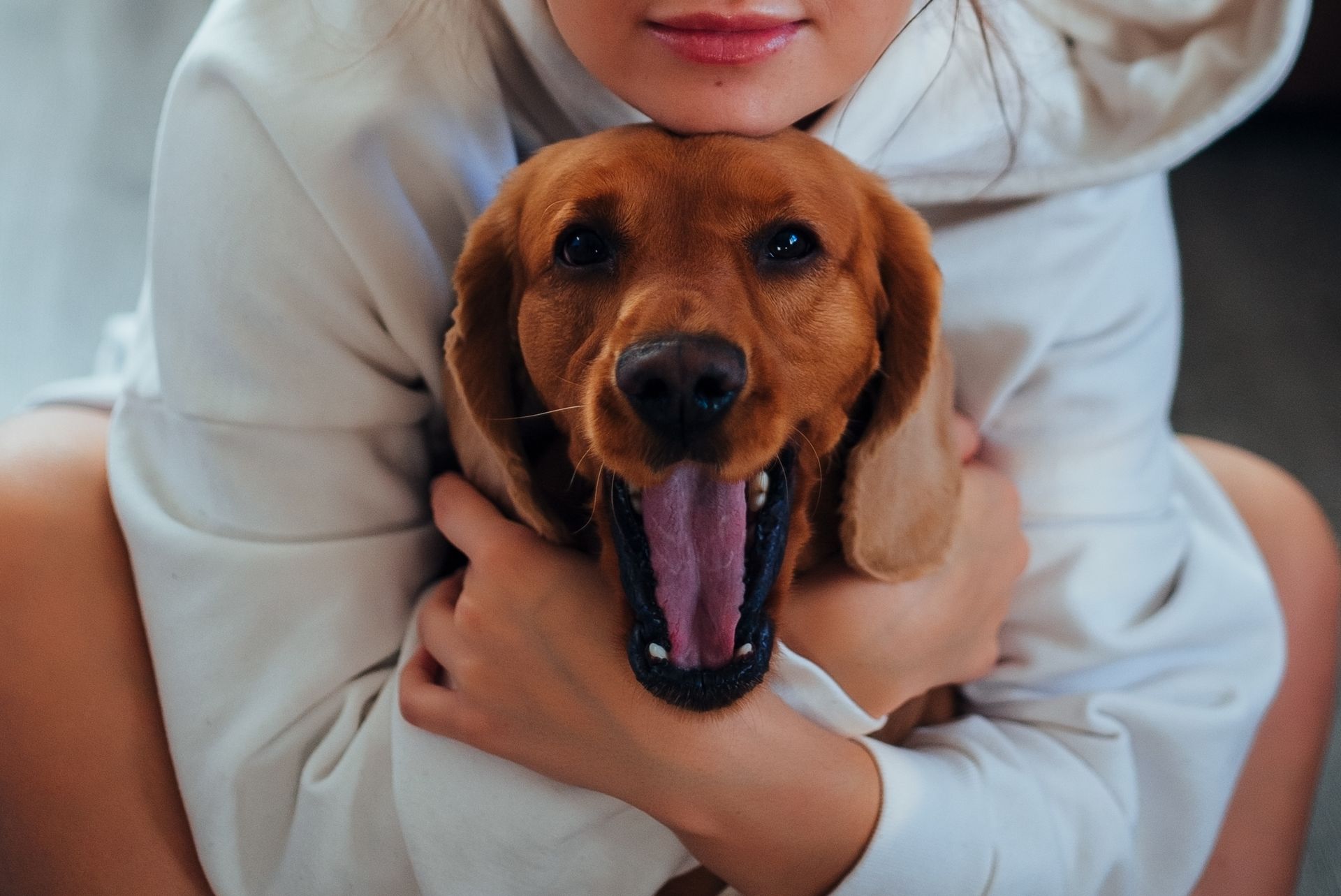
For many couples going through a split, the hardest question in a divorce is not who keeps the house, but who keeps the dog. New Mexico law treats dogs, cats, and domesticated birds as personal property, leaving families without a dedicated pet custody framework when marriages dissolve.
Pet disputes rarely surface during the initial consultation with a lawyer. Instead, they typically emerge months into a separation once the reality of dividing a household sets in. According to insights shared by Maggie Brister, managing attorney at the New Mexico Legal Group, attorneys regularly encounter legal fights over animals ranging from Great Dane mixes and shih tzus to horses, chickens, and bearded dragons.
Under New Mexico statute NMSA 77-1-1, a law dating back to 1912, dogs, cats, and domesticated birds are legally personal property. Horses, cattle, and other livestock are treated as property too. When a couple divorces, a judge evaluates a family pet the same way they examine a couch or a truck, awarding the animal to one spouse or the other as part of the overall marital estate.
Why New Mexico treats pets as community property
State lawmakers have previously attempted to alter this legal reality. In 2017, House Bill 448 was introduced to let judges award pets to either spouse regardless of whose name appeared on veterinary records, but the measure failed to become law. Unlike states such as California that now permit judges to weigh an animal’s care and well-being, New Mexico courts lack a best-interests-of-the-pet standard.
Because pets remain legally classified as property, the state’s community property rules dictate ownership. Animals acquired prior to a marriage are generally separate property, while pets obtained during the marriage are categorized as community property regardless of whose name is listed on adoption papers, microchips, or vet bills.
Family court judges strongly prefer that couples negotiate these matters outside the courtroom rather than litigate them. Crowded dockets mean animal disputes compete directly with urgent cases involving children.
“I have heard sad stories where the court judges have told the parties if they have a deadline to figure out who’s taking the dog or the animal and if they don’t, that the animal has to be placed for adoption for someone else.”
Brister explained regarding judicial patience when spouses fail to reach an agreement.
How spouses can establish private pet time-sharing plans
While judges cannot officially order shared custody of an animal, separating spouses can legally establish a time-sharing plan and incorporate it into their final divorce settlement. Attorneys note that while time-sharing can successfully resolve deadlocked cases, it often keeps former partners tied together and introduces friction over daily care, veterinary expenses, and routine schedules.
Legal professionals also caution against using family pets to gain an advantage during negotiations. Utilizing an animal to punish a spouse or extract financial concessions typically backfires, delaying court proceedings and drawing negative attention from judges evaluating broader issues like attorney fees and child custody.
How New Mexico classifies and divides pets during divorce
Are pets considered property in a New Mexico divorce?
Yes. Under NMSA 77-1-1, dogs, cats, and domesticated birds are classified as personal property alongside livestock, meaning courts divide them during property distribution rather than through a custody process.
Can a judge order shared custody of a dog in New Mexico?
No. Judges can only award an animal to a single spouse as property, though couples may voluntarily agree to a private time-sharing schedule within their written divorce settlement.
Who gets a pet acquired during the marriage?
Animals obtained during the marriage are generally treated as community property regardless of whose name appears on adoption paperwork or veterinary bills, requiring spouses to negotiate ownership or let the court award the animal.
Keep reading

Tower Hill Beats Newark Charter 3-1 in DIAA Girls Volleyball
Tower Hill secured a spot in the next round of the DIAA Girls Volleyball Tournament on Monday, overcoming...

Concord University Men’s Soccer Qualifies for NCAA Division 2 Tournament
Concord University Men’s Soccer has officially secured a spot in the NCAA Division 2 Tournament for only the...

Former CFO Jon Paul Calls Claims for Nonprofit Funds Outrageous
A divorced couple accused of embezzling funds from a struggling Nevada nonprofit now claims that the organization owes...

How a $10,000 Investment in Warren Buffett Turned Into Billions
In 1957, Dr. Carol Angle, a 29-year-old pediatrician at the University of Nebraska College of Medicine, walked into...