
“Our goal is to belong to a community that approaches this work deliberately, so families can remain here and raise their children in a rural setting,” said Caron Daugherty, president of Flint Hills Technical College. “That is a testament to our resilience.”
Flint Hills Technical College and Madisonville Community College moved quickly to retrain displaced workers after major employers shut down, ccdaily.com reported. Flint Hills Technical College launched commercial driver’s license and industrial engineering programs after Tyson Foods closed its Emporia meat-processing plant, eliminating 800 jobs in a region of 24,000 people.
Madisonville Community College built a utility lineman training center at a former coal mine site after the Dotiki Mine closure cost 200 jobs in Webster County.
Flint Hills responds to Tyson closure
Tyson had operated in Emporia for 75 years before layoffs began in November 2024 and continued through 2025. “There were generations of folks who worked there,” Daugherty said. “Our response was good, but we’re always wanting to respond sooner. My concern was for the families, and what that would look like for the community.”
FHTC CDL Coordinator Eric Crook said the college entered the plant to speak with “shag drivers” who maneuver trailers for loading. “Because of those conversations, we got many people inside the building into jobs,” Crook said. “Tyson maintains a strong training and safety culture, so the students we saw arrived with a positive attitude and a knowledge base for the work. We’ve had a 100% success rate with these folks — they came in with a solid foundation and transitioned well.”
Students earn Class A and Class B licenses, qualifying them for driving roles and future work as managers, dispatchers or mechanics. Daugherty said workers who previously earned $60,000 or $70,000 at Tyson are now making $80,000 annually as truck drivers. In 2025, about 20% of FHTC’s workforce development completions involved people directly or indirectly affected by the plant closure.
Beyond the short-term CDL track, the college funneled adults into an industrial engineering pathway offering a technical certificate and an associate of applied science degree. Participants learn industrial and residential wiring plus machine and equipment repair comparable to OSHA 10 General Industry certification.
“CDL is short-term training — industrial engineering is a longer program, though a one-year certificate is available,” Daugherty said. “Technical colleges are made to be agile, or to shore up (programming) within a couple of weeks. That is the arena we live in.”
Madisonville converts mine site for lineman training
The Dotiki Mine, a cornerstone of the Western Kentucky coal industry, closed in 2019 amid stricter environmental regulations and competition from natural gas. “In Kentucky, there are generations of coalminers,” MCC President Cynthia Kelley said. “It’s just something you did — it paid well, and we all understood each other. You would see people on the street wearing heavy khaki clothes, which was the uniform. Mine by mine, it all disappeared.”
Kelley arrived after downsizing began and worked with administrators to identify retraining options. Early efforts steered miners toward welding, electrical technology and health care. A turning point came when a Georgia-based contractor recruited local linemen for six-month stints out of state.
In 2022, MCC converted a building at the former Dotiki mine portal into the Lisman Workforce Complex. During a 10-week course, students climb power poles under industry professionals and receive pole-top and bucket rescue training. The median U.S. lineman salary is $92,560, according to the Bureau of Labor Statistics.
Facing a regional lineman shortage and a dwindling pool of qualified CDL workers, MCC expanded both programs and added a diesel technology curriculum. “This work built upon itself,” Kelley said.
Local industries “knew just like we did the need for line people and a distinct CDL program. It would help the entire community to get folks retrained in skills that would get them jobs. That helps our tax base and morale in the community.”
Keep reading
Newman Signs Ends 70-Year Run in Jamestown After Selling Final Divisions to Lamar, DFC Company
Newman Signs, a Jamestown employer for 70 years, has sold its final divisions and is winding down operations,...
Twins GM: Infield, Bullpen Remain Big Needs After Gray Re-Signing
"We're not just looking to sign you and be done," Sonny Gray recalled being told during Minnesota's recruitment...
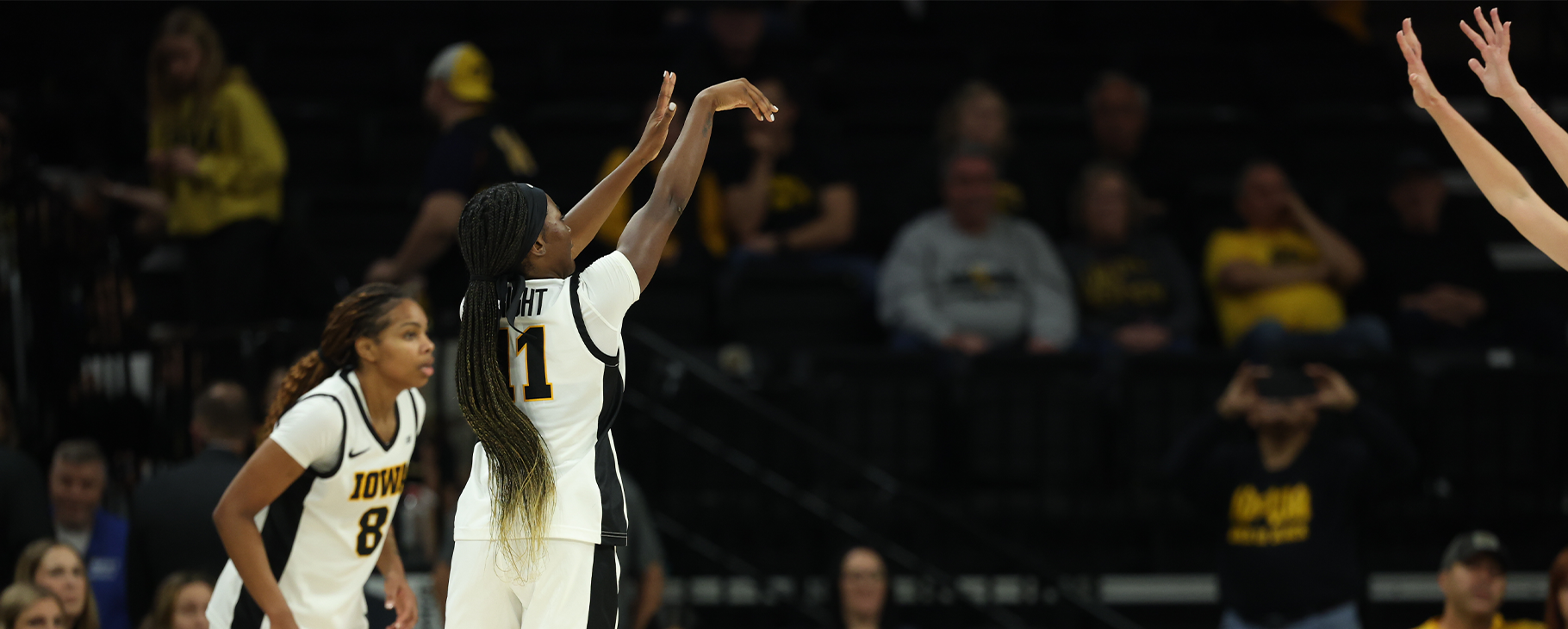
No. 8 Iowa Opens Pink Flamingo Championship vs. Undefeated Utah
No. 8 Iowa (5-1) opens the Baha Mar Hoops Pink Flamingo Championship against undefeated Utah (6-0) on Monday...
Madison Council to Vote on $2.265M Warehouse; Oversight Board Suspension Deferred
Madison's Common Council will vote Tuesday on a $2.265 million purchase of a Robertson Road warehouse for election...