
“I’d rather be slow and right than quick and wrong,” said Gene Uhl, director of information technology services for Huntsville, Ala., echoing a philosophy honed during 18 years as a soccer referee.
That restraint defines how Huntsville is approaching artificial intelligence and a modernization of its technology stack, GovTech reported. Huntsville is adding roughly 20 residents a day, pushing its population to about 250,000 within city limits and 500,000 across the region, while its boundaries have expanded by 30 square miles over the past decade to make it the 27th-largest U.S. city by land area.
The growth strains roads, permitting, inspections and public-safety systems, yet staffing has not kept pace. “We don’t want to be bigger in size; we want to be bigger in offerings,” Uhl said. “We’re implementing all these [technologies] to augment the workforce to actually be able to do more, but do more with the same staffing that we have.”
Larry Lowe, the chief innovation officer working under contract with the city, arrived 18 months ago from the commercial technology sector with a mandate to examine the technology stack and make the city more forward-leaning. His audit revealed that departments had been buying software independently, often duplicating functions, and that critical systems in engineering, planning, zoning, permitting, licensing, inspections and code enforcement were built in-house 25 to 30 years ago.

“We can’t move fast and break things,” Lowe said. “Municipal government has to work all the time, no matter what.”
Huntsville is now six weeks into an estimated 18-month project to consolidate those fragmented tools into a shared enterprise resource planning platform. At the same time, the city is testing AI in targeted pilots rather than chasing chatbots. The clerk’s office is running a proof of concept with two or three AI agents to produce City Council meeting minutes, both to understand the workflow and to evaluate commercial automated-minutes products.
Public works currently spends about three months per area manually evaluating pavement conditions with spreadsheets to prioritize resurfacing and pothole repairs. The city is considering computer-vision technology that could scan streets monthly or quarterly, assign condition scores and flag problems for crews to inspect — giving employees a starting point rather than replacing their judgment.
Huntsville has also signed an agreement with a major AI company to scan source code in legacy applications for vulnerabilities and to use code-generation tools to rebuild those systems on modern frameworks such as .NET. Uhl said that work is expected to take six months to a year and would widen the pool of developers able to maintain the software.
The city has budget approval for an ITS innovation analyst to bridge Lowe’s innovation work with the IT department and is discussing a digital services team to maintain AI agents and other tools over the next one to two years.
“A fast decision isn’t worth much if it’s the wrong one,” Uhl said. “In city government, where residents depend on services working every day, getting the call right comes first.”
Related reading

West Georgia Technical College Dedicates Fountain, Flag Display, Earns Military Friendly Award
"The steady flowing waters of the fountain remind us of the enduring legacy of service," Michael Jiles said...

Gateway Jax Opens Vandeveer, the First Project in Pearl Square District
Gateway Jax opened the first building in its Pearl Square district on Nov. 18, cutting the ribbon on...
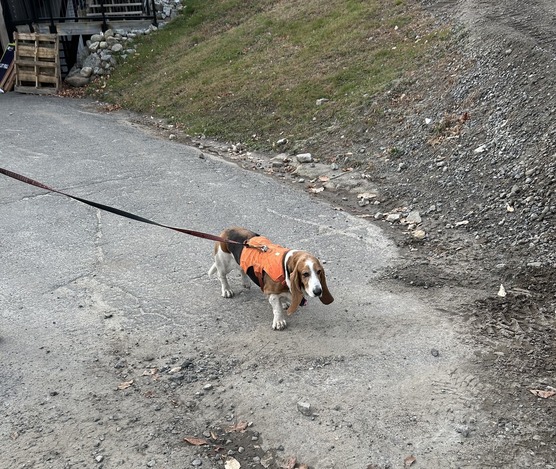
Basset Hound Becky Leads Rescuers to Missing Dementia Patient in Adirondacks
A basset hound named Becky showed up alone at Whiteface Mountain Ski Resort in Wilmington Thursday night, and...

UConn Hosts Old Dominion on Senior Day Seeking Bowl Eligibility
A victory would make the Huskies bowl eligible for the third-straight season and the fourth time in the...