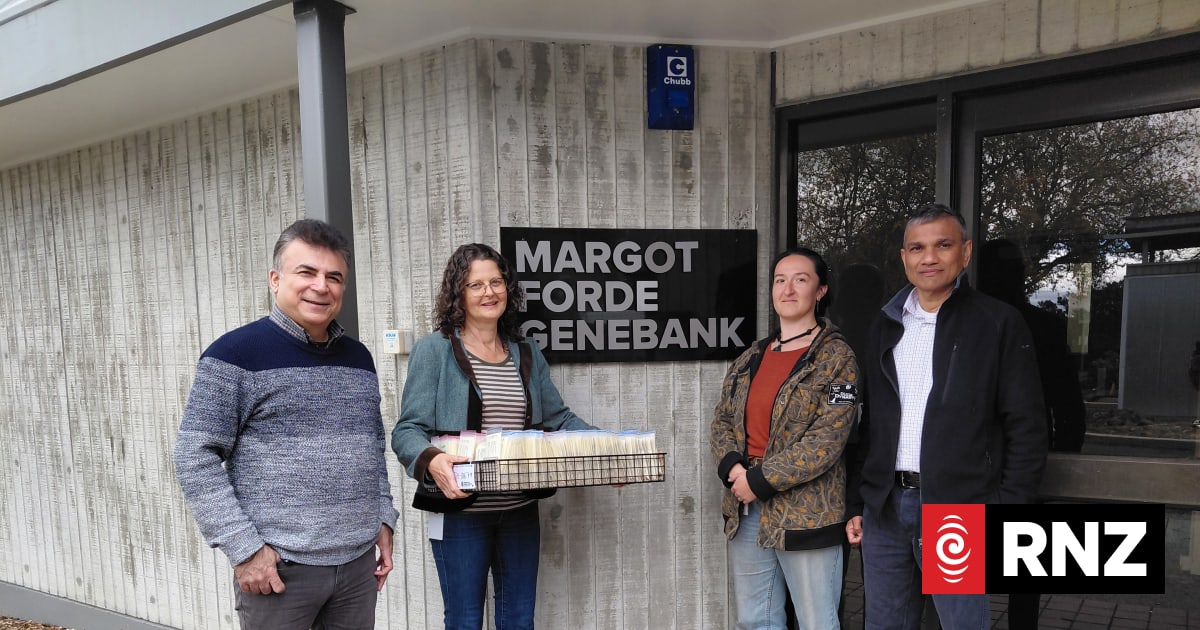
New Zealand has secured 300 seed samples grown under simulated future climate conditions in the Svalbard Global Seed Vault, marking a decade since the country’s first Arctic deposit.
- Margot Forde Genebank sent 300 samples to Svalbard on November 23, 2026.
- Core deposit: grasses grown 25 years in elevated CO₂ via FACE experiment.
- Total NZ deposits reach ~3,500 samples; 10-year goal is 18,000.
- Seeds stored under “black box” terms: NZ retains sole ownership.
Climate-resilient pasture seeds lead deposit
Most of the shipment came from grasses cultivated for more than 25 years in the Free Air Carbon Dioxide Enrichment (FACE) experiment — the world’s first trial testing raised CO₂ levels on grazed pasture, NZ Herald reported.
Genebank director Kioumars Ghamkhar said the samples contain “vital genetic material” that could help develop future forage varieties capable of withstanding extreme climate shifts.
“When you impose some conditions on plants, they adapt and their genetics changes over time,” he told RNZ.
The adapted varieties arose through natural selection rather than genetic modification, Ghamkhar said. Future deposits could include drought-resistant lines that adapted to wetter conditions.
Decade-long backup strategy
Monday’s shipment marks ten years since New Zealand’s first Svalbard deposit in 2016. Ghamkhar described that inaugural visit as “unreal,” recalling nearly 24-hour daylight and a polar bear at his hotel door, RNZ reported.
The Genebank has now shipped close to 3,500 samples, dried and sealed in double-layered aluminium pouches. Its long-term target is 18,000 samples — roughly 10 percent of the full collection — prioritising species with economic and climate-adaptive value. Ryegrass and white clover, New Zealand’s two most important forage species, remain core priorities, Scoop reported.
Under the vault’s “black box” agreement, New Zealand retains sole ownership and control; no other country or organisation can open or withdraw the seeds, NZ Herald noted.
Ghamkhar rejected the notion that the country’s future rests on his team.
“I wouldn’t put that much credit on myself and the team,” he told RNZ. He called the vault a realistic — not defeatist — project: “If they disappear and you don’t collect and bring them in, you won’t have any record of it. It’s gone and it’s gone forever.”
New Zealand’s recent Svalbard shipment came from the Margot Forde Genebank, the country’s national seed bank of grassland plants and host of the New Zealand Indigenous Flora Seed Bank, recognised as a Nationally Significant Collection and Database. Its objectives are to obtain, conserve, replenish and distribute germplasm for research and product development throughout New Zealand and globally, with seeds freely available to bona fide researchers worldwide.
Vault capacity and selection criteria
The facility opens for deposits only three times a year, Scoop noted. Ghamkhar said the Genebank focuses on backing up seed material with economic and climate adaptive value.
“So if we have them [seeds] here, and also even better if we characterise them and get ready for the worst case scenario … then it’s a real thing that can affect our preparation and readiness for the future and survival of human beings,” he told RNZ.

Over 12,000 Evacuated from Don Toliver Manchester Concert After Unknown Substance Released
Greater Manchester Police safely escorted more than 12,000 concertgoers from the 23,500-capacity Co-op Live arena after an unknown...

ASEAN-China Week Opens in Chongqing With 300+ Participants, FTA 3.0 to Take Effect Dec. 1
More than 300 participants gathered in Chongqing on Monday for the opening of ASEAN-China Week, where officials said...

24 Dead, Dozens Missing in Indonesia Candy Factory Fire
Rescuers removed 24 body bags from the PT Fonusa Agung Mulia confectionery factory in Cikande after a massive...

Beatles Savile Row Museum Faces Rooftop Live Music Ban
Plans to open a Beatles cultural attraction at 3 Savile Row face a strict restriction. Westminster City councillors...