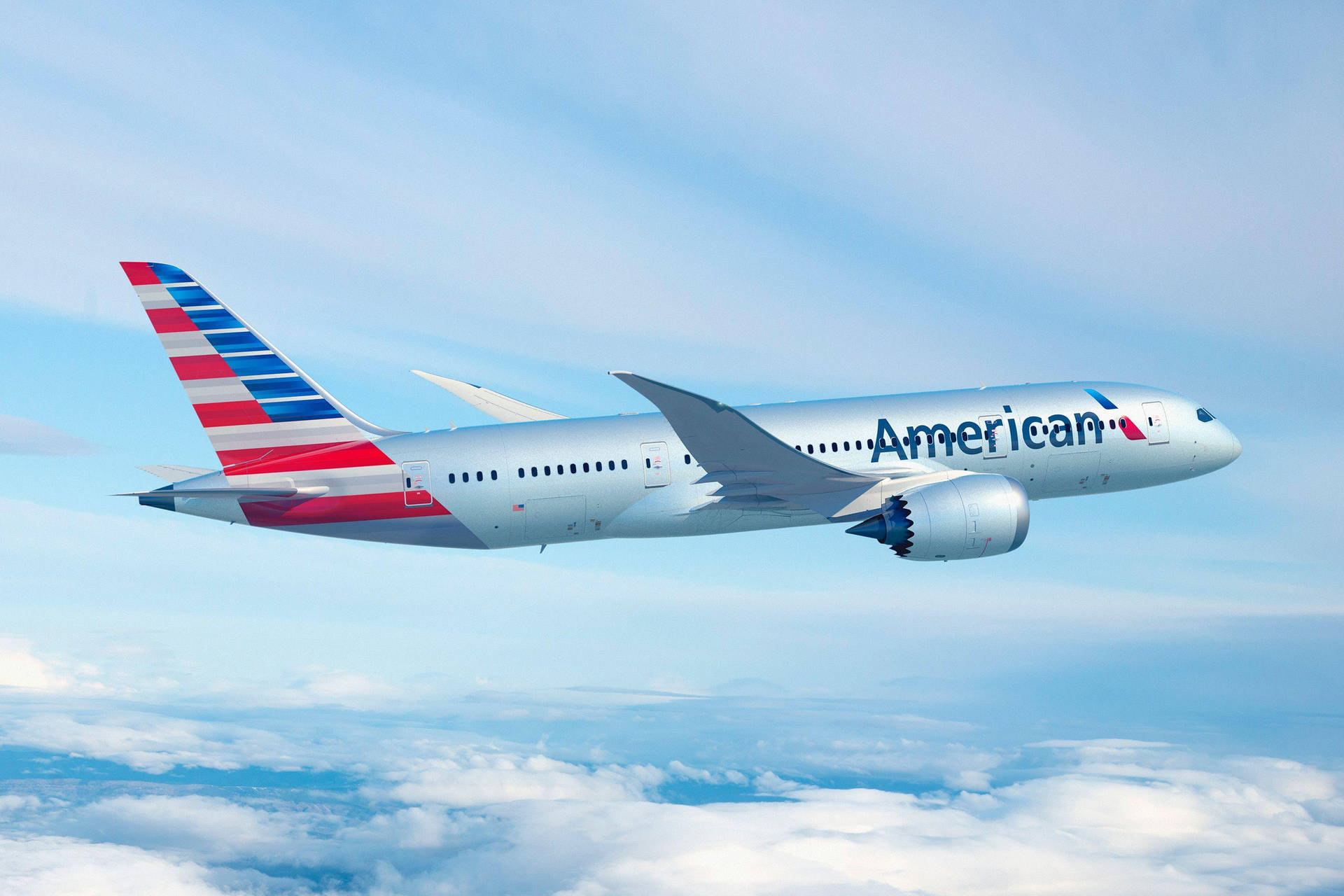
American Airlines lost its bid to freeze a gate reshuffle at O’Hare International Airport, and the Illinois Appellate Court said the fight was still alive even after the new assignments took effect.
The First District affirmed a Cook County circuit court decision denying American’s motion for a preliminary injunction, ruling that the airline’s appeal was not moot because the reallocation could still be unwound. The court found no abuse of discretion in the lower court’s balancing of harms, leaving American with a breach-of-contract claim that now heads toward trial but without the stop it wanted.
The contract that governs O’Hare’s gates
Since 2018, the Airline Use and Lease Agreement has set the rules for gate space at O’Hare. No airline owns a gate outright; space is designated either preferential use, giving the holder scheduling priority, or common use, managed by the city.
Each year the city can redetermine the split, allocating preferential space based on each airline’s share of departures the prior year. The idea is to push carriers to use what they have efficiently.
The AULA also accounted for a massive capital plan, the Terminal Area Plan. A centerpiece was the T-5 Extension, adding nearly 1,600 feet of gate space, and the L-Stinger, a new concourse addition.
To let the new capacity settle, the contract imposed a one-time moratorium on annual redeterminations — a “ramp-up period” — triggered by the completion of the T-5 Extension and the relocation of one or more long-term signatory airlines from the main terminal to Terminal 5. That moratorium would last 12 months, after which the city would not start the next redetermination until the following April 1.
When does the clock start?
The T-5 Extension finished in June 2023. Delta moved to Terminal 5 in November 2023, which everyone agrees triggered the moratorium. But three gates on the north side of the L-Stinger — space designated as common use in the contract’s Exhibit D-1.3 but expected to be used almost exclusively by American for regional jets — were not ready.
A telecommunications building blocked the third gate until it was demolished late in 2024; that gate only became operational in March 2025.
American argued the ramp-up period could not begin until the north L-Stinger gates were fully operational, because only then could the city allocate space “in accordance with Exhibit D-1.3” as Section 5.2.4 requires. The city and United Airlines countered that the 12-month clock started with Delta’s move in November 2023.
In April 2025, the city issued an initial redetermination that stripped American of more than 500 feet of gate space — roughly four narrow-body equivalent gates — while United gained about four and a half. Delta lost three to Southwest, and three other carriers each lost one.
American refiles in Cook County court
American sued in federal court in May 2025 seeking to block redetermination until April 2027. United intervened, then moved to dismiss for lack of diversity jurisdiction because both airlines are Delaware corporations. Rather than wait for a ruling, American voluntarily dismissed the federal case on July 16 and refiled in Cook County circuit court.
The state complaint mirrored the federal one: breach of contract, breach of the implied covenant of good faith and fair dealing, and a request for declaratory relief and a permanent injunction.
American moved for a preliminary injunction on July 3; the hearing began September 16 and ran five days. The city moved to exclude parol evidence under the AULA’s integration clause, but the court denied the motion without prejudice, saying it would decide after hearing the evidence.
What the evidence showed
Testimony was, in the court’s words, “vigorous—some might even say cutthroat.” American witnesses said losing the gates would force the airline to operate the same number of flights from seven fewer gates, increasing the risk of cascading delays and pushing some flights to less desirable off-peak hours. But American’s own projections showed it was on track to regain gate space at the next redetermination, not lose more.
United’s expert, Samuel Engel, testified that United operates more departures per gate at O’Hare with no meaningful impact on its on-time rate, and that American would not have “gone to market” with a schedule it did not think it could deliver.
Witnesses disagreed on whether American’s harms could be quantified; two of American’s witnesses said their revenue models could not predict how much business would be lost to United through customer defections.
United, meanwhile, had built its schedule on the assumption the redetermination would proceed. Its witnesses said unwinding the new assignments days before the October 1 effective date would disrupt crew and aircraft positioning and passenger connections — not as simple as moving departure times around.
The appellate court’s reasoning
The First District first addressed mootness. Because the reallocation could still be unwound, the appeal from the denial of a preliminary injunction was not moot. On the merits, the court upheld the circuit court’s balancing of harms.
The trial court found American’s alleged harms were speculative and not irreparable, while United and the city would face concrete operational disruption if the injunction issued. The appellate court saw no abuse of discretion.
American Airlines, founded in 1930 through the consolidation of more than eighty small carriers, is the world’s largest airline by passengers carried and daily flights.
The airline pioneered the Douglas DC-3, which entered service on simultaneous flights from Chicago and Newark on June 26, 1936, and later drove development of the DC-10 widebody. After its parent company filed for bankruptcy in 2011, American merged with US Airways in 2013, creating the largest carrier in the United States.
The ruling leaves American’s underlying breach-of-contract claims intact. The question of whether the ramp-up period required the north L-Stinger gates to be fully operational before the moratorium clock started remains for trial. But for now, the October 1 reallocation stands.
Keep reading
Daily Cardinal: 67% of UW Students Bet on Sports; Apps Outpace Regulation
Around 67% of students on campus are betting on sports, a 2023 NCAA study found, and the apps...

Third Circuit Denies Rep. McIver Rehearing on Delaney Hall Charges
The full U.S. Third Circuit Court of Appeals denied Rep. LaMonica McIver’s request to overturn an earlier appellate...

Study: Tagged Neutrino Beams Could Enable Precision Sterile Neutrino Searches at CERN’s nuSCOPE
A single neutrino beam that knows its own flavor, energy, and travel distance for every particle could rewrite...

The Guardian, LA Times: Peltola Beats Sen. Dan Sullivan, First Alaska Native in Senate
Democrat Mary Peltola defeated two-term Republican Senator Dan Sullivan in Alaska, delivering Democrats a 56-44 Senate majority and...