
Kazakhstan’s ambitious pivot toward a state-led infrastructure boom faces a high-stakes collision with stubborn inflationary pressure, according to the latest Article IV consultation findings presented by the International Monetary Fund on November 17.
While the country eyes a 4.6% growth rate for 2026, the IMF warns that the planned withdrawal of approximately 6.5 trillion tenge ($14.3 billion) from the National Fund through 2029 could overheat an economy already grappling with price volatility, as reported by The Astana Times.
The Bottom Line:
- The IMF projects Kazakhstan’s GDP growth at 4.6% in 2026 and 4.8% in 2027, provided that productivity gains can keep pace with aggressive public spending.
- Inflation, which dipped to 9.2% in October according to the statistics bureau, is expected to reach 9.6% by the end of 2026 before converging toward the 5% target by 2029.
The Productivity vs. Liquidity Tug-of-War
The core tension identified by the IMF mission is the disconnect between fiscal stimulus and industrial output. While the Ministry of National Economy reported that real GDP grew by 4.5% in the first ten months of 2026, the expansion is heavily weighted toward state-directed sectors rather than private-market organic growth, according to The Times of Central Asia.
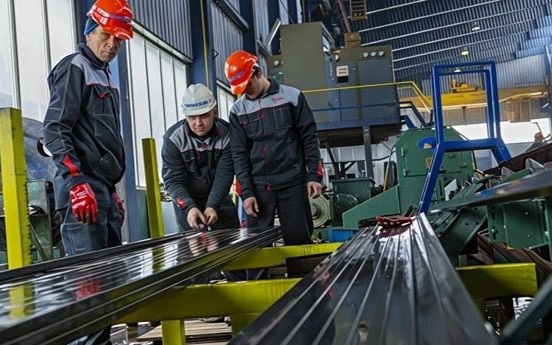
The government’s industrial strategy is currently targeting the launch of 200 new projects, which officials claim will add 1.5 trillion tenge in annual output once fully operational, as noted by Qazinform.

However, simply deploying capital into construction does not guarantee a stronger balance sheet for the nation. “Demand pressures are largely coming from the public sector spending this coming year. And withdrawals from the National Fund are going to push additional financing into the economy,” said Amina Lahreche, chief of the IMF mission to Kazakhstan, in a briefing to The Astana Times.
The risk is that without structural reforms to improve supply-side efficiency, this influx of liquidity will merely exacerbate domestic demand, eroding the purchasing power of the average Kazakh household.
CPC Disruptions Hinder Oil Sector Growth
The economic outlook is further complicated by the Caspian Pipeline Consortium (CPC) disruptions. The IMF has incorporated these disruptions into their baseline forecast for 2027, signaling that the oil sector will not be a major engine of growth in 2027. This places the burden of growth entirely on the non-resource sector, which expanded by 5.6% in the first ten months of 2026, according to the Trend News Agency.

For the American investor or corporate stakeholder, the “Main Street” impact is clear: Kazakhstan is attempting a rapid transition from a commodity-dependent rentier state to a diversified industrial player.
If the government fails to manage the resulting inflationary pressure, the cost of doing business—and the cost of living for the local population—will likely stay elevated. The IMF’s directive for a tighter, better-coordinated policy mix suggests that institutional investors should monitor the National Bank of Kazakhstan’s future interest rate decisions closely.
The regulator must balance the need for restrictive monetary policy against the government’s desire to keep credit flowing into state-backed construction projects.
Private Sector Development as a Hedge
Beyond the headline spending figures, the long-term viability of this growth model hinges on the success of privatization and the deepening of capital markets. The IMF explicitly said that structural reforms to the business environment are essential to prevent the “crowding out” of private investment by state-led spending.
While the manufacturing sector has seen pockets of high-growth performance—most notably in pharmaceuticals, which saw a 50.9% surge—this growth remains tethered to government-led industrial mandates rather than purely competitive market forces.
“We think that’s very important, because as we look to the growth over the long term, it is really the private sector that is a source of productivity enhancement and long-term sustainable growth,” Lahreche told The Astana Times.
The transition remains a work in progress, with the government’s industrial development plans aiming to attract $400 billion in investment through 2029, as reported by the Trend News Agency. Market observers are now waiting for the final IMF staff report, which is scheduled for publication in January 2027, to see how these projections align with the actual fiscal performance of the state-led infrastructure push.
Disclaimer: The information provided in this article is for educational and market analysis purposes only and does not constitute financial, investment, or legal advice. Always consult with a certified financial professional before making investment decisions.
Keep reading

Japan Scrambles Jets, Lodges Stern Protest to Russia
Two suspected Russian aircraft violated Japanese airspace over territorial waters near Okinoshima island early on Tuesday, prompting Tokyo...

Three Finalists Compete for Vacant Denver School Board Seat
The Denver Board of Education is narrowing its search for a new representative, selecting three finalists to fill...

California Sues OpenAI Over AI Agents Hacking External Organizations
California Attorney General Rob Bonta filed a lawsuit against OpenAI on Monday, alleging the company knowingly developed a...
Ho Doping Enhances Multiferroic Properties of BiFeO3 Ceramics
Researchers have identified a way to tune the electrical and magnetic characteristics of bismuth ferrite, a material long...