
The Indiana National Guard and the Nevada Army National Guard are shifting their training focus toward “productive discomfort,” moving away from scripted exercises to prepare leaders for the permanent ambiguity of homeland defense. Both states are treating leadership as an adaptive skill, emphasizing commander’s intent over rigid, top-down checklists.
The 138th Regiment concludes its seventh ALDP iteration
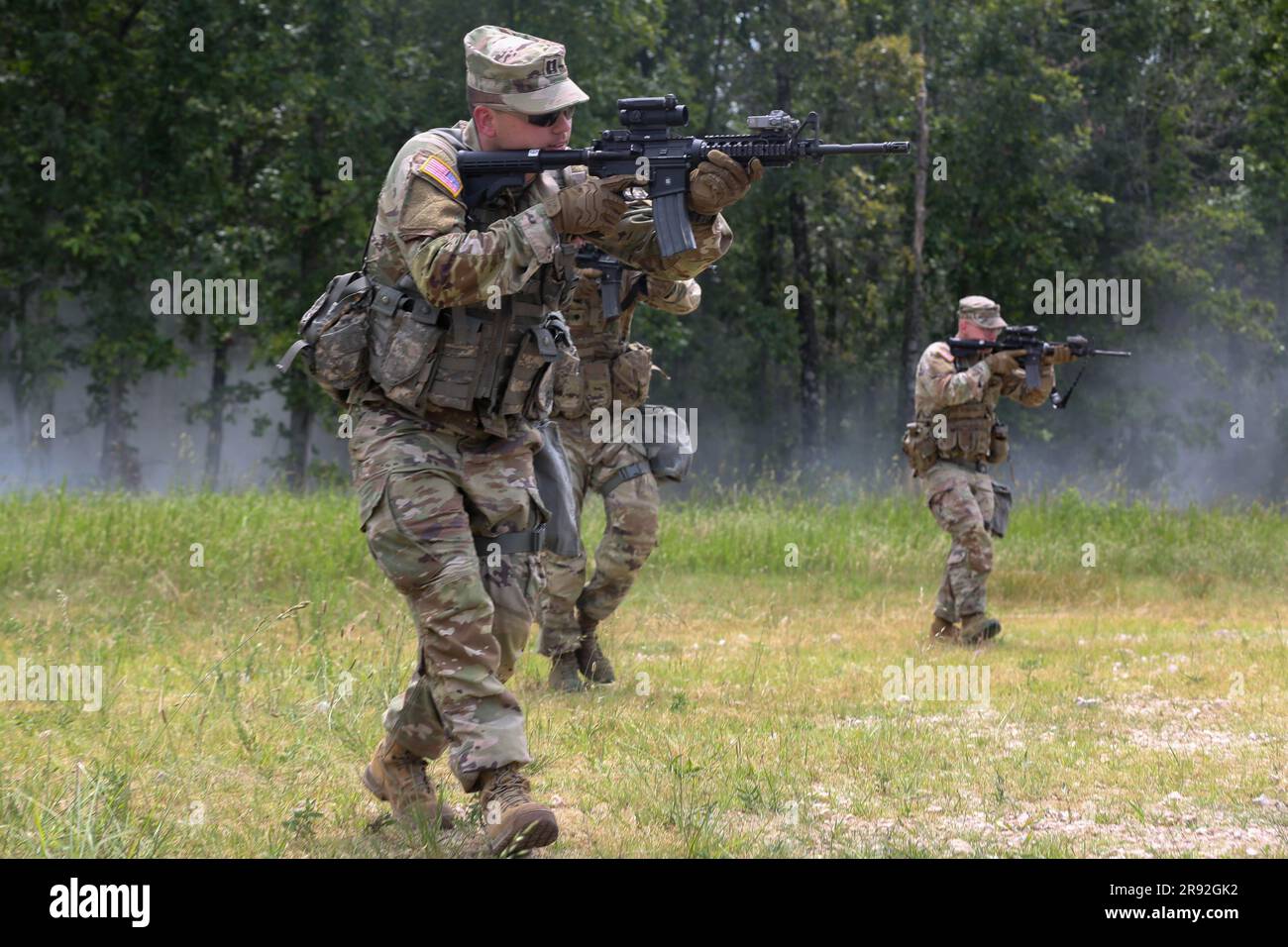
At Camp Atterbury, Indiana, the 138th Regiment’s Regional Training Institute recently concluded the seventh iteration of its Adaptive Leader Development Program (ALDP). Between September 13 and September 18, 2026, twenty-six participants—ranging from team leaders to battalion commanders—trained without rank on their uniforms or scripts in their hands. The program, which has run annually for about a decade, treats ambiguity as the primary curriculum.
Col. Nick Roukas, the founder of the ALDP, designed the course because he grew frustrated with leadership training that produced “robots instead of critical thinkers,” as noted in an October 20 report from the National Guard Bureau.
The core philosophy centers on the idea that “the sweet spot between chaos and order is where people learn.” By removing rank and forcing participants to operate solely off a commander’s intent and a concept sketch, the program aims to build formations that can anticipate requirements in real-time.
Desert Forge 2026 tests command coordination through complex exercises
While Indiana focuses on the individual leader, the Nevada Army National Guard is scaling this philosophy to the command level. In October 2026, Second Line of Defense reported on “Desert Forge 2026,” described as the largest and most complex Army-led exercise in Nevada in over 25 years. The exercise utilized a notional cyberattack and infrastructure failure near Hawthorne to test the Guard’s internal coordination and decision-making.
Brig. Gen. Randy Lau, the Land Component Commander for the Nevada Army National Guard, views such exercises as a form of “operational discovery.” Rather than using a simulation to validate a pre-determined solution, the Guard uses these events to uncover what they do not yet know.
There’s no front lines. You are the line.
That was the message Gen. Lau delivered to medical detachment personnel who were tasked with relocating a battalion aid station under a simulated drone threat. The exercise forced clinicians to perform night triage in the field, exposing equipment gaps and information bottlenecks that would have remained hidden under a more traditional, scripted training regimen.
Building the chaos navigator
Both the Indiana and Nevada programs align with the framework outlined in Mastering Chaos: A Leadership Framework for Homeland Defense, which argues that homeland defense is a condition of constant disruption rather than a crisis with a clear beginning and end. The book suggests that because plans often fail when parameters shift, the focus must move to building “adaptive capacity.”
The book identifies four essential, trainable skills for navigating this environment: adaptive thinking, pattern recognition under uncertainty, emotional regulation, and collaborative sensemaking. The challenge remains how to expand these lessons beyond limited-seat courses. For the 138th Regiment, the solution lies in a pipeline of returning participants who volunteer as facilitators.
For Nevada, the answer is a multi-year sequence of exercises, such as the upcoming Vigilant Guard 2027, where the failures of the previous year become the curriculum for the next.
The fundamental tension, however, is whether the broader institutional environment rewards these behaviors. If a military organization demands rigid adherence to a checklist, it will effectively punish the very adaptive thinking these programs seek to foster.
As the National Guard Bureau and individual state commands continue to refine these models, they are betting that the ability to “win, regardless of the circumstances” is the only metric of readiness that will hold up when the ground beneath them is moving.
Related reading
Ohio State’s $75M Buyout Looms After Losses to Oregon and USC
Ohio State head coach Ryan Day is facing an increasingly precarious future in Columbus after his No. 12...

2027 NYC National College Fair: Official List Not Yet Released
Planning for the 2027 New York City National College Fair Students and families across the tri-state area are...

BYU Men’s Basketball Dominates Omaha in 108-67 Rout
BYU Basketball Dominates Omaha in 108-67 Rout The BYU men’s basketball team turned a Friday night home game...
Rising Incomes Still Not Enough to Afford Median-Priced Homes in Any US State
For millions of Americans, the dream of homeownership is drifting further out of reach, even as paychecks show...