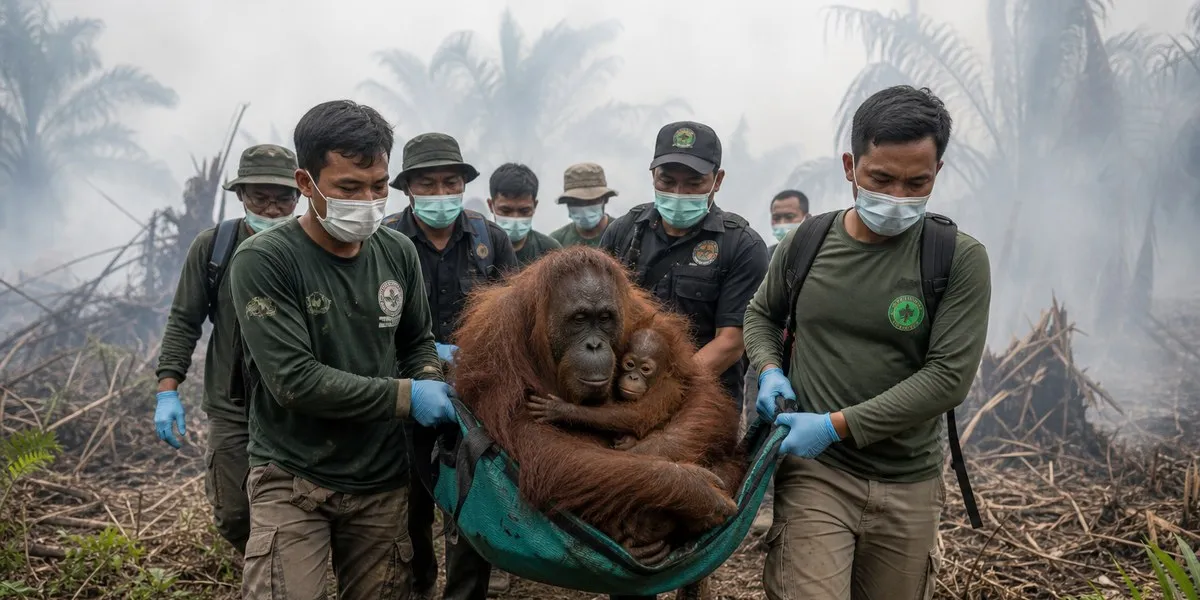
- More than 2.8 million hectares burned across Indonesia from July through October.
- Particulate pollution at the Tuanan research station reached roughly 400 times the WHO safe limit.
- 72 orangutans were rescued in West Kalimantan between August and late November.
- Three orangutan skeletons were found in one West Kalimantan area on October 28, 2023, signaling persistent mortality.
A super El Niño dried peatlands and fanned winds that drove roughly 300,000 blazes across the region between July and October, Nature reported.
The burned area topped 2.8 million hectares nationwide, with Kalimantan hit hardest. At the Tuanan Orangutan Research Station in Central Kalimantan, where researchers have studied Bornean orangutans (Pongo pygmaeus) for more than 20 years, October air quality readings showed toxic particulate matter roughly 400 times higher than the World Health Organization’s safe threshold.
“It felt like you were on Mars,” said Erin Vogel, a primatologist at Rutgers University in New Brunswick, New Jersey, describing the orange-brown haze that hung over the forest. “You didn’t hear birds; you didn’t hear insects; you didn’t hear anything except trees burning and falling,” she told Nature.
Vogel said her team encountered a male orangutan they had tracked for more than 15 years lying on the ground, breathing heavily. Days later he was eating vegetation and climbing trees near the station, a sign of partial recovery. But the broader pattern is displacement: orangutans forced from burned areas into remaining forest fragments, where they face heightened competition for limited resources.
In West Kalimantan, the toll is counted in rescues. The Natural Resources Conservation Agency (BKSDA) and Yayasan Inisiasi Alam Rehabilitasi Indonesia (YIARI) rescued 72 orangutans from fire-affected areas in Ketapang and North Kayong districts between August and late November.
Nine were pulled from a single area within about two months. YIARI Program Operations Director Argitoe Ranting said the rescue numbers demonstrate the severe impact on wild populations and their habitats.
Rescue teams are also using new tools.
On October 14, local residents reported two orangutans near a construction site at Kilometer 39 on Jalan Cilik Riwut in Sei Gohong Village, Palangka Raya City. A thermal drone helped locate a female estimated at 9 to 10 years old, in relatively healthy condition, according to the Borneo Orangutan Survival Foundation’s Nyaru Menteng communications team.
West Kalimantan BKSDA head Murlan Dameria Pane said rescue operations are an emergency response, not a substitute for long-term forest protection. Conservationists warn that repeated fires displace wildlife, increase human–orangutan conflict, and erode the habitat base the species needs to survive.
Ranting also noted the discovery of three skeletons suspected to be orangutans in the same West Kalimantan area on October 28, 2023, calling the repeated findings evidence of persistent threats.
With peat fires still smouldering at Tuanan as of late November, the question remains whether enough intact forest can be protected and restored to sustain viable orangutan populations, or whether rescue operations will simply become a recurring crisis response.
Related reading
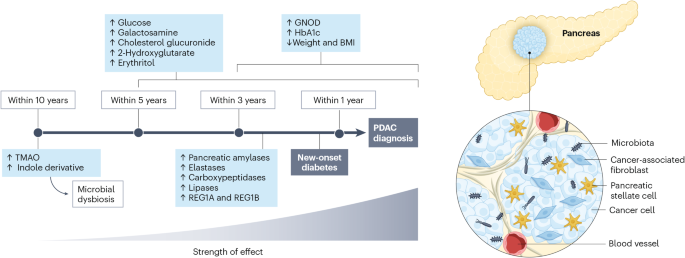
Biomarkers and Metabolic Signatures Advance Early Detection Strategies for Pancreatic Cancer
A comprehensive review published in Nature Reviews Clinical Oncology examines the opportunities and challenges of biomarker assays for...

RTÉ: Horse Sport Ireland Faces Liquidation Thursday, 40 Jobs at Risk
Horse Sport Ireland faces liquidation at a High Court hearing on Thursday, threatening around 40 jobs and risking...
Cardiologist Names 7 Festive Foods That Can Lower Cholesterol, Including Walnuts, Oats and Brussels Sprouts
Cardiologist Francesco Lo Monaco has identified seven festive foods that can help lower cholesterol levels during the Christmas...

Optometrist Colette Donellon on Role and Treatments at Optilase Galway
Colette Donellon manages the Optilase clinic in Galway city centre, where she guides patients through every stage of...