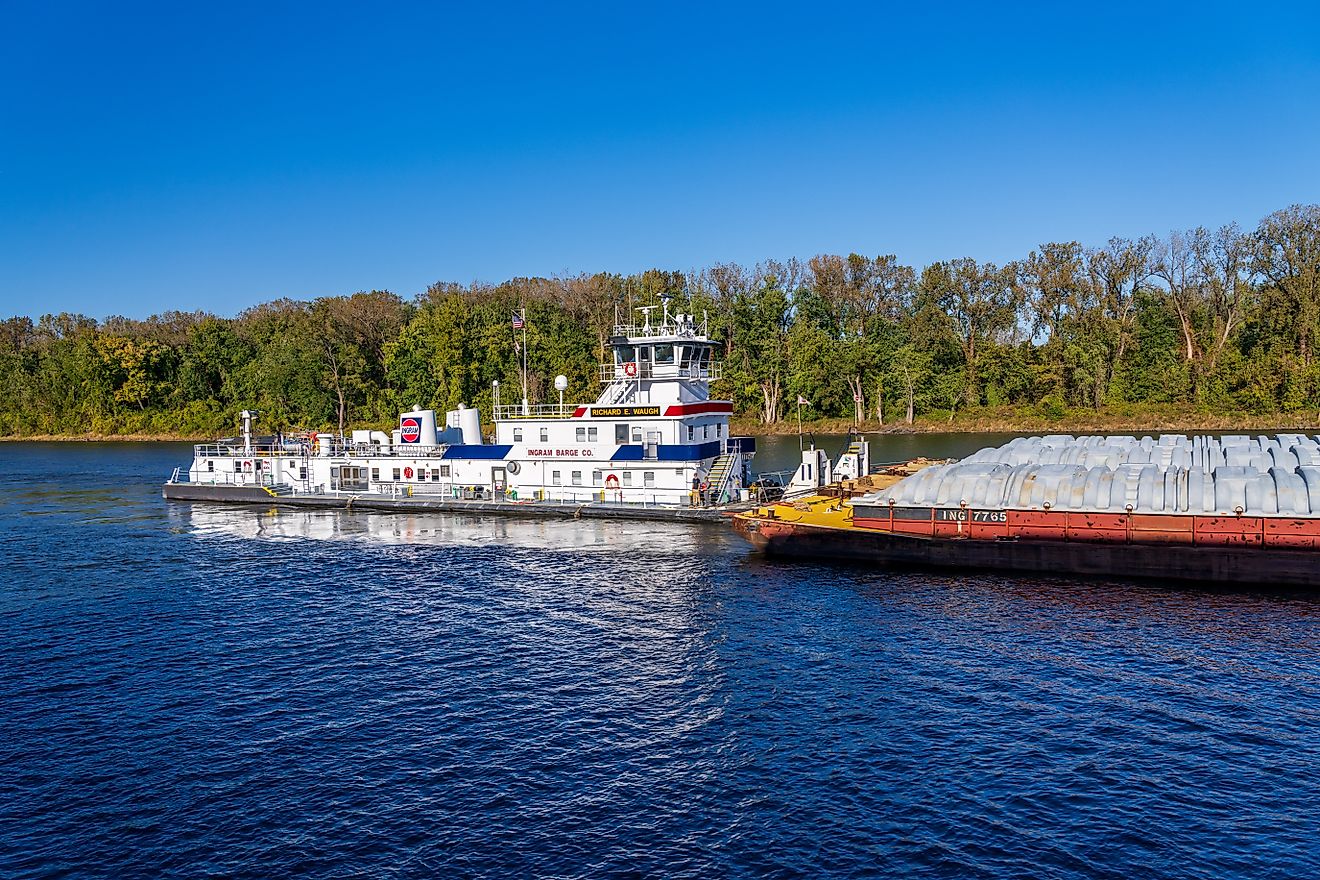
A typical Mississippi River towboat operates with a crew of eight to eleven people, pushing barge tows longer than three football fields around the clock. The exact number depends on the boat’s size, horsepower, cargo type and travel distance, World Atlas reported.
Because the vessel never stops, the crew works “square watches” of six hours on and six hours off, splitting the day into two shifts. Crews live aboard for 28 to 30 days at a stretch before a relief crew takes over, making the assignment as much a lifestyle as a job.
Command and navigation
The captain, also called the master, holds overall command and is responsible for the safety of the boat, crew and cargo. A licensed pilot stands the opposite watch, holding the same high-level Coast Guard credentials and sharing the round-the-clock navigation duties. Between them, an experienced mariner is always at the helm.

Chief engineer oversees mechanical systems
The chief engineer maintains the towboat’s diesel engines, generators and all mechanical, electrical, hydraulic and plumbing systems. Larger boats may carry a second or assistant engineer. On deck, two mates supervise the deckhands — one per watch — directing the hazardous work of building and breaking the tow and serving as the link between the pilothouse and the barges.
Three to five deckhands provide the physical labor, lashing barges together with heavy steel cables, handling lines during lockages and maintaining the vessel in all weather. On boats pushing liquid cargo such as petroleum or chemicals, a certified tankerman joins the crew to manage the loading and unloading of hazardous “red flag” cargo, a role requiring extra training and a Coast Guard endorsement.
Daily life aboard
The cook is typically the only crew member not on the six-and-six rotation, working daytime hours to provide three hot meals a day for the month-long hitch. With supplies purchased at scattered river stops, feeding eight to eleven people continuously is a demanding job, and a good cook is often described as the most valued member of the crew.
Living shoulder to shoulder for weeks at a time, crews often describe themselves as a second family, and many spend their entire careers on the river. From grain ports near Memphis down to the Gulf, these small, round-the-clock teams keep the Mississippi’s commercial traffic moving.

Thousands Still Without Power in Hampton Roads After Thanksgiving Storm; Dominion Crews Working on Restoration
More than 7,000 Dominion Energy customers in Hampton Roads remained without power Saturday morning after a coastal storm...

Paris Hilton Calls Phoenix and London Her ‘World’
“They’re getting so big, and they are my world, so I just love creating all these magical memories...

NESN Writer Suggests Gallen Could Follow Gray’s Path With Red Sox
"Gallen reminds me a lot of Gray, who was really good for the Red Sox during his time...

Two Men Arrested With Gun and Drugs Outside Lovera VIP Club
Providence Police arrested two Massachusetts men outside the Lovera VIP Club on Broad Street after officers observed them...