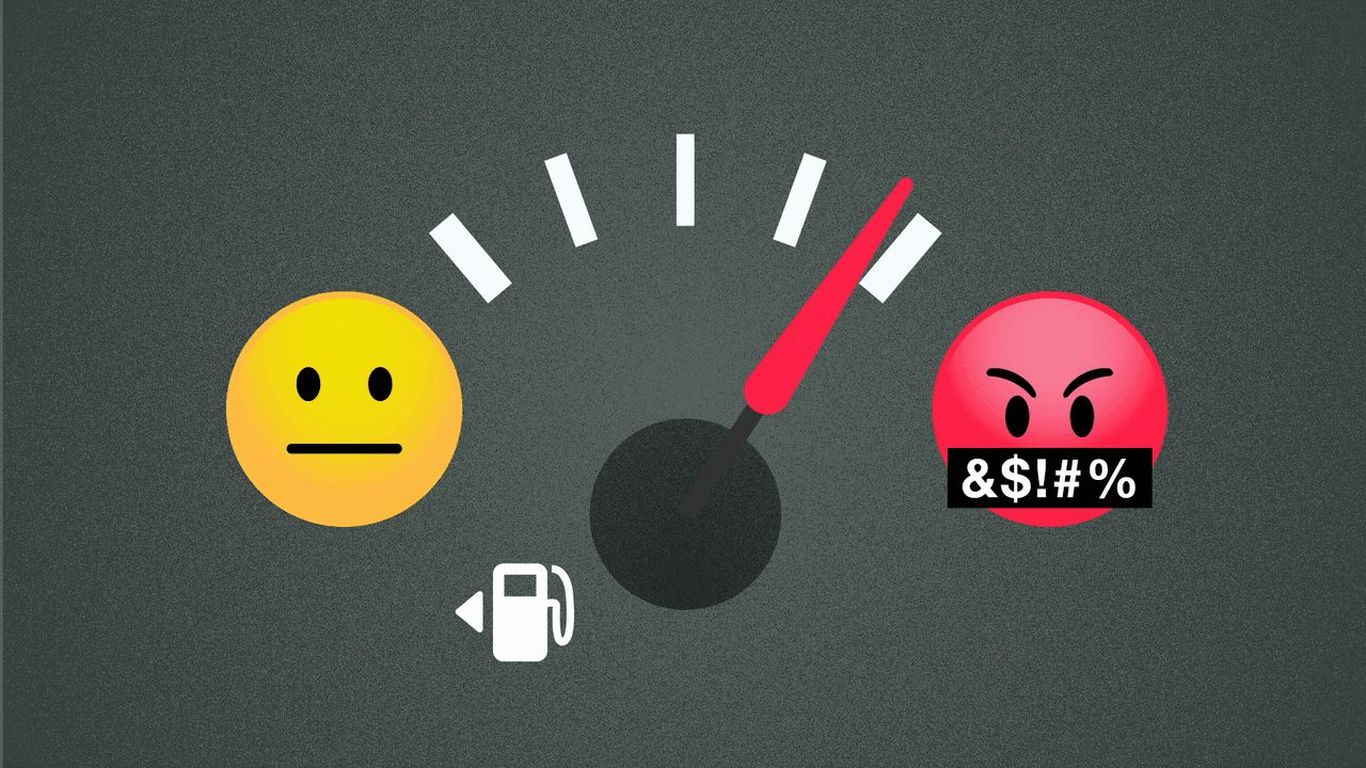
Americans paid an extra $88 billion for gasoline this year as the U.S.-Israeli war with Iran pushed pump prices 31% above the same period in 2025, yet federal data show demand barely budged.
The gap between what drivers say and what they do has widened since the conflict began in late February. Polls from April and June found 44% to 57% of respondents claiming they had cut back on driving, but the Energy Information Administration’s measure of gasoline supplied — a proxy for consumption — ran nearly identical to 2025 from March through early November. The Transportation Department’s vehicle-miles-traveled data through August also shows no drop-off.
“no discernible evidence of a decline in gasoline consumption,” UC-Berkeley energy economist Lucas Davis wrote in a new analysis of the federal figures.
The Energy Policy Research Foundation calculates that U.S. households paid between $300 and $730 more on gasoline from March through August compared with the prior year. Davis said the stubborn demand fits a long-established pattern: “Drivers may talk about cutting back, but studies in the economics literature consistently find that gasoline demand is inelastic in the short run.”

“[T]his is a valuable reminder of the gap between what people say and what they do,” Davis wrote.
The New York Times is collecting reader experiences to understand how the 2026 energy shock is reshaping daily life. Business reporter Aruni Soni, a member of the 2026-27 Times Fellowship program for early-career journalists, and energy correspondent Rebecca F. Elliott are asking whether people are driving less, carpooling, switching vehicles or cutting spending elsewhere to afford fuel.

The newsroom says responses will help cover the fallout from the oil shock and may be included in upcoming articles after follow-up contact; contact information will not be shared outside the Times newsroom or used for other purposes.
An April Washington Post-ABC News survey showed 44% of respondents saying they had cut back on driving. A June Gallup survey found 57% of respondents said high prices were causing them to drive less. Multiple polls show some version of this reported behavior change.
Davis’ analysis and accompanying chart rely on the federal Energy Information Administration’s measure of gasoline product supplied. EIA calls this a proxy for demand and measures gasoline leaving the supply chain, including refineries and bulk terminals. The Transportation Department tracks vehicle miles traveled, though there is a lag; the most recent data, for August, does not show a drop-off this year. There is no perfect measurement of consumption.
Brown University’s Climate Solutions Lab estimates that Americans have paid an additional $88 billion for gasoline this year relative to a no-war baseline. Gasoline prices have been 31% higher since the war began compared to the same period last year. State of play: gasoline demand from the beginning of March, right after the Iran war started, through early November is very similar to the same stretch last year, per federal data.
Related reading


Kerch Strait Bridge Road Span Collapses After Ukrainian Drone and Missile Strikes
Ukrainian drones and missiles collapsed a 227‑metre road span of the Kerch Strait Bridge on the night of...

European Commission Proposes €45 Billion Ukraine Loan, Repayment Tied to Russian Reparations
The European Commission proposed a €45 billion loan for Ukraine in 2027, structured so Kyiv repays only after...

Trump, Xi, Putin Trilateral Summit in Shenzhen Set for Nov 19
Trump arrives in Shenzhen as Xi greets him on the tarmac President Donald Trump landed at Shenzhen Bao'an...