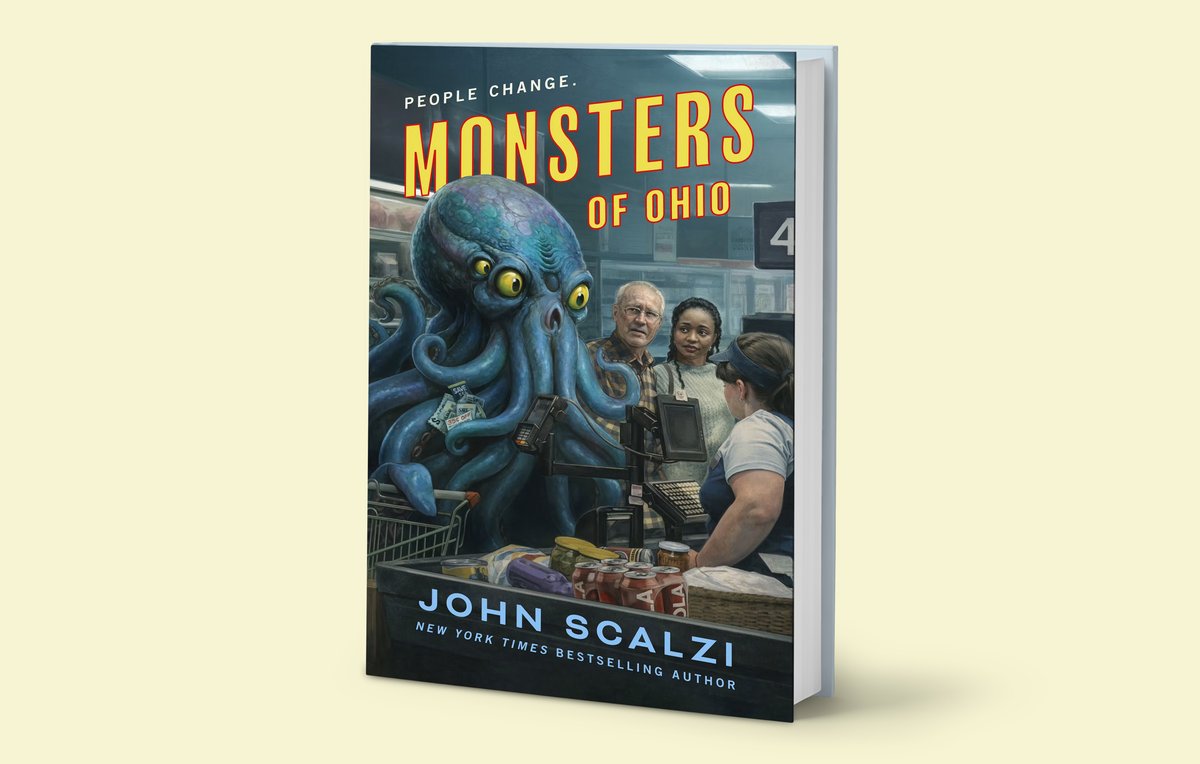
John Scalzi is bringing “cozy Cronenberg” to the American Midwest in his 20th novel, Monsters of Ohio, a story that blends sci-fi horror with the gritty reality of small-town economic decay. In a recent interview with Scientific American, Scalzi described the book as a collision between the sensibilities of Stephen King and Nora Ephron, focusing on the mundane struggle of getting through a workday while hideous monsters descend upon a town in Richland, Ohio.
Scalzi Links Rural Exploitation to Systemic Greed
While the plot features tentacles and monsters, Scalzi argues the core of the narrative is rooted in the systemic exploitation of small towns. He points to the role of private equity in “strip-mining” rural communities, creating a stark divide between the moneyed class and those living day-to-day. This isn’t just a fictional trope for Scalzi; it’s a reflection of his own current surroundings in Darke County, Ohio.
“We live in a world where the interests of the moneyed class really are at odds with the interests of the people going day-to-day,” Scalzi told Scientific American.
The Science of Plausible Fiction
Despite the absurd premise, Scalzi emphasizes scientific plausibility. He distinguishes between “hard” science fiction—which he notes often requires advanced degrees—and his own approach, which relies on a “rat’s nest” of gathered knowledge including judicial decisions, astronomy, and small mammal facts. With a B.A. in philosophy, Scalzi views his role not as a scientist, but as someone capable of finding the right information to make a fictional leap feel natural.
In John Scalzi’s new book, the real Monsters of Ohio are the friends we made along the way.https://t.co/wZACG21MN5
He argues that for science fiction to work, the “science” part must be broadly correct so that the “fiction” part feels like a logical extension. In Monsters of Ohio, he avoids relying on magic or supernatural deities, opting instead to root the monster shenanigans in events that are plausible within the natural world, even if they are highly unlikely.
Community as a Survival Strategy
The novel balances its cynicism with a hopeful outlook on human connection. Scalzi suggests that the only way for the “little guy” to survive the pressures of modern economic and social disinformation is by turning toward their neighbors. He argues that the messaging designed to keep people angry and suspicious of one another is a tool used to prevent the very unity required for community survival.
This theme of mutual support contrasts with the more violent impulses of the plot. When asked about the takeaway of the book, Scalzi admitted that while the “little people” might get through the crisis by exploding, the hope lies in the support systems they build before that happens.
Scalzi Integrates Emo Music into New Novel
Coming off a win for his fourth Hugo Award, Scalzi is continuing his tradition of integrating music into his literary world. The protagonist of Monsters of Ohio was briefly a member of a famous emo band, and Scalzi has already sent out inquiries for a theme song to accompany the release. While a rendition of the character’s signature song, “Red Wine Massacre,” by artist Chappell Roan was suggested, Scalzi joked that such a star would likely be out of a “humble science-fiction author’s” price range.
When pressed on whether he would ever write a character from Michigan, Scalzi expressed a willingness to do so, though he acknowledged the risk: “Will my neighbors burn my house down if I do it? Possibly. But that is the risk one takes for true literature.”

Cincinnati Volleyball Previews Matches Against Colorado and West Virginia
The Cincinnati volleyball team is traveling to Boulder, Colorado, to play Colorado on Thursday at 9 p.m. ET...

Washington State Suspends Pre-Election Campaign Contribution Limits
Washington state's campaign finance regulators are effectively pausing the rules on how much money can flow into political...

Richmond Kickers Name Brian Ownby as Head Coach
The Richmond Kickers have officially named Brian Ownby as the ninth head coach in the club's history, moving...

Will Hoser runs for Vermont Legislature on platform of fairness
A physician assistant with over 30 years of medical experience in Chester and the surrounding communities is running...