
Democrats reclaimed the governor’s office, a U.S. Senate seat, and three of four U.S. House seats in Iowa on Tuesday, riding a wave of voter participation that reached 63% of registered voters—the highest midterm turnout the state has seen since 1990, KCRG reported. More than 1.3 million Iowans cast ballots, a figure the Des Moines Register put at precisely 1,380,528, eclipsing the previous midterm record of 1,329,930 set in 2018 and far surpassing the 1.22 million ballots cast in 2022.
Entering the election, Republicans held a registration advantage of roughly 180,000 voters, yet that edge dissolved at the polls as Democrats dominated statewide contests and made gains in the Iowa Legislature. Secretary of State Paul Pate attributed the turnout to candidate enthusiasm and the national mood rather than party machinery, telling reporters Wednesday that voters respond to the people on the ballot, not the label beside their names.
A Record Broken After Three Decades
The 63% turnout represents a dramatic reversal from recent midterm cycles. In 2022, only about 1.22 million Iowans voted, and the 2018 high of 1,329,930 had stood as the benchmark for nearly a decade. Pate noted that roughly 70% of ballots cast this cycle were early votes, a shift so pronounced that his office expects to expand satellite voting locations and lengthen the early voting window by five days to accommodate demand.
Two Parties, Two Theories on Why Voters Showed Up
Republican leaders entered the election acknowledging the challenge. GOP chair Jeff Kauffmann had warned that his party needed “low propensity” Republican voters—those who typically skip midterms—to turn out, which is why the President campaigned in the state. “In a midterm election, when it’s not a presidential year, it’s making sure we get our low propensity Republican voters out there,” Kauffmann said on election night.
Democratic Party chair Rita Hart offered a different explanation, arguing that her party’s focus on listening rather than lecturing resonated with Iowans seeking change. “You don’t come in and tell them how to think but you ask them how they are doing and why they think this or that is happening,” Hart said. Pate, for his part, suggested voter registration numbers did not shift dramatically, implying the outcome reflected the “mood of the public” rather than a fundamental realignment. “You can call us a blue state, you can call us a red state,” he said. “But the reality is we’re still purple. Iowans are pretty independent.”
“I think on average when you’re looking at an election, turnout is driven by candidates. People I don’t think vote party,” Pate said.
Early Voting Reshapes the Map
The mechanics of how Iowans voted changed as dramatically as who they voted for. With 70% of ballots cast early, the traditional Election Day surge mattered less than the weeks leading up to it. Dallas County drew particular scrutiny this cycle after cutting satellite voting locations from five in 2024 to two in 2026, a move the county auditor defended by noting that new sites require citizen petitions. Pate indicated the state will work with county auditors to prevent similar bottlenecks, acknowledging that the trend toward early voting “is definitely here, and I think it’s going to be here for a while.”
Audits and Breakdowns Still to Come
The Secretary of State’s office does not anticipate any recounts in statewide or federal races, though post-election audits will hand-count ballots in randomly selected precincts for the state treasurer and U.S. Senate races to verify tabulator accuracy. Pate also promised a turnout breakdown by party in the coming days, which will reveal whether the Democratic victories came from persuading Republicans or simply mobilizing their own base at higher rates. He expects turnout to keep growing in future elections, a prediction that will test whether this year’s surge was a one-time reaction to national politics or the start of a new era of civic engagement in the Hawkeye State.
Secretary of State Paul Pate expects the 63% turnout to keep growing in future elections and said early-voting infrastructure will need to adapt to accommodate the high volume of pre-Election Day ballots.
Related reading
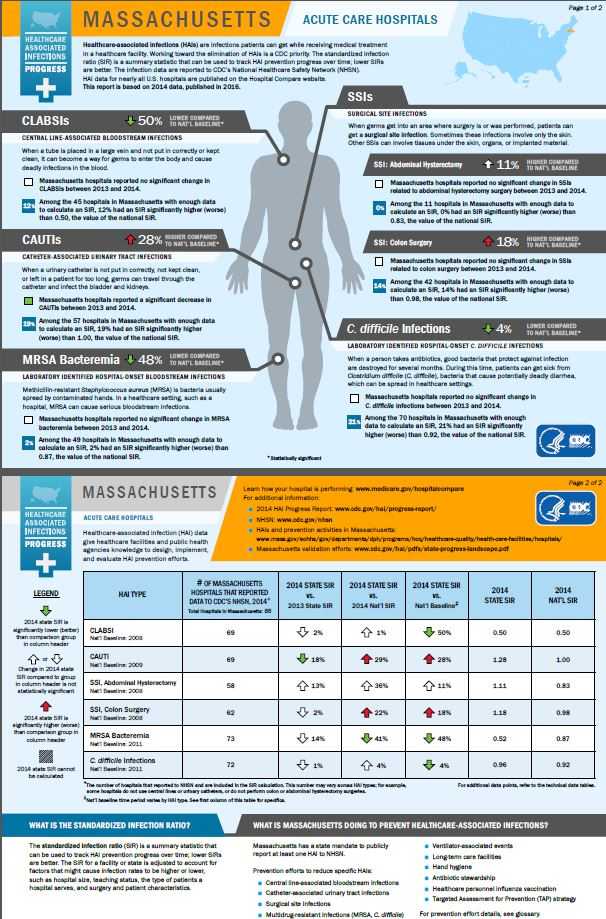
CDC Funds Massachusetts Healthcare Programs to Combat Infection and Resistance
Massachusetts is receiving federal funding through the CDC's Division of Healthcare Quality Promotion to prevent healthcare-associated infections and...

Iron Mountain Family Donates 60-Foot Spruce as Michigan State Christmas Tree
60-Foot Iron Mountain Spruce to Be Cut Thursday for the Ride to the Michigan Capitol The 2026 Michigan...

Silver Spring Man Gets 25 Years for Attempted Laurel Hotel Robbery After 45-Year Sentence
Joel Manuel Moreno, a 32-year-old Silver Spring man, will spend the next quarter-century in prison without the possibility...

Portland Hearts of Pine Sporting Director Ray Saari Outlines Vision for Future Success
"I have been very happy to see people who are very introspective, who are looking at themselves, who...