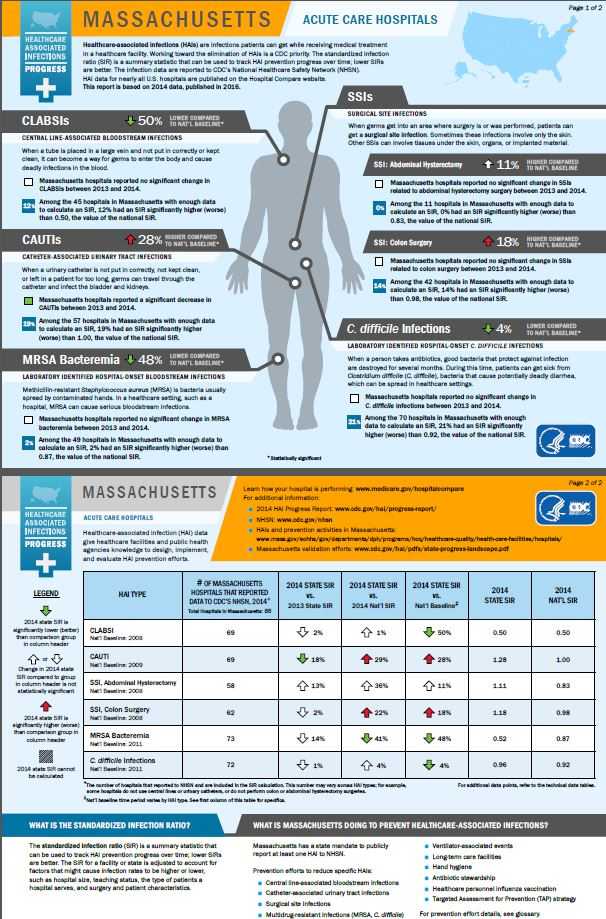
Massachusetts is receiving federal funding through the CDC’s Division of Healthcare Quality Promotion to prevent healthcare-associated infections and fight antimicrobial resistance in healthcare facilities and communities across the commonwealth, ARPSP reported. The investment supports state HAI/AR programs and the AR Laboratory Network, which implement activities to detect, prevent, respond to, and contain HAI and AR threats while working to improve antibiotic and antifungal use in medical settings.
This funding draws on CDC’s Antimicrobial Resistance Solutions Initiative along with additional annual and supplemental CDC appropriations. However, the investment amount presented for Massachusetts includes only funds related to DHQP-supported activities and CDC’s AR Lab Network, which constitutes a subset of the broader data included in CDC’s AR Investment Map.
Serving a Diverse Population of 6.87 Million
In 2020, the state was home to 6.87 million people, with a median age of 39.6 and a median household income of $84,385, and this federal support now reaches it. Massachusetts’ five largest ethnic groups are White, Black or African American, Asian, Other Ethnic Group, and American Indian or Alaska Native.
Through the National Healthcare Safety Network, the CDC reports state-level data for general acute care, long term acute care, inpatient rehabilitation facilities, and critical access hospitals, allowing Massachusetts officials to see where threats emerge in both urban and rural settings.
Tracking Threats Through the National Healthcare Safety Network
Through the National Healthcare Safety Network, the CDC provides data on antibiotic resistance and hospital antibiotic stewardship from general acute care, long term acute care, inpatient rehabilitation facilities, and critical access hospitals in Massachusetts. Within the AR & Patient Safety Portal, NHSN’s Antibiotic Resistance and Hospital Antibiotic Stewardship modules currently fold critical access hospital data into general acute care hospital reporting.
What the Funding Actually Covers
The state HAI/AR programs funded through this investment focus on the full lifecycle of infection control: detecting resistant organisms in laboratory settings, preventing transmission in patient care areas, responding to outbreaks when they occur, and containing threats to stop further spread. These activities extend beyond hospital walls into communities, recognizing that antimicrobial resistance travels with patients between facilities and homes.
Improving antibiotic and antifungal use stands as a central goal of the funded work.
Reaching Every Community
Massachusetts has a median age of 39.6, and the National Healthcare Safety Network provides data on the state’s long term acute care and inpatient rehabilitation facilities. The CDC’s Division of Healthcare Quality Promotion provides funding to Massachusetts to prevent healthcare-associated infections and fight antimicrobial resistance in healthcare facilities and communities.
As these programs operate across general acute care hospitals, long term acute care facilities, inpatient rehabilitation centers, and critical access hospitals, they address threats in every corner of Massachusetts. The CDC continues to provide data through NHSN to track progress, with the AR & Patient Safety Portal offering transparency into how facilities across the state are performing on antibiotic stewardship and resistance reporting.
Worth a look

Jim Pillen Wins Reelection as Nebraska Governor
Governor Jim Pillen Secures Reelection in Hard-Fought Nebraska Contest Nebraska Governor Jim Pillen has won reelection, overcoming political...

Michelle Malone and James Reinkemeyer Drive Community Impact at JC Parks
Building Community Connections at The Linc For many residents visiting The Linc in Jefferson City, Missouri, the morning...

ICE enforcement operation motivates Minnesotans to vote
Operation Metro Surge Inspires Minnesota Voters I had this sense of hope that I haven't had for a...

Detroit Lions Injury Report: 10 Players Listed Ahead of Dolphins Matchup
Lions Face Roster Crunch Ahead of Dolphins Trip The Detroit Lions are riding a wave of momentum, but...