Irish Road Bowling Rolls Into Small-Town America
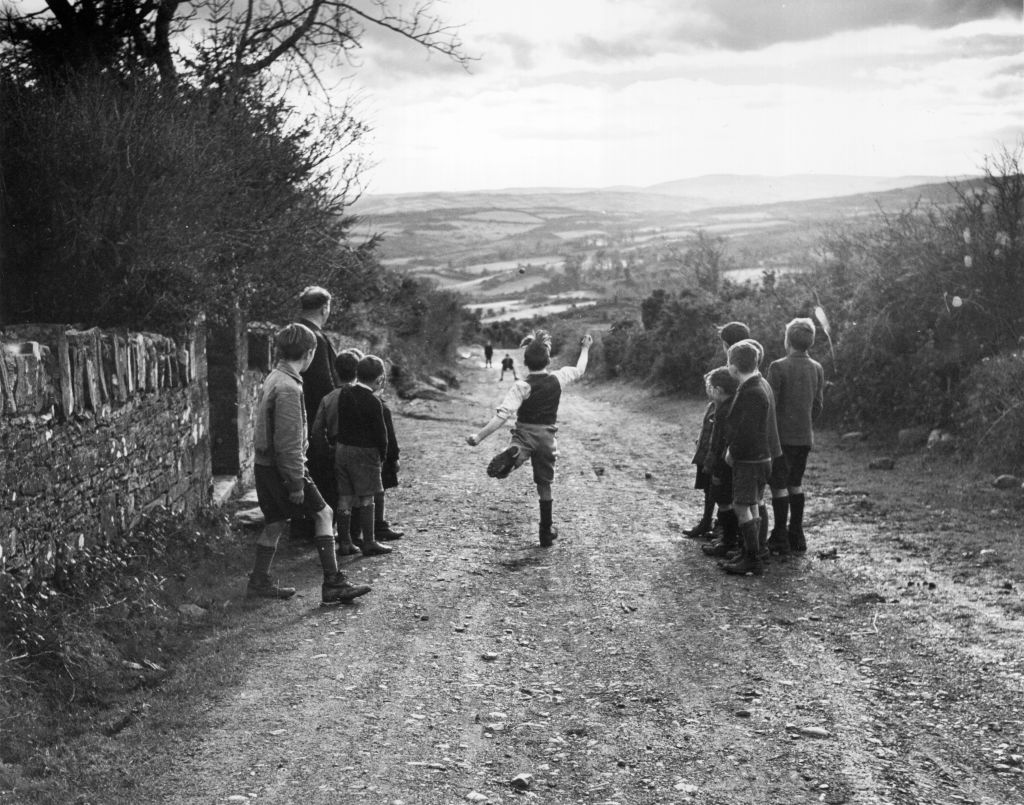
On a rural backroad in West Virginia, you might catch a hand-stenciled sign warning drivers about Irish Road Bowling Ahead. Somewhere up the blacktop, a competitor takes a sprinting start and hurls a solid 28-ounce iron ball—about the size of a baseball—underhanded down the asphalt, as spectators watch closely with wagers riding on the throw.
Rooted deeply in County Armagh and County Cork, the sport is finding fresh momentum stateside, serving both as a lively pastime and a connection to ancestral heritage, smithsonianmag.com reported on November 2, 2026. Teams take turns covering a course stretching one to two-and-a-half miles in the fewest possible throws, using little more than a paved country lane and a heavy metal sphere known as a bullet or a bowl.
Jason Kelce Boosts Sport After Trying Boston Road Bowling
The sport gained national attention when retired NFL star Jason Kelce took a swing at it alongside the Boston Road Bowling team, a squad composed largely of Irish expatriates. Kelce later admitted on Instagram that he struggled to understand at least half of the local brogue during the matches, though he vowed to play again.

While road bowling might feel archaic, it carries centuries of contested history. In Ireland, historians debate whether the pastime began in the mid-1600s with cannonballs left behind by Oliver Cromwell’s soldiers, arrived with Dutch troops under William of Orange, or traveled over with Scottish and English weavers. Today, an overarching organization called Bol Chumann na hEireann oversees the sport across Ireland, culminating in the massive King & Queen of the Roads championship.
Stateside, the revival traces back roughly 30 years to West Virginia. Environmental journalist and documentary producer David Powell discovered road bowling on television, tracked down a instructional book from the Library of Congress, and brought back six bullets from a hardware store in Cork during a 1994 trip with his mother. A year later, he introduced the sport at the Irish Spring Festival in Ireland, West Virginia. What started with cautious locals dodging the iron balls eventually blossomed into a registered nonprofit with roughly 50 dedicated members and a hundred more who drop in for matches.
Styles Across the Atlantic and the Irish Sea
Back in Ireland, the sport maintains distinct regional strongholds that disagree on technique. Chris Mallon, a lifelong competitor and vice chairman of the Ulster branch of Bol Chumann na hEireann, explains the division between the two primary hubs.
The Cork lads do a full 360-degree turn of the arm, but we use underarm.
Despite divergent throwing styles and fierce local pride between Armagh and Cork, the underlying mechanics remain deceptively simple. Beginners can pick up the basics in minutes, yet mastering the curve of a rural backroad takes a lifetime of practice. Whether streamed to over 156,000 followers on social media or played out live on small-town asphalt in West Virginia, the ancient tradition continues to bridge the Atlantic one throw at a time.
Related reading
Wisconsin Basketball Grinds Out Season-Opening Win Over Denver
Wisconsin secures 75-68 home-opening win behind frontcourt physicality The University of Wisconsin basketball team opened its 2026-27 campaign...

Washington Commanders beat Eagles 27-10 after early offensive struggles
Washington Commanders secure 27-10 win over Eagles despite early struggles The Washington Commanders walked away from Sunday Night...

Gifford Medical Center raises daycare rates and Reduces hours
When a Rural Hospital's Childcare Lifeline Becomes a Budget Battleground For Hillary McAllister-Bove, taking a job as a...

Registered Nurse (RN) – Ortho/Joint/Spine Post Surgery | Sentara Princess Anne Hospital
Opportunities in Virginia Beach When searching the listings provided by DocCafe, healthcare professionals looking at roles in Virginia...