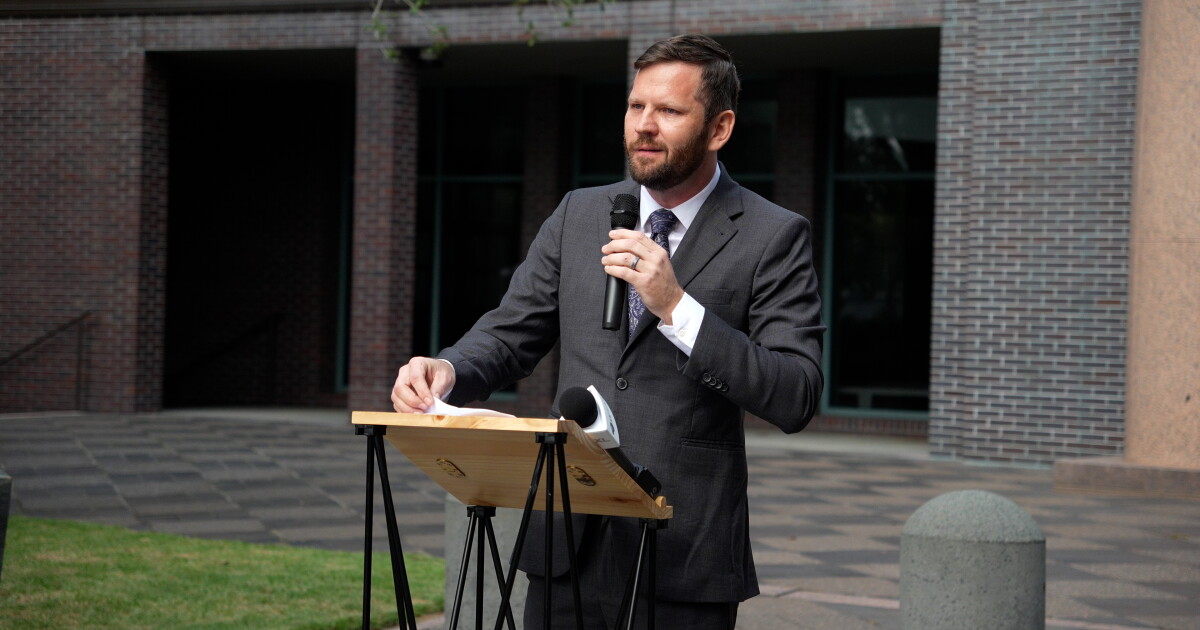
Tallahassee Mayor-elect Jeremy Matlow is preparing to face a potential $10 million deficit in the city’s budget next year following the voter approval of Amendment 3, according to reporting from WFSU.
The ballot proposal, which Florida voters passed to provide financial relief to homeowners, fundamentally alters how local governments secure their funding. While the shift promises relief for residents, it creates an immediate fiscal gap that the incoming administration must bridge.
Matlow, who previously served as a city commissioner, has been a vocal critic of what he describes as “wasteful spending” at City Hall. He intends to use his upcoming term to scrutinize internal costs, specifically targeting administrative salaries, nonessential departments, and budgets allocated for travel and food.
The Mayor-elect plans to begin workshopping these potential cuts with other commissioners starting in January. He believes the city can find enough efficiencies to protect essential services without the public feeling a drop in quality.
“I think we can make the necessary cuts and people in Tallahassee aren’t going to see a noticeable difference in the delivery of service,” Matlow said.
Matlow intends to use his experience as a small business owner to manage the upcoming fiscal tightening. He noted that the process does not feel like particularly difficult work given his professional experience.
Despite the looming $10 million shortfall, Matlow does not view the situation as a crisis for the city. He suggests that Tallahassee’s specific economic makeup offers more stability than neighboring areas.
“It’s not a doomsday scenario like some would predict,” Matlow said. “We’re in a little bit better shape in the city, than in the county or rural counties and that’s because we have a lot of commercial properties and student housing.”
This reliance on commercial tax bases and student housing provides a layer of insulation that rural Florida counties, which often lack diverse revenue streams, may not possess. The transition period will require coordination across all city departments.
The process of restructuring the city’s finances will be a multi-year effort. Matlow stated that the entire commission will need to play an active role in the upcoming sessions.
Starting in 2027, the administration will focus heavily on addressing long-term budget sustainability. By next summer, local governments are expected to have a clearer view of their projected budgets under the new rules established by Amendment 3.
To prepare, Matlow plans to implement a rigorous review process where individual departments must present their specific budgets and workforce sizes. The goal is to identify reduction opportunities across the board through a structured, department-by-department audit.
Worth a look

Cowboys Escape Improbable Chaos to Defeat Colts 27-23
Dallas Cowboys escape Indianapolis in chaotic 27-23 victory The Dallas Cowboys secured a 27-23 comeback win against the...

WSU Women’s Basketball Defeats Idaho 76-53 in Dominant Home Opener
Washington State women's basketball secured a commanding 76-53 victory over Idaho on Monday afternoon, controlling the tempo from...

Former Cobb County deputy Julie Ann Barrs Dies in Murray County Floods
Julie Ann Barrs, a 56-year-old Ellijay resident and former Cobb County sheriff’s deputy, died on Thursday, Nov. 5,...

CT Republicans Face Future Challenges After Midterm Election Losses
Connecticut Republicans are attempting to plan their next moves following losses in last week's midterm elections, WFSB reported....