
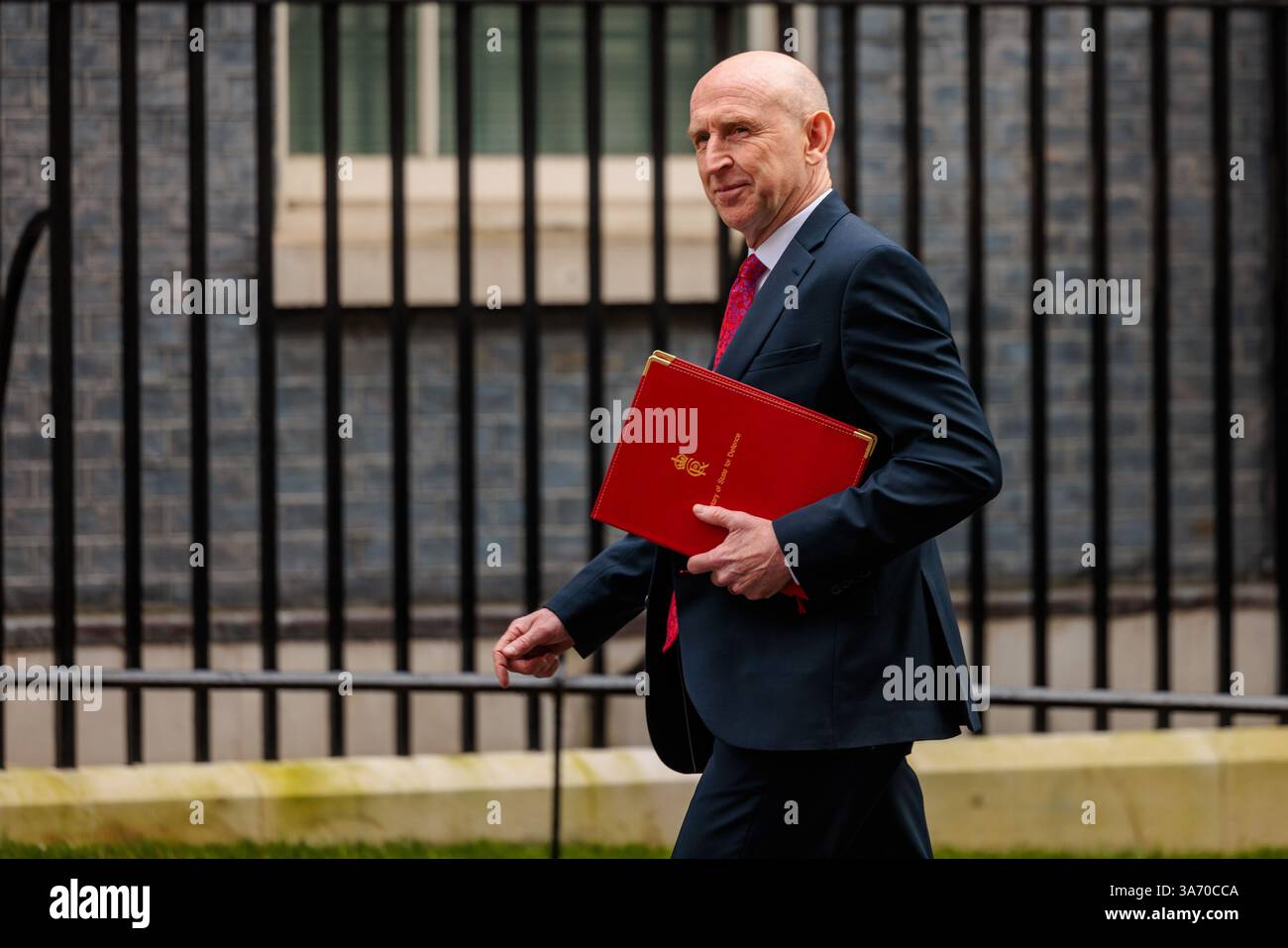
U.K. Finance Minister John Healey has deployed a calculated fiscal strategy to dampen a domestic cost-of-living crisis without spooking the bond markets. In his first budget delivered Wednesday, Healey balanced aggressive social relief—including energy bill cuts and grocery tariff removals—against a targeted tax hike on the banking sector and a long-term commitment to ramp up defense spending. The move arrives as the U.K. grapples with a 3.5% inflation rate driven by fuel costs and the geopolitical fallout of the U.S.-Iran war, leaving the Bank of England likely to hike interest rates next month.
The Budget Impact:
- Bank Surcharge: The tax on banks rises by 3% to a total of 6%, a temporary 15-month measure to fund household relief.
- Defense Targets: A commitment to hit 3% of GDP in defense spending by 2030, scaling to 3.5% by 2035.
- Fiscal Headroom: The Office for Budget Responsibility (OBR) forecasts £15 billion in headroom by 2029/30, aiming to eliminate the deficit within three years.
The Alpha Metric: 83.8% Debt-to-GDP
The canary in the coal mine for this budget is the OBR’s projection that national debt will rise to 83.8% of GDP next year. For institutional investors, this number is the ultimate litmus test for whether the Burnham government is practicing fiscal discipline or merely delaying an inevitable crash. While the government claims debt will steadily decline to 81.7% by 2032, the immediate uptick shows how thin the margin for error is when borrowing costs are rising.

The market’s reaction was a vote of confidence in Healey’s restraint. As he spoke, yields on the benchmark 10-year gilt fell by 2 basis points to 5.323%.
Banks Foot the Bill for Household Relief
Healey is effectively using the U.K.’s financial sector as a piggy bank to provide “breathing space” for the public. By raising the bank surcharge to 6%, the government is offsetting the £2.6 billion cost of energy bill interventions, which include removing standing charges on gas heating and extending electricity tax breaks through July 2027.
The irony is palpable. Healey recently described British banks as the “jewel” of the economy, yet he is now taxing them to fund £100 checks for low-income households and a 3.9% minimum wage increase. Despite the rhetoric, the equity markets didn’t panic; Barclays climbed 3.3%, while Lloyds Banking Group and NatWest rose more than 2.6% and 2.5%, respectively. The tax hike was simply less severe than the sector’s worst-case scenarios.
“To single out this industry for additional taxes again, one of the UK’s biggest generators of growth and jobs, lacks principle.”
JPMorgan Chase, which is currently building a new headquarters in Canary Wharf, expressed sharp disapproval. CEO Jamie Dimon has previously hinted that a “hostile” environment could force a rethink of that investment, though the firm maintains it remains committed to the U.K. for now.
The Main Street Bridge: Impact on the American Portfolio
Sterling dipped slightly against the dollar and euro following the announcement, reflecting the tension between social spending and fiscal tightening.
More critically, Healey’s “covenant” for data centers creates a new blueprint for AI expansion. By offering grid connections in exchange for local job creation and water protection, the U.K. is attempting to bypass the regulatory bottlenecks that have slowed AI deployments in other jurisdictions. For U.S. tech giants and the 401k portfolios heavily weighted in Big Tech, the U.K. is positioning itself as a sovereign hub for AI security, backed by hundreds of millions of pounds in state funding and reduced capital gains taxes for founders on gains up to £10 million.
Defense Scaling and Geopolitical Risk
The budget isn’t just about domestic relief; it is a strategic pivot toward a “new era of threat.” Healey committed an additional £10 billion in military and economic support for Ukraine, sending a direct signal to Moscow.
The long-term trajectory is clear: the U.K. is aggressively chasing NATO targets. The plan to hit 3% of GDP by 2030 and 3.5% by 2035 suggests a permanent increase in the defense baseline. This represents a massive shift in capital allocation, moving funds away from the welfare bill—which hit 10.7% of GDP in 2024/25—and toward the military-industrial complex.
The Smart Money Tracker: Growth vs. Stability
Institutional sentiment remains cautiously optimistic, anchored by the OBR’s revised growth forecasts: 1.2% this year, 1% in 2027, and 1.6% in 2028. If inflation remains sticky at 3.5% or higher, the Bank of England’s projected rate hikes will eat into the “breathing space” Healey is trying to create for families.

For now, the gilt market is betting that Healey can walk this tightrope without falling into a deficit trap.
Disclaimer: The information provided in this article is for educational and market analysis purposes only and does not constitute financial, investment, or legal advice. Always consult with a certified financial professional before making investment decisions.
Related reading

Mountain West Power Rankings: New Mexico Top, Wyoming Moves to Third
New Mexico holds the top spot in the Mountain West power rankings, remaining undefeated in conference play following...

James Madison face Troy on October 29 at Bridgeforth Stadium
The James Madison Dukes enter their October 29 matchup against the Troy Trojans as heavy favorites, with sportsbooks...

Charleston Offers $1M to Settle 20-Year Longborough Park Dispute
The City of Charleston is offering $1 million to the Longborough Owner’s Association to settle a near 20-year...

Why Olympia is Shifting Downtown Sidewalk Repairs to Night Work
Downtown Olympia expects to wrap up its current sidewalk repair project by Nov. 20, though the 26 trees...