
Jonathan Kreiss-Tomkins is projecting a majority win in Alaska’s gubernatorial race as 30,000 ballots remain uncounted.
The Democratic candidate currently holds just over 50% of first-choice votes in the ranked-choice election, according to Anchorage Daily News reporting. If these figures hold, Kreiss-Tomkins is positioned to become the state’s first Democratic governor in more than two decades, breaking an eight-year period of executive control by left-leaning policymakers.
The race remains uncalled by national outlets, and the leading Republican, Bernadette Wilson, has not conceded. Kreiss-Tomkins is facing three Republican opponents: Wilson, Dave Bronson, and Treg Taylor.
“I recognize I’m in a little bit of a liminal space, you could say, right now,” Kreiss-Tomkins said, noting that internal projections suggest he will finish with 51% to 52% of the vote once the outstanding ballots are counted.
A rapid transition period
Alaska maintains one of the fastest executive branch transition timelines in the country. Election results are scheduled to be certified by Nov. 25, with the new governor slated to be sworn in on Dec. 7.
This compressed window forces an immediate scramble for personnel. Kreiss-Tomkins intends to oversee the transition with three co-chairs representing a Republican, a Democrat, and an independent. He told an audience at the Resource Development Council annual conference in Anchorage that the goal is to build an administration with blended political affiliations.

While his campaign centered on criticisms of outgoing Governor Mike Dunleavy, Kreiss-Tomkins indicated he may retain certain members of the current administration. “I have a lot of respect for a number of commissioners in the current cabinet,” he said, suggesting that while certain policy directions will shift, some agency continuity may remain.
Fixing government performance
A central pillar of the proposed administration involves addressing operational delays within state agencies. Kreiss-Tomkins has specifically pointed to the Department of Transportation and Public Facilities’ struggle to adopt required federal long-term plans, alongside a backlog in processing social safety net applications like food assistance.
To address these issues, he plans to launch a public tracking website at metrics.alaska.gov. The site would monitor key performance data, such as wait times for Medicaid eligibility determinations. “Even if those numbers are ugly, I think it’s important to confront them,” he said.
Managing the oil revenue windfall
The state is entering a period of high fiscal abundance, driven in part by the war in Iran, which has increased energy costs and subsequently boosted Alaska’s oil revenue. This surge is expected to bring hundreds of millions of dollars in excess funds into state coffers.
Kreiss-Tomkins said he prefers "responsibility and restraint" regarding this surplus. While he supports increased spending for public education and a “moderate” Permanent Fund dividend, he aims to prioritize state savings. He is looking to reverse the trend seen under the Dunleavy administration, where state savings accounts frequently remained below recommended levels.
The incoming administration faces a tight deadline, as the first budget draft must be submitted to the Legislature by mid-December, only one week after the inauguration.
Protecting the Permanent Fund
One major long-term fiscal goal involves constitutional reform. Kreiss-Tomkins intends to reintroduce legislation to enshrine the Permanent Fund in the state constitution and place strict limits on annual withdrawals.
This is a policy he previously introduced while serving in the Legislature in 2019. The objective is to insulate the fund from political spending pressures, ensuring that investment earnings—which have recently eclipsed oil extraction as the state’s largest revenue source—can continue to grow while covering annual payouts and government services.
Passing such a measure is a major legislative hurdle. It requires a two-thirds vote in both chambers of the Alaska Legislature before it can be presented to voters for a constitutional amendment. “I think this is one of the most important pieces of fiscal policy the state of Alaska can pass,” Kreiss-Tomkins said, adding that the move would place the state on the best long-term fiscal path.
Worth a look

Isaac Hord Sentenced to 205 Months for Overdose Death of Girl
Isaac Hord was sentenced on Friday to 205 months in prison for his role in the 2025 overdose...

LEL Foundation Empowers Indiana Individuals With Disabilities
The LEL Foundation, an Indianapolis-based nonprofit established in 2022, is currently expanding its reach to provide what it...

Can Independent Candidates Win in Idaho After Todd Achilles’ Senate Run?
Independent challenger Todd Achilles fell short in his bid to unseat Republican U.S. Senator Jim Risch on November...
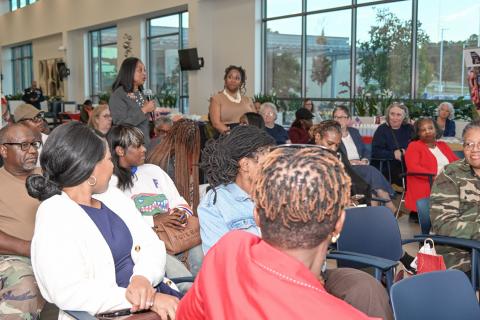
Atlanta VAHCS Honors Women Veterans at Healing Voices and Visions Event
The Atlanta VA Health Care System (VAHCS) honored the service and sacrifice of female veterans on Tuesday evening,...