
A Judge Orders the Removal of League of Women Voters Guides from New Mexico Polling Places
Voters heading to the polls in New Mexico this Tuesday will find a noticeable absence at the entrances of many polling locations. A Roswell judge issued an injunction on Monday ordering county clerks to remove all voter guides published by the League of Women Voters from polling places statewide. The decision follows a lawsuit filed by New Mexico Republicans that targeted a specific error in the organization’s 2026 printed guide.
The guide published a photograph of Nehemiah Vasquez, a Taos County Commission candidate, but incorrectly identified him as Larry Marker, the Republican nominee for U.S. Senate. The error became the catalyst for a broader legal confrontation regarding how nonpartisan information is distributed during election cycles.
While the injunction specifically addresses the physical presence of these guides, it does not prevent individual citizens from using them. 5th Judicial District Judge Jared Kallunki ruled that the order does not preclude individual voters from bringing a voter guide with them to the polls for their own personal use. However, the official supply of these materials at polling sites is now prohibited. “Voter guides produced by the League of Women Voters for the 2026 election should not be supplied to voters, posted visibly, or stored in a location visible to voters” within 100 feet of any polling place, Judge Kallunki ordered.
The Dispute Over Electioneering and Partisanship
The error involving Mr. Marker’s photograph was the immediate cause of the injunction, but the lawsuit filed by the Republican Party of New Mexico and the Republican National Committee seeks to address a deeper ideological divide. The plaintiffs argue that the distribution of these guides violates New Mexico law, which prohibits electioneering within 100 feet of polling locations. Even if a guide does not contain factual falsehoods, the suit contends that the presence of these materials at the doorstep of a polling place constitutes a violation of the spirit and letter of state law.
A central tension in the lawsuit involves the definition of “nonpartisan.” While the League of Women Voters was established as an apolitical organization, the plaintiffs argue that its leadership and policy priorities have shifted. The lawsuit claims that the group’s membership and leadership composition have become “overwhelmingly left-of-center,” suggesting that their guides may no longer serve as neutral resources for the electorate.
“Voters deserve accurate, reliable information when making decisions about their representation, and we take that responsibility seriously,” said Hannah Burling, president of the League of Women Voters of New Mexico. The LWV
The League of Women Voters Central New Mexico addressed the photographic error on Friday, noting that the mistake occurred after the guides entered production and could not be corrected before they were distributed. The organization issued a formal apology to both Mr. Marker and Mr. Vasquez for the confusion.
The legal battle also revisits a precedent set years ago. The lawsuit notes that the guides were briefly banned during the tenure of Dianna Duran, a Republican who served as New Mexico Secretary of State from 2011 to 2015. During that time, Duran ordered the guides removed, classifying them as “electioneering” materials under a 2011 state law. When Maggie Toulouse Oliver took office as Secretary of State in 2016, she lifted that ban, allowing the guides to return to polling locations—a practice that has continued until this Monday’s ruling.
Immediate Impact on Election Day Logistics
The ruling has forced an immediate shift in administrative duties for election officials across the state. Shortly after noon on Monday, Secretary of State Maggie Toulouse Oliver issued guidance to county clerks statewide, directing them to remove the guides from all polling locations. According to Peter Auh, an attorney for the Secretary of State’s agency, many county clerks had already begun the removal process prior to the formal guidance.
For the voter, the practical consequence is a loss of immediate, on-site access to condensed candidate information. Those who rely on the League’s summaries to navigate complex ballot measures, bond questions, or contested races may now need to secure their own copies in advance. This change affects everyone from first-time voters to those navigating high-stakes races, such as the U.S. Senate contest between Larry Marker and incumbent Ben Ray Luján.
As the state prepares for Tuesday’s vote, the legal landscape remains focused on the specific injunction regarding the guides. While the judge’s order settles the immediate issue of the physical presence of the League’s materials, the broader question of whether such guides should be permitted in polling places at all—regardless of accuracy—remains a point of intense political and legal contention in New Mexico.

Minnesota House Races Focus on Two Key Battleground Districts
Minnesota’s political landscape reached a high-stakes inflection point on Tuesday, as voters in the 1st and 2nd Congressional...

Andrew Hershberger, PA-C: Cardiology Provider in Petoskey, MI
Andrew Hershberger, PA-C: Expanding Cardiology Care Across Northern Michigan For patients navigating the complexities of heart and vascular...

Trooper Michael McGuire Relieved of Duty After Breaking and Entering Arrest
Trooper Michael McGuire, 37, has been relieved of duty by the Massachusetts State Police following his arrest on...
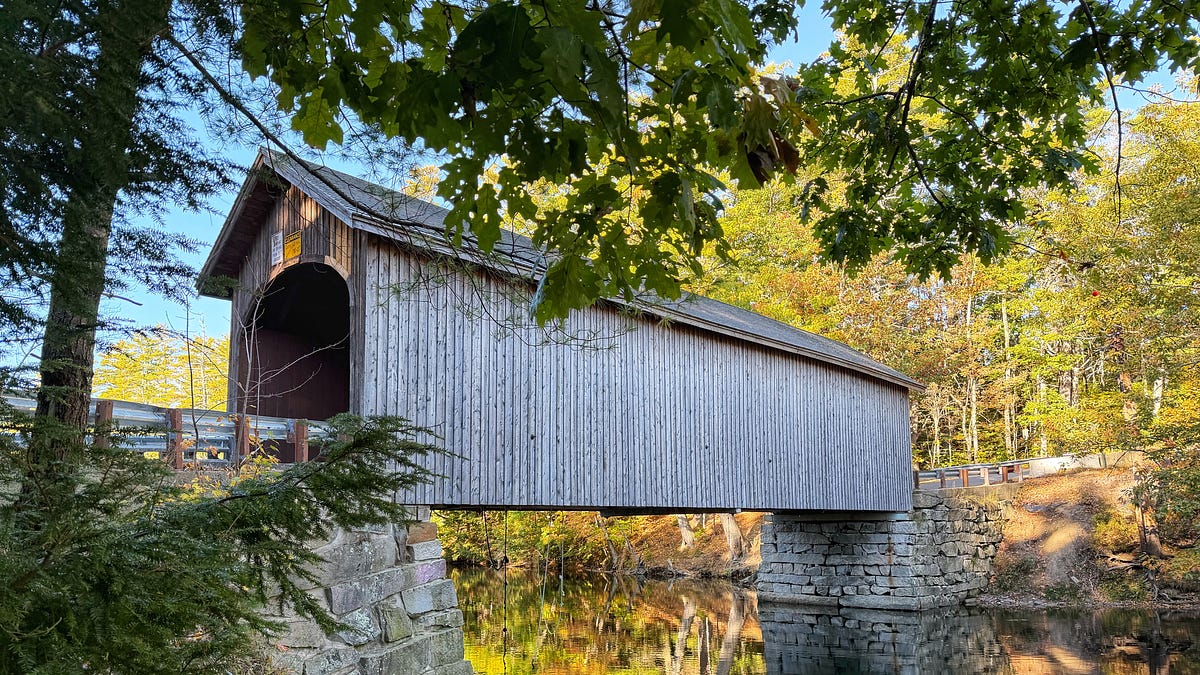
Maine’s eight historic covered bridges offer a secluded experience
When the conversation turns to covered bridges, the collective imagination of New England usually drifts toward Vermont. It...