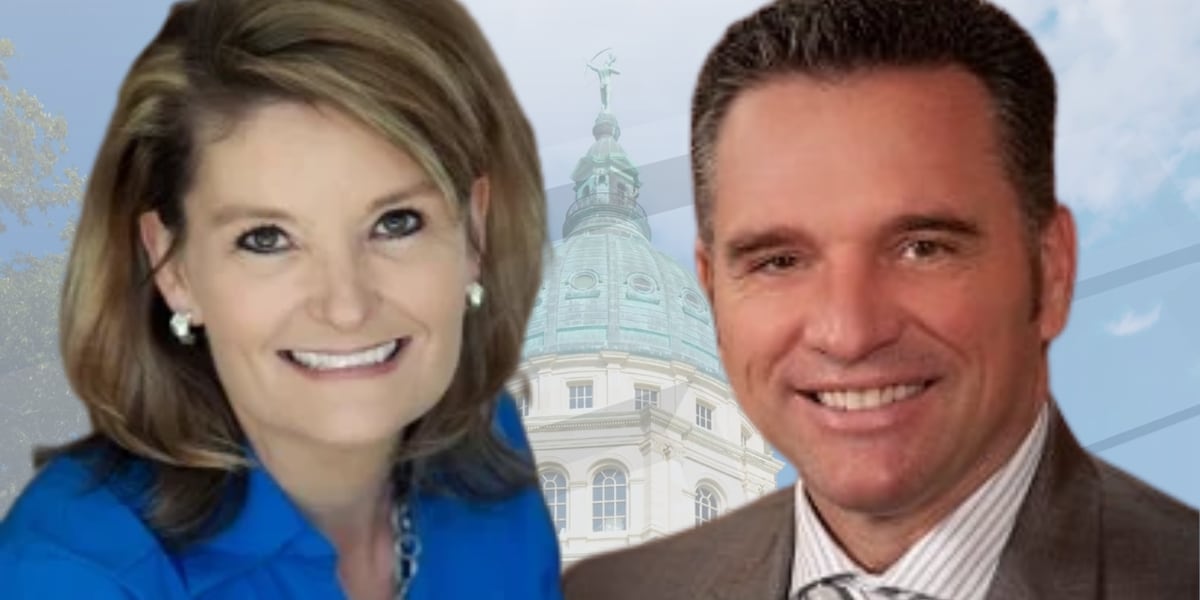
The Morning After in Kansas: A Governor’s Race Too Close to Call, a Historic Senate Flip, and a Broken Republican Supermajority
Wichita, Kan. – As Kansans woke up on the morning after a midterm election that reshaped the state’s political leadership, one question hung heavy in the air: Who will be the state’s next governor? It’s a race that remains on a razor’s edge, with Democrat Cindy Holscher holding a slim 5,500-vote lead over Republican Ty Masterson, a margin of just over half a percent out of more than one million ballots cast. The vote is so tight that Masterson has already signaled that “lawyers might have to be brought in,” a clear indication that the final count could trigger a recount and review. This uncertainty defines the most immediate political drama in the Sunflower State.
But the story of this election is far bigger than a single, too-close-to-call race. While the nation watched a historic shift at the federal level, Kansas delivered seismic changes of its own. In a historic upset, Democrat Adam Hamilton defeated incumbent Republican Sen. Roger Marshall, according to final, unofficial returns. Hamilton’s victory marks the first time in 94 years that Kansas voters have elected a Democrat to the U.S. Senate, ending a Republican winning streak dating back to 1932. Simultaneously, Democrats in the Kansas House mounted a “once-in-a-generation win,” flipping enough seats to shatter the Republican supermajority that had held power for 16 years. The balance of power is shifting, and the morning after is filled with the quiet hum of a political realignment.
The Governor’s Race: Waiting for Every Last Ballot
The stakes in the governor’s race are immense, and the process is far from over. Sedgwick County Election Commissioner Laura Rainwater provided the crucial context for why the final count is taking time. Kansas law, upheld by the state Supreme Court earlier this year, includes a three-day grace period for mail-in ballots. “We still count ballots that are postmarked on or before 7 p.m. Election Night for three days,” Rainwater explained. “So as long as they’re in our possession by 5 p.m. the Friday following the election, the ballots will still be counted.” This means every last vote has its say, and a final result won’t be known until that Friday deadline passes.
Masterson, acknowledging the tight numbers, posted a message on his Facebook page early Wednesday morning that struck a conciliatory but firm tone. “Last night was a difficult night in Kansas and around the country,” he wrote. “But I’m grateful to the hundreds of thousands of Kansans who stood with us, and to every volunteer who gave their time to this campaign. The first count does not seem to be going our way, but the margin is narrow enough that Kansas law calls for another look, and we’ll let that process finish. Every Kansan deserves to know the result is right. Whatever the outcome, the fight for lower property taxes, safer communities and better schools doesn’t end tonight. I’ll keep working for those things no matter what, and I’ll work with anyone who wants to get them done.” It was a recognition of the democratic process and a promise to continue the fight, regardless of who ultimately takes the oath of office in January.
Historic Upsets and Familiar Outcomes in Federal Races
While the governor’s race hangs in the balance, other federal contests have been decided, and the results are a study in contrasts. The most significant was Hamilton’s victory over Marshall. The win is not just a change in party representation; it breaks a nearly century-long precedent.
In the state’s congressional districts, the outcomes were more predictable, though still consequential. In the 4th Congressional District, Republican Rep. Ron Estes fended off challengers Katy Tyndell and Drew Cranmer to keep his seat. Estes, who has represented the district that includes Wichita since 2017, campaigned on his conservative record and a push to make the Tax Cuts and Jobs Act permanent, signaling his continued focus on fiscal policy for another term. Similarly, in the sprawling 1st Congressional District, incumbent Republican Rep. Tracey Mann won re-election, securing another term in the “Big First,” a district that covers nearly two-thirds of Kansas’s land area.

State Legislature Shifts Power, AG and Secretary of State Races Remain Close
The most significant shift in state power occurred not in a single race, but across the entire Kansas House. Democrats, fueled by a wave of voter support, gained 20 seats, dramatically narrowing the Republican advantage from 88-37 to 68-57. This is more than enough to break the Republican supermajority, which had given them a veto-proof majority for the past 16 years.
“Once-in-a-generation win,” the minority party described the results.
The race for Attorney General is also proving to be a nail-biter. Democrat Chris Mann holds a slight lead of about 11,300 votes, or roughly 1%, over Republican incumbent Kris Kobach with more than 98% of votes counted. Though Mann has already delivered a victory speech, the race has not yet been officially called. Similarly, in the contest for Secretary of State, Republican Pat Proctor leads Democrat Jennifer Day by a slim margin of about 1%, or between 10,000 and 11,000 votes. Proctor, a state representative who championed a constitutional amendment on Election Day that explicitly states only U.S. citizens can vote in Kansas, is fighting to hold onto his lead in another very tight race.
Local Voters Decide on Schools and Public Safety
While state and federal races dominated the headlines, local voters also made critical decisions. In Kansas’ largest school district, Wichita Public Schools, residents approved a two-part, $615 million bond measure. The comprehensive proposal will fund large-scale infrastructure and building improvements across USD 259 campuses. In a different local vote, however, Valley Center residents rejected a 1 percent sales tax that would have funded a full-time fire department. The rejection means the city will continue its current model, using full-time staff for 12 hours a day and volunteers for the other half, and will now join Sedgwick County Fire District One.
The morning after Election Day in Kansas is a picture of a state in flux. From the historic flip of a U.S. Senate seat to the breaking of a legislative supermajority, the political ground has shifted. Yet, the most powerful symbol of this moment of change is the unresolved race for governor—a contest so close that its outcome will be decided not on Election Night, but by the slow, deliberate process of counting every last vote. The story of this election is still being written, and the final chapters are yet to come.
Worth a look

Obituary for Robert Bob Thompson of Montpelier Vermont
Robert (Bob) Thompson of Montpelier, Vermont, passed away on October 13, 2026, at the University of Vermont Medical...

BYU vs. Utah: Big 12 Rivalry and College Football Playoff Bowl Projections
Utah and BYU eye College Football Playoff berths ahead of rivalry game The landscape of the Big 12...
Johanne Killeen: The Legacy and Success of Providence’s Al Forno
A Half-Century of Flame and Flavor: Johanne Killeen Reflects on Al Forno's Enduring Legacy Al Forno's story shows...

American Heart Association reports Medicaid, sugary drink vote outcomes
Across the country on Tuesday, voters made decisions that will directly impact the health and wallets of their...