
A Portland Tree’s Fall Ignites a National Book Award-Finalist Conversation
Across the street from her home, a towering eucalyptus, “several school-buses tall,” was cut down. For poet Victoria Chang, watching the tree’s dismantling from her daughter’s bedroom sparked a profound melancholy. That singular, personal experience—the removal of a neighborhood landmark—became the unlikely genesis for her latest collection, Tree of Knowledge, a work now a finalist for the 2026 National Book Award in Poetry. The book, a finalist for the 2026 National Book Award in Poetry, weaves this intimate grief with the sweeping history of Chinese American displacement, environmental loss, and the fragile nature of memory.
Chang, who also directs Georgia Tech’s Poetry@Tech poetry center, brings this singular vision to the Portland Book Festival this weekend. She will appear at 10 a.m. on Saturday, November 7, in the Brunish Theatre for a session titled “Poetry and the Natural World.” She will be joined by poet and scholar Beth Piatote, with Portland-area poet and editor Alyssa Ogi moderating their discussion on the intersections of nature, history, and language. The session is currently sold out, a testament to the festival’s draw and the resonance of Chang’s work.
A Conversation Rooted in Loss and Connection
For Chang, the connection between the felled tree and complex historical narratives was not a deliberate intellectual exercise but a natural, intuitive leap. “I don’t really think like that. I’m not consciously making these connections, and I think that’s what poetry is really wonderful for,” she explained. “For me, at least, oftentimes the poem and the creative process are guiding me versus me guiding it.” This process of “wander-writing” allows her to find unexpected juxtapositions, placing ideas “side by side, not even that close to each other.” It’s a method she describes as “very joyful,” showing how the creative process can reveal hidden truths.
The impulse to follow these connections is central to her understanding of poetry itself, which she sees not as a quest for definitive answers but as a comfortable space for uncertainty. “I think poetry is very comfortable amongst those gaps, silences, and spaces, whereas a lot of other topics are all about knowing. I think poetry is very much about unknowing,” she reflected.
“Being that kind of person in our culture can be a little rough, you know, because we’re so forced to be vertical, and I’m way more of a horizontal kind of brain,” Chang said. While our culture prizes specialization, her creative strength lies in her ability to connect disparate fields, a horizontal thinking that allows her to build rich, multilayered poems from a wide range of influences.
A Title Borrowed, a Legacy Honored
The book’s title, Tree of Knowledge, is a direct nod to the Swedish artist Hilma af Klint and her series of small watercolor paintings by the same name. Chang saw these works in New York and was deeply struck by the artist, who was a pioneer of abstract art but long uncredited for her contributions. “I was just struck by what an incredible artist Hilma af Klint was, and so ahead of her time,” Chang said.
“It’s extremely important to think about your complicity, and also how you angle or triangulate whatever it is you’re writing about. Especially today, it’s not enough to have a poetry of witness, where you just stand back and look. In this day and age, I’d rather hear from the people who are experiencing those things. I think for poets, though, if you’re writing poetry of witness, which I was and often do, you have to understand your role. It’s important to query that and question that, and have awareness of what you’re doing.”
—Victoria Chang
The book’s final focus on af Klint, whose series of paintings is titled Tree of Knowledge, serves as a corrective, highlighting a woman who was foundational to a major art movement but whose contributions were long overlooked.
The Role of the Poet and the Challenges for Women
When writing about difficult historical events, Chang feels a deep sense of responsibility. She stated that it is extremely important to think about one’s complicity and how one angles or triangulates a subject. She believes a modern “poetry of witness” must go beyond simple observation and that she would rather hear from people experiencing those things. She added that poets who write from this perspective must constantly question their role and be aware of their position.
This sense of responsibility extends to her own experiences as a woman in the literary world in 2026. While acknowledging progress, Chang feels that misogyny remains a pervasive force. “I feel like we’ve come really far, but we have a really long way to go. And I think women are still extremely marginalized in the field. Women still aren’t as respected as we should be as artists and as thinkers, mostly as thinkers,” she shared. She describes facing this misogyny “every day,” both in personal encounters and in the stories she hears constantly from other women.
For emerging writers, especially women, she advises finding community and holding onto conviction. She said it is an uphill battle because one is making art, which is hard enough. She added that there is also a lot of self-doubt that can occur in that process, and it takes a lot of love for the art and conviction, even when work feels very unpopular or under-recognized. Chang believes that a community built on generosity, kindness, and empathy is essential for creating a more equitable literary world.
Where Place and Memory Meet on the Page
For Chang, place is the fertile ground from which her work grows. “Place is where things begin for me. I have wanderlust all the time, so I love traveling to new places, and they all end up in my poems,” she said. Her travels, the people she meets, the trees she sees, and even the smells she encounters become raw material for her poetry. A single swan she spotted at New England College, for instance, has already become the seed for her next collection of poems. Similarly, a trip to Europe where she saw original paintings by Caspar David Friedrich inspired a whole new series, demonstrating the deep and lasting impact of visual art on her written work.
Her Portland appearance is more than just a reading; it’s a continuation of the very conversations her book embodies. At 11:45 a.m. on Saturday, she will host a pop-up reading inside the Portland Art Museum’s “The Stars We Do Not See: Australian Indigenous Art” exhibit, further cementing the link between poetry, visual art, and the natural world that defines her creative vision. Although the main festival events on November 7 are sold out, Portland Book Festival’s expanded programming offers tickets for other literary events throughout the week, providing ample opportunity for the community to engage with Chang’s work and the ideas she so passionately explores.
Ultimately, Tree of Knowledge is a meditation on change—its inevitability, its cost, and the human stories it leaves behind. It began with a tree, but its branches reach far, connecting a quiet neighborhood loss to the grand, often painful, sweep of history. For Chang, the act of writing is a way to make sense of that change, to find order in the chaos, and to honor the memories, both personal and collective, that form the roots of our identity.
Keep reading

Four die in Rogers Park fire, according to authorities
Four Lives Lost in Early Morning Rogers Park Fire A predawn fire in Chicago's Rogers Park neighborhood claimed...

Honolulu City Council to debate Bill 53 shopping cart ordinance
Bill 53’s Cart Crackdown: Honolulu’s Shopping Cart Battle Hits a Crossroads On a Tuesday morning at Honolulu City...
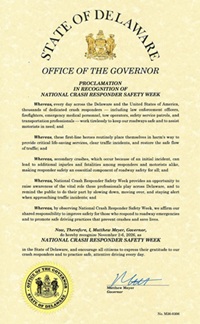
More than 27,000 crashes on Delaware roads in 2025
More than 27,000 crashes on Delaware roads in 2025. That’s a number, but it represents thousands of moments...

Record Flooding in McCaysville: Toccoa River Overflows, Dozens Rescued
McCaysville Underwater as Record 18-Foot Floodwaters Trap Dozens Emergency crews in McCaysville, Georgia, are conducting boat rescues after...