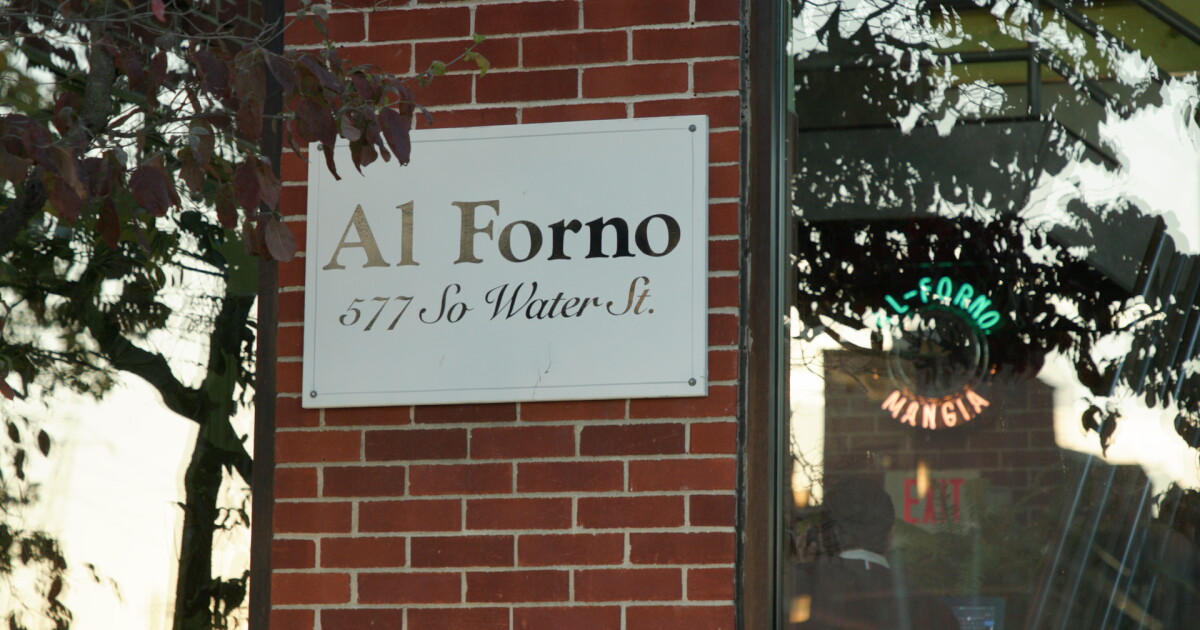
A Half-Century of Flame and Flavor: Johanne Killeen Reflects on Al Forno’s Enduring Legacy
Al Forno's story shows how unwavering passion and a deep-rooted connection to place can sustain a business through fleeting trends and viral sensations. Johanne Killeen, the co-founder of the legendary Providence restaurant, recently sat down with Ocean State Media’s Ian Donnis to look back on her journey, a journey that began not with a global plan, but with a love for Italy and a belief in a city she now calls home.
Providence has no shortage of Italian restaurants, but Al Forno has always occupied its own stratosphere. The restaurant, which opened in 1980, is celebrated as the birthplace of grilled pizza and shot to international acclaim in 1993 when the International Herald Tribune named it the “best casual restaurant in the world.” For Killeen, a New Jersey native and graduate of the Rhode Island School of Design, this success was a long way from the initial vision she and her late husband, George Germon, shared when they first opened their doors.
A Love Letter to Italy, Forged in Providence
The story of Al Forno is inseparable from the story of its founders and their shared enchantment with Italy. “We were both more than enchanted with Italy,” Killeen told Ocean State Media. “I lived in Florence after I graduated from RISD, and George taught the European Honors Program for RISD in Rome. There were things (in Italy) about the feeling of places, the kind of welcome you got, the atmosphere, plus the food, and those were the things that we really wanted to bring back to Rhode Island and share with clients and customers.” This wasn’t just about replicating recipes; it was about capturing an entire ethos of hospitality and place.
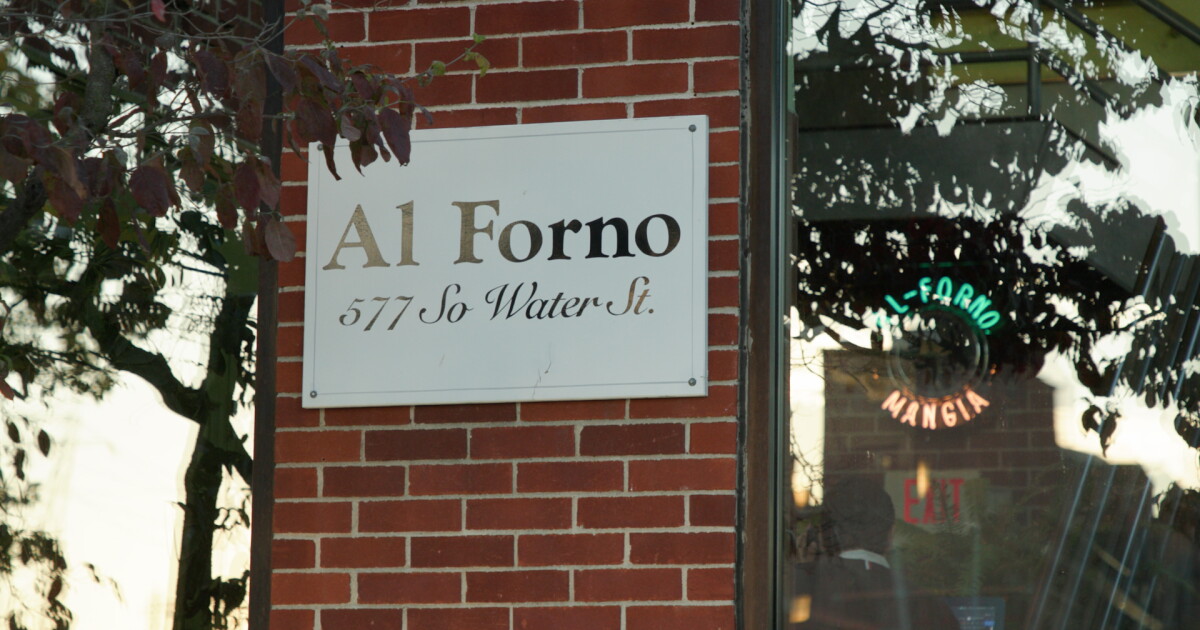
When they first considered opening a restaurant, their geographic aspirations pointed in different directions. “I think I probably had aspirations to go to New York because being from New Jersey, New York was kind of a mecca, I suppose,” Killeen admitted. “George really loved the architecture here. Just walking down Benefit Street was heaven for him, to see the colonial houses, and he just, he really loved Providence.” In the end, George’s affection for Providence’s charm and character won out. “But George was right in the end,” Killeen reflected with a smile.
The reality of restaurant life, once they opened, was a grueling cycle of passion and perseverance. “Once we opened the restaurant, there wasn’t very much to think about except getting there in the morning and leaving late at night, and repeat, repeat,” she recalled. It was a devotion that forged an unbreakable bond to the city and its people. Over time, that bond deepened. “I love Providence more now. I love Rhode Island more. I don’t want to live anyplace else,” Killeen stated. “Part of that is going away and coming back, and then seeing Rhode Island with fresh eyes.” She described a moment of clarity, after being away, crossing over the Jamestown Bridge and the Newport Bridge, thinking, “it cannot be more beautiful than this.” It’s a sentiment that captures the profound sense of belonging she found in Rhode Island.
Buddy Cianci and the Making of a Providence Institution
No history of Al Forno is complete without acknowledging the role of former Providence mayor Buddy Cianci. Killeen described him as a central figure in the restaurant's early days, a champion for local businesses who took a personal interest in their success. “He knew everything that was going on in Providence, and he was the most pro-Providence person that I think ever walked the earth,” she said. “He was interested in business, he was interested in young people and he was interested in the growth of Providence.”
His support was practical and transformative. When Killeen and Germon opened Al Forno, they did so without a liquor license—a significant handicap. “He helped us. We opened without a liquor license, and he basically gave us the steps to get a liquor license,” she explained. At the time, a license cost $32,000—a sum far beyond what the young, inexperienced restaurateurs thought they could afford. “We were totally naive. We didn’t know anything about business, and he just showed us the way to do it,” Killeen remembered. Cianci’s guidance extended to connecting them with a bank, providing a crucial lifeline that allowed the restaurant to flourish.
The Menu, a Seasonal Symphony
Al Forno’s menu is a living document, a reflection of both its Italian roots and its commitment to Rhode Island’s local bounty. Killeen emphasized that while some dishes have become signatures, the menu is in a constant state of evolution dictated by the seasons. “It’s obvious that it’s very seasonal,” she said. “In the summer, there’s corn all over the menu, even though corn (was) not, especially in 1980, an ingredient that would be normally found in a restaurant. That was mostly for livestock.” This bold, early adoption of local ingredients was revolutionary.
The rhythm of the menu is clear: “In the fall, we start with pumpkins and squashes and that sort of thing. In the winter, it’s winter vegetables, and in the spring, asparagus.” While dishes like the Clams Al Forno have stood the test of time, Killeen stressed that there is always something new to excite regulars. “There’s always something new on the menu. For instance, desserts change seasonally, as well, so you’re not going to find raspberries here in the winter, but you will find them here in the summer. It’s just what real markets and local farmers can bring for us.” This philosophy of working with, not against, the agricultural calendar has been a cornerstone of the restaurant’s identity.
The Enduring Fire of a Love for the Work
Operating a restaurant today involves different economic conditions than in 1980, and Killeen acknowledges the increased pressure on new ventures. “I think the rules have changed in terms of economics. It seems that you have to hit the ground running as soon as you open the doors, and that’s not inexpensive. That’s quite expensive. So I think the stakes are different.” The financial barriers to entry are higher, making the risk of failure even more acute for aspiring restaurateurs.
Yet, for Killeen, the fundamental reward remains the same. “I still love it,” she declared with a clarity that speaks volumes. “I think George would be happy to know that I’m still doing this. It’s not the same without George. Maybe not as much fun, let’s say, but I still love what I do, and I’m happy doing it. So why would I not do it?” This simple, powerful question is the heart of Al Forno’s story—a story of passion that has not just endured, but has thrived. It’s a legacy built on a foundation of love for food, for a city, and for the work itself—a flame that continues to burn brightly in Providence.

Minnesota official challenges ICE claims using prison records
Paul Schnell challenged federal claims of immigration enforcement accuracy by releasing prison records and video footage during Operation...

Katseye Faces Backlash After Last-Minute Detroit Concert Cancellation
K-pop band Katseye canceled its sold-out Detroit concert just 30 minutes before it was set to begin at...

Augusta Athletics Announces Partnership with Wellstar on Youth, Family Outreach
Augusta Athletics and Wellstar Hospital Team Up to Score Big for the CSRA This collaboration is designed to...

Councilor Durkan Objects to Crime Lab Debate After Flynn Remarks
Boston Council Vote Halted After Sexual Assault Remark A routine debate over crime lab leadership on Wednesday erupted...