Opening its doors on Friday, a new Louisville museum centered on accessibility and inclusion invites visitors to experience history through touch, sound, and interactive storytelling.
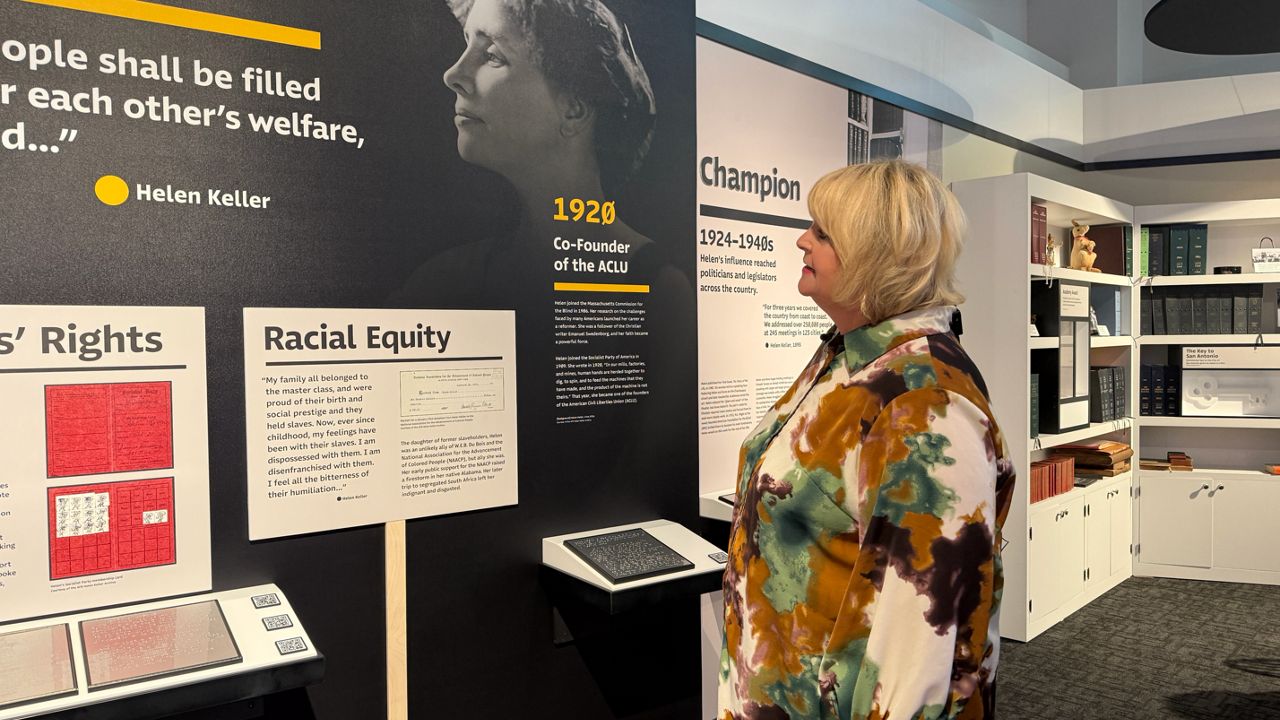
The Dot Experience puts accessibility at the very center of its design, highlighting both the historical roots and the future trajectory of accessible technology. Among its primary attractions is a dedicated exhibit detailing the life and legacy of Helen Keller, designed to immerse visitors in her enduring fight for societal inclusion.
Keller Johnson-Thompson, executive vice president of the Helen Keller Foundation for Research and Education and Keller’s great-grandniece, toured the installation ahead of its public opening.
“I’m just in awe. I have always wanted for everyone to be included in the Helen Keller experience because that’s what she fought for her entire life.”
Johnson-Thompson noted that the exhibit captures Keller’s drive to make the world more inclusive. Describing Keller as a warrior and a fighter, she emphasized that the museum serves as a call to action. We cannot simply let the world remain as it is; we must actively work to make it better for everyone.

Celebrating Decades of Innovation at the American Printing House for the Blind
Beyond the Keller exhibition, the museum examines nearly 170 years of accomplishments by the American Printing House for the Blind, tracing past achievements while offering a direct look at modern technological advances and upcoming developments.
Darrick Wood, director of the Dot Experience, explained that the facility aims to bridge history with actionable change. Visitors are encouraged to absorb the exhibits, engage with staff and fellow guests, and take those insights back into the broader world.
“How do you learn from the exhibits, learn from the people that you talk to, learn from the experiences here, and then go out and make the world a better place?”
Wood emphasized that the museum was built to foster a sense of belonging for diverse audiences, particularly those who historically felt alienated in traditional cultural institutions.
People who have never felt comfortable in a museum environment are invited to claim the space as their own, while visitors accustomed to standard museum layouts are encouraged to reconsider how public spaces can accommodate everyone.
Factory Tours and Public Access
In addition to interactive galleries, visitors have the opportunity to tour the American Printing House for the Blind factory. This working tour provides a firsthand look at the manufacturing processes behind specialized, accessible products.
The facility opens to the public on Friday, establishing a fixture in Louisville dedicated to disability awareness and technological progress.
Related reading

Find Your Used Chevrolet Tahoe for Sale at Eddy’s Chevrolet in Wichita
Sedgwick County Driving Demands and the Full-Size SUV Solution Wichita families rack up miles fast, whether they are...

No Clear Winner in Pivotal Israeli Election as Netanyahu Faces Tight Race
Israel's High-Stakes Turnout Yields No Clear Winner in Tight Parliamentary Race With a majority of the votes counted...

Indianapolis Trick-or-Treat Hours Set for 6 to 8 p.m
As the countdown to Halloween reaches its final hours, communities across Central Indiana are locking down their schedules,...

Sophia Bush Details Alleged Abuse Behind Her Chicago P.D. Exit in New Memoir
Nearly a decade after walking away from her starring role on NBC’s hit police procedural, actress Sophia Bush...