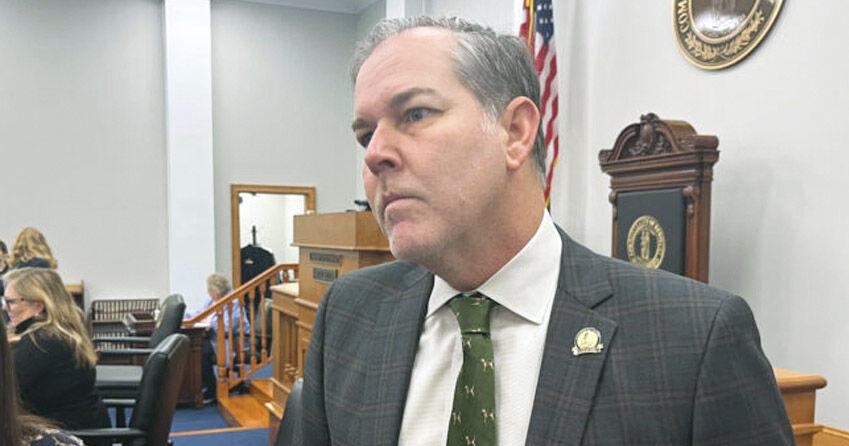
Kentucky Republicans lost nine incumbent legislators in suburban districts this month but kept supermajorities in both chambers as the 2027 session approaches.
Senate Republican Floor Leader Max Wise of Campbellsville told Madison Courier he does not expect the party to shift away from its focus on lowering the state income tax. “I do not think there was anything that we have done as state policy that was a direct effect on those elections at all. I think it was a traditional presidential midterm election,” Wise said.
He characterized the losses as “a trickle down from federal policies that were being put forth at that level,” pointing to what some called a national “blue tsunami” reacting to the economy and the state of democracy under the Trump administration.
Among the defeated were Sen. Julie Raque Adams of Louisville, chair of the Licensing and Occupations Committee, and Sen. Lindsey Tichenor of Smithfield, vice chair of the Education Committee. Wise commended both for their “passion for policy.” Rep. Ken Fleming of Louisville, who co-chaired the Medicaid Oversight and Advisory Board with Adams, also lost his seat, Madison Courier reported.
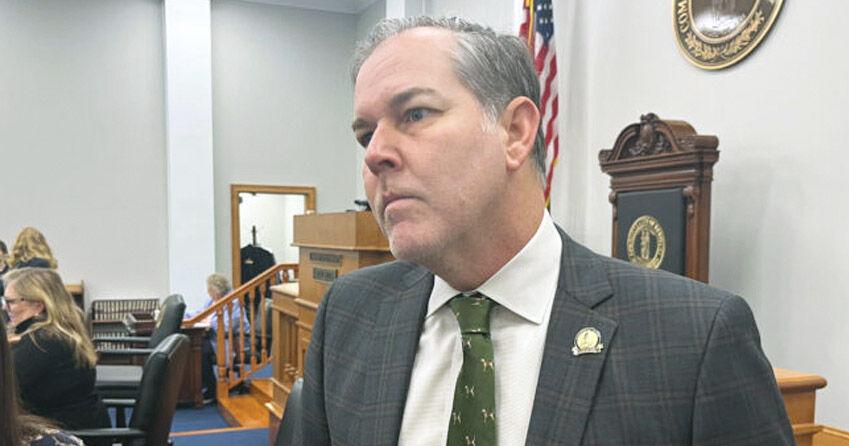
Democratic gains, committee control
Democrats picked up seats concentrated around Louisville and Lexington and will have about seven new members, according to House Minority Floor Leader Lindsey Burke of Lexington. That increased their share of committee assignments.
“Because our numbers increased significantly enough, that has changed the proportion of committee membership, and so we are going to have a greater presence in the committee meetings where the policies are hashed out,” Burke told Madison Courier.
Burke said she hopes the GOP majority will address affordability through housing expansion and Medicaid protection but expressed skepticism. “All I am hearing is a dogged commitment to continuing the same policies that led us here. So, that’s not good for Kentucky, and that’s going to set us back even further,” she said.
Revenue surplus, Medicaid pressure
While 2027 is not a budget year, a revenue forecast projects $1.7 billion more over the biennium than anticipated, according to Jason Bailey, executive director of the Kentucky Center for Economic Policy.
That may give the General Assembly room to allocate more Medicaid funding, he told Madison Courier. Over the summer, Gov. Andy Beshear used $255 million in tax revenue to block a 4% reimbursement cut for Medicaid providers, Madison Courier and focalnews.org reported.
Bailey said that Adams and Fleming were top Republican voices on Medicaid policy. He also said the election results signaled voter concern about data centers. House Republican Whip Jason Nemes of Middletown sponsored a 2025 bill expanding a sales and use tax break for data center equipment to all counties.
His opponent, Democrat Jennifer Hardin, criticized him for it in a district spanning Jefferson and Oldham counties, where residents have vocally opposed data center projects, Madison Courier and focalnews.org reported.
Housing, surveillance, children’s services
Lawmakers failed to pass an omnibus housing bill and a measure to protect ratepayers from data center electricity costs during the 2026 session; both are expected to return. Legislation to curb unwarranted use of Flock surveillance cameras is also anticipated, along with perennial debates over health care, children’s services and education, Madison Courier reported.
Caleb Brown, chief executive of the Bluegrass Institute, predicted a serious effort to claw back surveillance powers expanded last year, citing a recent U.S. Supreme Court decision that found police conducted a Fourth Amendment search when reviewing a person’s cell phone location information, focalnews.org reported.
He also said housing reform remains urgent despite the loss of Rep. Susan Tyler Witten, R-Louisville, who co-chaired the housing task force. “Young people are still being priced out of home ownership,” Brown said.
Terry Brooks, executive vice president of Sunrise Children’s Services, said “kids lost” in many races, noting several defeated incumbents had worked on legislation for kinship caregivers. “Rookies from the minority party simply are not going to be players of influence come January,” Brooks told Madison Courier.
Urban-rural balance
Wise said Republicans have had “a pretty fair balance” in policy and budget between rural and urban areas. The most recent one-time spending bill totaled $1.7 billion for projects, with about $189 million allocated for Louisville initiatives, he told Madison Courier.
Urban areas are “economic engines” but investing in water lines and infrastructure in small cities and counties is also important, he said. “I don’t think you’re going to see us take our foot off the gas as a supermajority of what we’re going to continue to do in terms of policy,” Wise said.

Cortez Masto Joins Bill to Ban AI Surveillance Pricing in Grocery Stores as Thanksgiving Costs Hit Record Highs
Sen. Catherine Cortez Masto (D-Nev.) joined legislation Tuesday to ban AI-driven "surveillance pricing" in grocery stores as Thanksgiving...

Pistons Defeat Magic 104-86 Without Cunningham as Joe Scores 21
The Detroit Pistons defeated the Orlando Magic 104-86 at Kia Center on Tuesday, improving to 11-6 and 2-1...

Arsenal and Manchester City to Meet at Emirates With Form Contradicting Table Positions
Arsenal and Manchester City meet at the Emirates Stadium on Sunday with both sides carrying form that contradicts...

Milwaukee Mother of Three Hit by White Audi in Hit-and-run
A Milwaukee mother of three was struck by a vehicle while crossing Juneau Avenue near Edison Street around...