
Aryna Sabalenka’s 2026 season collapsed into a mental and structural crisis that cost her the world No. 1 ranking and ended with a first group-stage exit at the WTA Finals since 2021, a downturn four-time major champion Kim Clijsters traces directly to a fracturing mindset and a destabilized support team.
Clijsters said the Belarusian’s frustration now hardens into a negative loop faster than it did during her dominant 2023-24 run, and she questioned whether the mid-season dismissal of coach Max Mirnyi — her partner for the Sunshine Double titles — signals a player blaming her environment rather than solving the work.
“There is stuff going on that maybe we don’t know,” Clijsters said. “The fact she is changing her team or parts of her team right now, people that have worked with her… I think her physio has worked with her for almost six years and has been a part of all the successes and some of the struggles.”
The numbers frame the collapse: after sweeping Indian Wells and Miami to complete the Sunshine Double — saving a championship point against Elena Rybakina in the California final — Sabalenka failed to win another title the rest of the year.
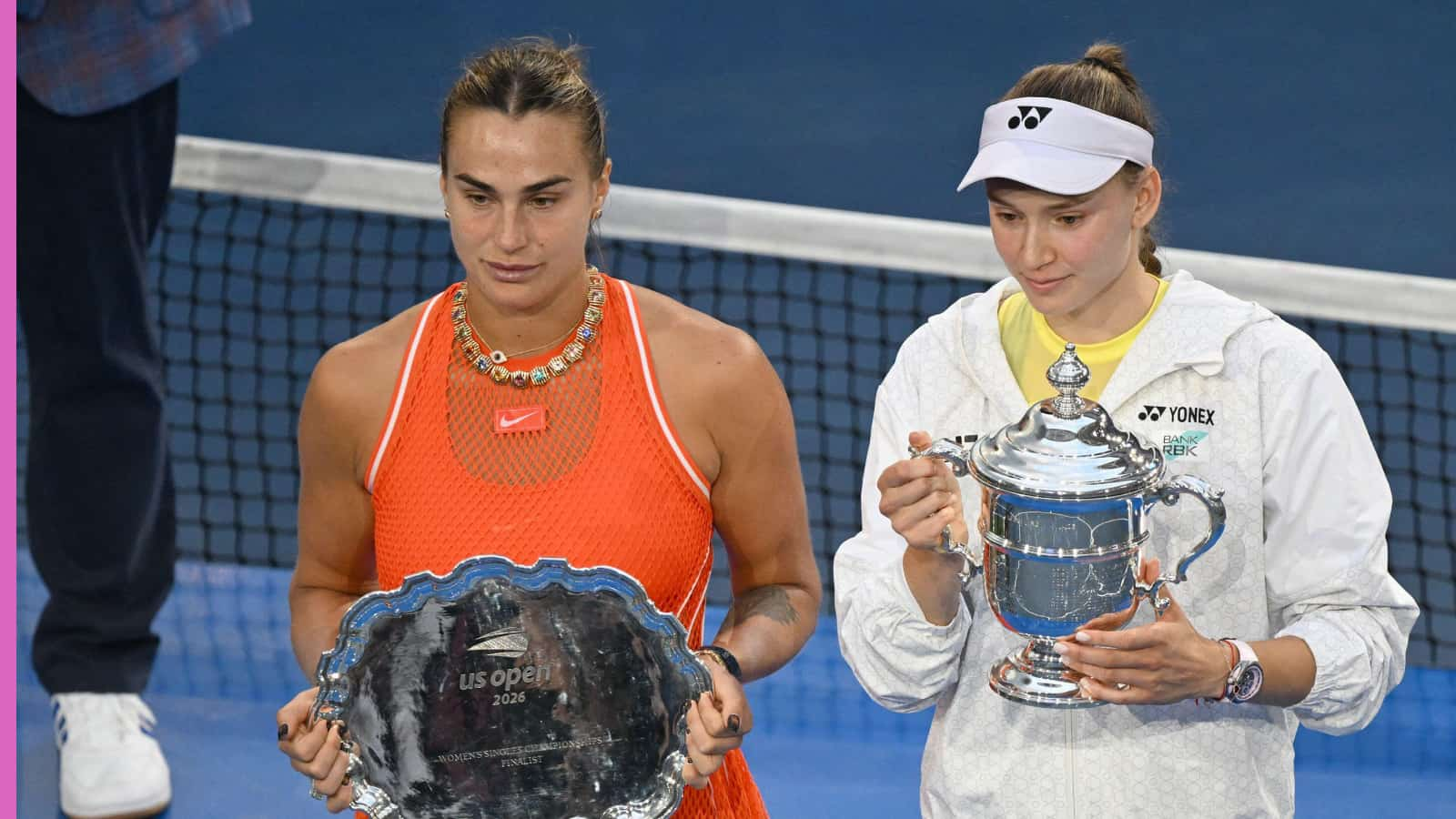
She lost both Grand Slam finals to Rybakina (Australian Open, US Open), fell 6-4, 6-0 to Mirra Andreeva and 6-3, 3-6, 6-1 to Elina Svitolina in Riyadh, and surrendered the top ranking to Rybakina in September before Andreeva’s WTA Finals title pushed her to No. 3. Sabalenka lost 11 games in a row after leading 4-1 in the opening set against Andreeva.
Sunshine Double peak masks structural decay
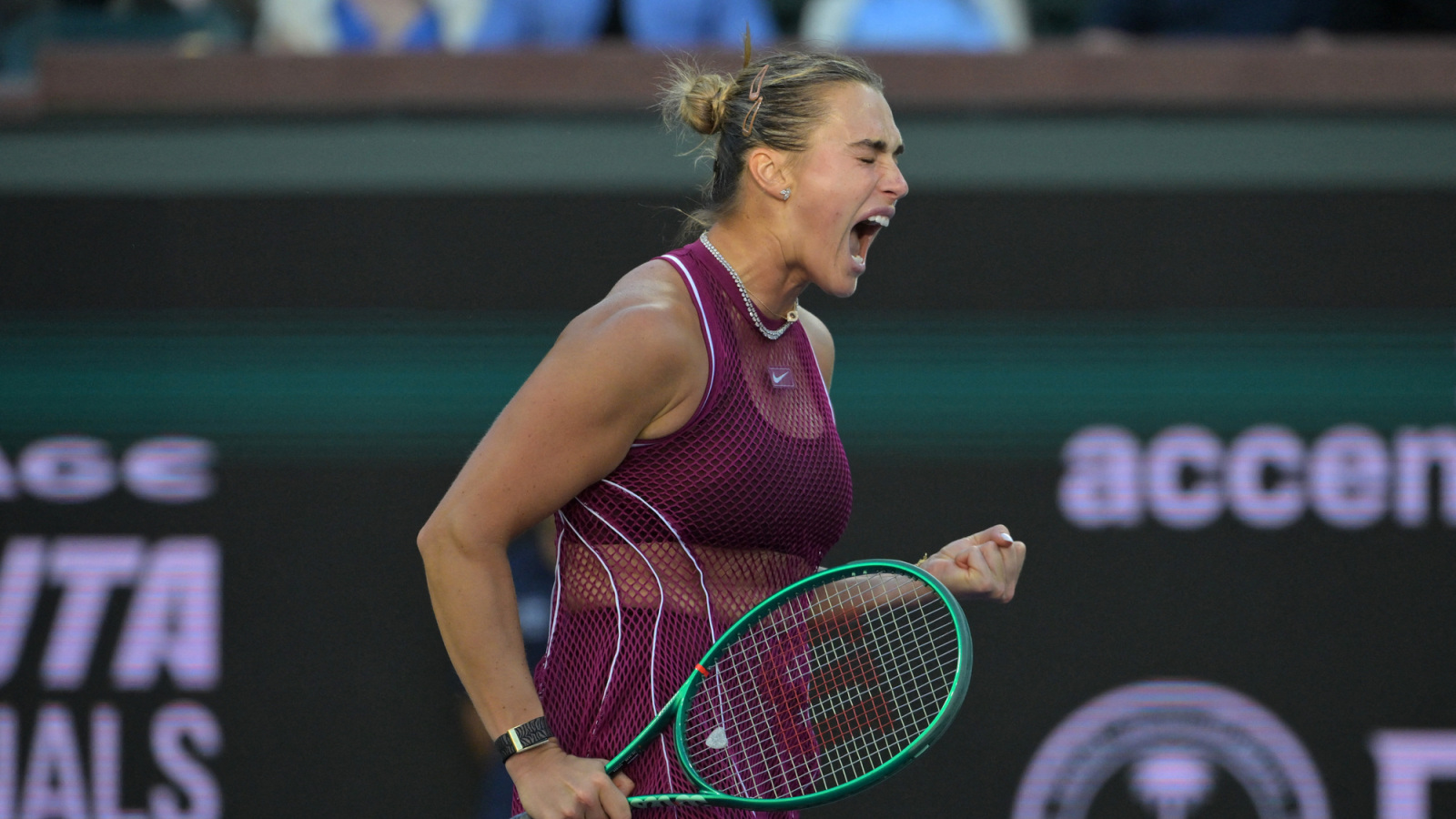
Sabalenka’s 3-6, 6-3, 7-6 Indian Wells victory over Rybakina — followed by a 6-4, 6-3 Miami semifinal win over the same opponent — created the illusion of a player tightening her grip on the sport.
She called the Indian Wells fortnight “tennis paradise,” referencing her engagement to Georgios Frangulis and a new puppy, Ash. Sabalenka is now 4-5 in Grand Slam finals, having lost four of her last five after winning three of her first four.
The physical toll complicates the mental diagnosis. In an Instagram post, Sabalenka described 2026 as a “constant battle with my body, pushing through pain and showing up on days when maybe i shouldn’t have.” She confirmed the split with Mirnyi, the 10-time doubles major winner who joined her camp in 2025 and sharpened her net game, after the WTA Finals.
Rivals no longer fear the hunter
Greg Rusedski, the 1997 US Open finalist, argued on his Off Court podcast that the aura of invincibility has evaporated. “Opponents are no longer ‘fearful’ of the Belarusian,” Rusedski said, adding that the US Open loss to Rybakina “hurt her mentally” and that she must recalibrate from hunted to hunter.
“You have to be comfortable in your personal life. You have to be comfortable with the team around you, and you have to get the balance because of all the pressure that’s put on you when you’re world number one.”
Rick Macci, the longtime developmental coach, echoed the severity on social media, warning that Sabalenka is on a “very slippery slope” and that her mentality has become a “weakness.” The financial drop: $8.37 million in 2026 prize money versus $15.01 million in 2025, a 44% decline reflecting the absence of deep major runs.
Off-court variables enter the calculus
Clijsters introduced a speculative but pointed variable: family planning. Drawing on her own experience, she wondered whether “a strong maternal kind of feeling that’s starting to play up” could be diverting focus, noting Sabalenka’s intense attachment to her dog and a September 2027 wedding date.
“Is she not as happy on tour anymore?” Clijsters asked. “Is it not feeling like this is the all or nothing kind of mindset that you at times need to have to push yourself through the struggles?”
The coaching vacancy is the immediate technical question. Mirnyi’s departure removes the architect of Sabalenka’s improved transition game, and no replacement has been announced. Rusedski emphasized that stability — personal, physical, and tactical — is the prerequisite for a 2027 rebound. “Easy to say, hard to do,” he admitted. “If we could bottle that, we’d all be great players.”
Sabalenka is on the very slippery slope with her career. Her strength has now become her weakness. A brutal competitor anytime anywhere against anybody now she checks out at Publix on a regular basis and competes against herself. Because her defense is average and very few tools…
Sabalenka will open 2027 in Australia, where she won back-to-back titles in 2023-24 before this year’s final loss to Rybakina. The draw will determine whether a first meeting with the Kazakh since New York arrives early or late. For now, the player who defined the power baseline era enters an offseason defined not by technical tweaks, but by the search for a mindset that stopped working.
“Now she just sticks into that negative mindset a lot faster and she stays there a lot longer. There is stuff going on that maybe we don’t know.”
Kim Clijsters, four-time major champion
Disclaimer: The analytical insights and data provided in this article are for informational and entertainment purposes only and do not constitute medical advice or sports betting recommendations.
Related reading
RSM Classic: 2026 PGA Tour Cards, Masters Spots on Line at Sea Island Finale
The PGA Tour season ends this week at Sea Island with full 2027 status and Masters invitations on...

Devenny Strike Earns Northern Ireland Nations League Promotion and Top-Tier Spot
Justin Devenny’s 65th-minute volley into the top corner earned Northern Ireland a 1-1 draw in Budapest and promotion...

CFP Committee Keeps Top Four; Texas Passes Notre Dame, Wake Forest Surges
The College Football Playoff selection committee released its third rankings Tuesday night, holding Georgia, Utah, Alabama and UCLA...

ESPN Chairman Confirms World Series Pursuit; NFL Eyes International Package; NHL Plans Studio Show
At the Sports Business Journal Media Innovators conference Tuesday, ESPN chairman Jimmy Pitaro confirmed the network will pursue...